Blog

  • 9 Steps to Effective Social Media Marketing

    Social media is huge. 92% of marketers are expected to use social media for marketing in 2022. This statistic reflects the importance social media has in the marketer’s circle. With more than 4 billion users, social media holds immense marketing potential. That’s why every business, regardless of its scale, is now investing in social media marketing.

    However, not all marketers find profitable results through social media marketing. Does that mean social media is a magic box that offers its treasures to only a selected bunch? No.

    Effective social media marketing begins with a sound marketing strategy. That means with a well-built marketing strategy, you can reap the benefits of social media.

    This article will walk you through the basic steps for building a well-thought-out and promising social media marketing campaign.

    Read through the end to find the insights you need to set up your next social marketing campaign.

    How to Build Your Social Media Marketing Strategy for Success?

    Success on social media comes after a strong social media marketing campaign. Here’s how you can use social media to achieve your marketing objectives:

    1-      Understand Your Audience

    You are using social media to connect with your audience. But you cannot do it without understanding them first.

    Knowledge about who your audience is will guide your entire social media marketing campaign.

    Women make up about 70% of total Pinterest users, while the stats for Instagram are no different, with 50% of its users being women belonging to the 18-24 age group.

    Additionally, 52% of millennials want to see brand videos, while only 25% of 45-54-year-olds want to see this type of content. They would rather prefer emails over videos.

    Knowing such demographics will highly influence your decisions down the road. The information you gather with customer analysis will determine the type of content you create and the social platform you choose.
    For example, if you have a makeup brand, the first choice for your social media marketing campaign will be Instagram.

    Similarly, if you are selling a supplement for healthy bones, you must be targeting the 45-54 age group, and hence email might be a more appropriate choice.

    It is important to dive deep into data and collect insights about your customer behavior and preferences. Build buyer personas based on these insights and adapt your social media strategy to target this buyer persona.

    We did some research and found a case study that effectively proves the importance of buyer personas.

    Pegasystems, a software solutions provider, wanted to be more customer-centric. And to achieve this goal, they developed specific and detailed buyer personas that carried information about everything, from the social networks their buyers use to information sources they consult before making a decision.

    When they adapted their marketing strategy to their newly built buyer personas, they saw significant results. Their interactions with the target customer increased by 20%. The number of leads they earned through marketing increased by 10%. At the same time, the conversion from lead to opportunity rose by 8%.

    The Pegasystems case study is sufficient for you to initiate your social media marketing campaign with a sound understanding of your audience.

    2-      Choose the Right Platform

    Now that you know everything about your audience, it’s time to choose the right platform.

    Facebook and its subsidiaries rank among the top ten most used social platforms. And Facebook is used by more than 90% of businesses. But these statistics shouldn’t fool you into believing Facebook should be your channel of choice.
    As we mentioned above, platforms like Pinterest and Instagram have a large feminine user base. And hence, they should be your go-to choice if your target audience comprises women.

    Likewise, say you run a business, with your target audience being largely professionals and business executives. In this case, LinkedIn should be your platform of choice, which hosts a massive community of business individuals.

    You should not forget about your competitors when choosing your social marketing channel. Carry out competitor analysis and see where they are located, follow in their steps, and get ahead with better content.

    Neil Patel, the digital marketing champion, suggests using competitor analysis tools like Quintly, Ahrefs, and Buzzsumo for reverse engineering your competitor’s social marketing campaign. By doing so, you can identify where your mutual audience engages with the brand and what promising platform your competitor fails to capitalize on. So you can finetune your strategy according to the homework done by your competitors and fill the space they have left unoccupied.

    Additionally, your choice for the right platform should also be based on what you plan to achieve with your social media marketing campaign, aka, your goals. If you want to drive brand awareness and build a community, Twitter and Instagram might make for a great option. While enhancing sales, Instagram and Facebook offer unprecedented opportunities.

    Talking about business goals, let’s hop onto the third step for social media marketing success.

    3-      Align Your Social Media Goals with Your Business Objectives

    It is critical to have a clear vision of your business objectives before developing and implementing your social media marketing campaign. To understand the importance of this point, take this example. Suppose your business wants more sales, but your social media strategy is directed towards bringing more visitors to your blog. In that case, your social media efforts will not do much to get your business closer to its goals.

    Therefore, you must determine your business objectives and select your social media goals accordingly.

    For example, if your objective is to have more people know about your business, the goal of your social media marketing campaign must be to drive brand awareness. If your business has stepped into social media to generate increased revenue, you should set up a social media marketing campaign focused on driving more sales.

    4-      Work Out Your Game Plan

    Now you understand what your customers want. You have chosen the best channel for your social marketing. And you know what your social media goals should be. The next step is to develop a game plan for execution.

    In this step, you will plan your content and schedule it.

    Content development largely relies on what your customers want to see and what stage they are in the buyer journey.
    You know, from step 1, what your customers want. Now, determine where the customer is in the buyer journey. If they are in the consideration phase, they need a solution to a problem they know they have. If they are in the awareness phase. They know they have a problem, and you have to help them identify it. Plan your content according to the stage your target customers are in.

    As for content scheduling, remember social media requires regularity. Therefore, map out your content publishing plan using a content calendar.

    You can also use one of the social media management tools for content scheduling and publishing listed here.

    5-      Decide What Metrics to Track

    If you continue your social media marketing campaign without tracking its results, you might end up falling into a bottomless pit. And free falling in a hole is in no way an effective step for a successful social media campaign.

    What actually is a smart step towards social media success is to identify what metrics can define your success and track them diligently.

    Having granular insights into the performance variables of your campaign can help you optimize it for better results.

    Deploy smart social media analytics tools for unearthing critical performance variables and streamline your social media strategy according to these metrics’ results.

    Remember to track real valuable metrics, like engagement rate, conversions, and click-through rates, instead of focusing on vanity metrics.

    Additionally, make sure the metrics you choose align with your social media marketing goals. For example, if your goal is increased brand awareness, you may want to track your post reach. For sales and revenue, you should be tracking lead conversions, etc.

    6-      Don’t Forget Your Competitors

    Monitoring your competitors’ activity on social media can greatly inspire your own social campaign. You can use tools like SocialMentions to track what your competitors are doing.

    Tools like Buzzsumo can help you determine what content your competitors are creating and how each content piece is performing. Using this tool, you can generate content ideas, find gaps in your competitors’ content, and fill it up with your own content.

    Additionally, you can find out your competitors’ engagement tactics, the metrics they track, their social timing, and a lot of other juicy information with tools like FanPage Karma. Having this information on hand will eliminate tedious work and give your campaign a head start.

    But remember, this step is called competitor analysis. So avoid plagiarizing the competitor. Don’t do exactly what they are doing. Instead, take ideas, inspirations, and directions. Then combine these with your own data, findings, and creativity to build your social success.

    7-      Create Great Content

    You might think we are stating the obvious. But some people need to understand the importance of compelling content.

    Your content is the front-end of your social marketing campaign. And no matter how well-developed the backend is, if the front-end isn’t attractive, compelling, and valuable, you will not see desirable results.

    Ensure your content aligns with your brand personality and is based on what your audience wants to see.

    If you are a makeup brand with a decent, welcoming, and aesthetic personality, you want to make sure your content reflects this.

    Additionally, ensure that you know what you are talking about. One wrong turn with content can end up tarnishing your reputation.
    While creating content for your social media, you must also consider your audience’s sentiment, lest you end up like Dove.

    In a recent post, Dove received severe backlash when their Facebook Ad showed a black woman turning white after using Dove lotion. Seriously, what were they thinking? Or were they thinking at all?

    Adding graphics into your content, writing short, crisp, and concise social media copy, and staying relevant to your customers are all social media content best practices.

    8- Focus on Social Timing

    When it comes to social media marketing, timing is important.

    It may come as a surprise, but there is a right time to post on your social media channels. When posted at the right time, the content is likely to get more exposure and drive better results.

    You can begin finding the right social time for your brand by studying the data that’s already available. Then you can develop your social schedule according to these findings and optimize it based on the results that each post you publish at various timings within the opportune timing window generates.

    You can read more about social timing and its influence on your social media campaign here.

    9- Get Entertaining and Show Your Personality

    Nothing drives engagement like entertaining content and content that gives a sneak peek into your personal life.

    Sharing snippets from your life can not only keep your audience engaged but can humanize your brand and help build a warm relationship between you and your customers.

    On the other hand, Entertaining content not only delivers information and garners massive engagement, but it drives great brand awareness too. Why? Because people love humor and tend to share funny and entertaining things with their friends.

    Notice the engagement on this Buzzfeed post from the number of comments.
    So, don’t be afraid to show a bit of personality or humor when creating your next social post.

    Conclusion

    Effective social media marketing can quickly generate the ROI you expect from your social media efforts.

    A handful of best practices can streamline your social marketing strategy and help generate a good return on your investment. These best practices include, among others, customer, and competitor analysis, choosing the right social platform, and creating compelling content.

    However, whatever you do, remember, social media marketing is largely based on experimentation, analysis, and adaptation. Experiment with the data and insights you find. Analyze the results of these experiments and adapt your strategy accordingly. By doing so, you will increase your chances of finding the coveted social media prosperity.

  • 7 Tools for Creating Stunning Social Media Graphics

    Visual content can increase sales by 80%. This statistic indicates how critical visual content is for the success of any marketing campaign. Therefore, if you want your social media marketing campaign to be a hit, you must create visual content and include it in your social media content strategy.

    Without any real graphic design skills or a budget to hire a professional designer, creating social media graphics may seem impossible.

    Luckily, you exist in an era where social media tools have evolved to the point where anyone can create stunning posts for their marketing campaigns with virtually no graphic designing skills and on a shoestring budget.

    The Importance of Graphical Content on Social Media

    Around 65% of people are visual learners. Which means they process visual content better than textual content. That means, including visual content in your social media marketing strategy can help you get your message across, leave an impact, and effectively engage your audience.

    Buffer reports that tweets containing visual content are 150% more likely to get retweeted than only text-based tweets. Moreover, Facebook posts that include visual content garner higher engagement than regular posts.

    If all of this isn’t enough to convince you of the importance of visual content in your social media strategy, here is a case study from content marketing giant HubSpot discussing how visual content increased their social engagement.

    HubSpot took a fun approach towards increasing audience engagement and decided to create memes for their social media handles. Before you come at us with pitchforks and knives, memes have now evolved from a time-wasting medium of jokes to an important marketing tool.

    The HubSpot team made the infamous “what people think I do/what I really do” meme for their sales and marketing teams.

    Both the memes performed better than you would expect. They managed to engage HubSpot’s audience and collectively accumulated more than 900 likes, 100+ comments, and a whopping 593 shares.

    The reason for such massive engagement metrics was visual content, combined with a bit of creativity and lots of fun.

    Best Tools for Creating Stunning Social Media Graphics: Our Top Picks

    At this point, we are sure you are ready to include stunning graphics in your social media campaign. And we don’t want to leave you wandering on the internet looking for the best tool to put your amateur graphic design skills to the test.

    So, here is a list of the best tools you can use to create stellar social media posts, even if you cannot design visual content to save your life and have zero graphic design budget.

    Canva

    Canva is hands-down the best graphic designing tool for beginners.

    It is a freemium tool. Yes, that’s a word. We didn’t just make it up.

    Being a freemium tool, it offers some of its features for free, while the more advanced features become accessible when you upgrade to pro. But even the free version of Canva is good enough to set your visual content strategy in motion.

    It allows for the creation of platform-appropriate posts. That means you can create graphics within elongated frames for platforms like Pinterest and Instagram stories, wider ones for Facebook and Twitter, and square frames for your Instagram feed posts.

    Conversational, a virtual receptionist agency, used Canva to maximize its social engagement, and Canva proudly talks about it in this case study.

    This virtual receptionist agency needed a tool to supplement its social media strategy.
    Once they started using Canva to create original visual content, they experienced a whopping 1100% increase in engagement on their social posts. No kidding!

    If you are looking for a graphic design tool that’s easy to use, has diverse features, and you don’t mind creating a free account, Canva is for you.

    Pablo by Buffer

    Buffer has a suite of social media tools, as discussed in one of our previous articles. With Pablo, Buffer extends it expertise and helps social media marketers to create and schedule visual social content.

    Pablo goes beyond Canva in helping people generate highly engaging visual content for their social media. It has over 600,000 images, more than 25 fonts, and a no-login feature, enabling you to create unique, eye-catching, and lead-generating social posts instantly!Besides the no-login feature, another aspect of this intuitive and user-friendly tool that compelled us to make it a part of our list is its dimension readjustment option. Using Pablo, you can create a generic post and then readjust it to fit the unique dimensions of each of your social handles. This eliminates the need to create different posts for different platforms

    Pablo allows free downloads, but another feature that earns it some brownie points is that it lets you share your visual content directly on the social platform of your choice. That’s Pablo 1-0 Canva.

    Easel.ly

    Easelly lets you create infographics easily. (Of course we had to!)
    Since most people are visual learners, infographics are a great way to visualize important information and data sets and present them in a format that makes them easy to read, understand, and retain.
    65% of brands use infographics for marketing. That means your competitors are most likely planning to include or have already designed an infographic. And now, with tools like Easelly, you can too!
    Easelly helps you create highly engaging, compelling, and truly selling infographics for free! There are no catches. No hidden charges, or sneaky watermarks, or branding. That’s right. You can start working on your new visual content just by registering for a free account. And once your infographic is done, you can download it for free in multiple formats.
    When designing your infographic using Easelly, you can choose from hundreds of professionally designed and customizable infographics templates

    But wait. That’s just the cake. The icing on the cake is Easelly’s graphic support team.

    Easelly gives you your own design team to reach out to and consult, discuss ideas, accept feedback, and get suggestions.

    For example, you are designing an infographic on Skincare through Easelly. But you are stuck choosing a color palate. You can reach out to Easelly’s support team through email or live chat, get suggestions from professional designers on what colors to use and how, and proceed with confidence

    Infogram

    Since we are discussing tools that create infographics, let’s talk about Infogram, which tackles infographic designing and enables you to create maps and charts.

    Truly a data visualization tool, Infogram has over 35 charts and several infographic templates to choose from. These charts and templates are fully customizable and create responsive graphics that help convert boring data into fun and engaging visual content that can generate leads and drive sales.
    What makes Infogram better than its peers is its performance analysis feature. It tracks the performance of each content piece that you create using its resources. In this way, it helps you shape your visual content strategy with data-driven insights.

    Giphy

    Believe it or not, GIF marketing is a thing. It is still relatively new, so if you start capitalizing on it now, you can enjoy its benefits before everybody and their grandma starts using GIFs for marketing. And it becomes overused.
    Breathing life into boring textual content and setting still visual content into motion, GIFs burst with the potential of enhancing your social engagement. When used smartly, they can take your social media campaign to newer heights.
    Let’s explain the functionality of GIF for a marketing campaign with an example.
    Say you are about to launch a new product for your fun and quirky skincare brand. You can generate prelaunch hype with a series of GIFs to intrigue your audience and set the stage for your new product.

    Here’s how a series of GIFs can bring you closer to achieving your social objectives:

    You can kick-off your campaign with “Are you tired of fighting your acne and seeing every product fail?” along with this GIF

    This caption, along with the GIF, will engage people and make them want to know more.

    Next, you post this GIF with the caption, “Do you want to get rid of your acne, for good?”:

    At this point, your target audience, i.e., people struggling with acne, will be hooked to your social handle.

    You can continue with yet another post, the final post before the official product reveal, and say:

    “We have something you’ll love!”

    By now, your engagement metrics will be shooting through the roof, and you will have the attention you need to trigger sales of the new product.

    Giphy is the tool you can use to supplement your visual content plan with highly engaging and promising content pieces. It has a website that you can access right now and download from thousands of GIFs present in its content library.

    Using GIPHY, you can create a content plan for an engaging and successful marketing campaign in a few minutes. Like we did for our example above.

    BeFunky

    BeFunky is yet another graphic designing tool that lets you edit your images, create collages, and develop engaging graphics, all through a single platform.
    Built with your lack of graphic designing expertise in mind, BeFunky is easy to use and bursts with all the tools and resources you need to create stunning graphics for your social media. It has hundreds of fully customizable templates for your next social post.

    With a stock image repository having more than a million images, you can enhance your social posts and generate content ideas through royalty-free images. Additionally, it has hundreds of elements you can choose to embellish your visual content and make it more eye-catching and impactful.

    Stencil

    The last but not in any way the least graphic designing tool in our list is Stencil.

    Much like its peers, Stencil is a graphic designing tool for graphic designing dummies, and you can literally create an engaging piece of content in less than five minutes.

    We created this post in less than five minutes using Stencil. Yes, we were running short on creative quotes ideas.

    It has three versions, the hobbyist version, which is free and lets you download ten images. The pro version is paid and allows you to download 50 images, and the unlimited version, which, as the name suggests, lets you download unlimited visual content at a fixed price.

    It has more than 5000,000 royalty-free images that you can use to create visual content for your social media. Combined with more than 1300 customizable templates and around 3,100,000 icons, Stencil, quite literally, bursts with everything you need to create fun, engaging, and meaningful visual content.

    Conclusion

    Bill Gates said content is king. We will go a step ahead and modify Mr. Gates’ statement and say visual content is king. Visual content is engaging, intriguing, and easier to understand. Therefore, including it in your social media content strategy can help skyrocket its results.

    With the evolution of social media graphic designing tools, creating visual content has become easier than ever. Now you can generate fun and engaging visual content within minutes, that too without any design expertise or a massive budget.

    However, it is important to understand that success with visual content relies on your own creativity, imagination, understanding of your audience, and insights. All the tools we have discussed here only supplement your creativity with their features and make it easier for you to generate ideas and manifest them graphically.


  • 6 Types of Content That You Can Create To Get More Social Shares!

    As a content marketer, you want shares. It is the number of shares, after all, that tells you how good your content was, right?

    Creating shareable content, however, involves a lot of guesswork. You experiment with certain types of content to see which one performs best and then continue to optimize from there.

    But what if there was a way to minimize experiments and start on the right track?

    What if you could know exactly what type and format of content will get more shares before you even start creating content?

    Luckily for you, there is research indicating that certain types of content promise increased shares.

    In this article, we are sharing the top five content types and formats that are proven by data to get more shares. So, read on till the end to find out what to include in your content strategy to make it successful.

    Why do people share content?

    If you were a restaurant owner, you would want to know the types and nature of dishes your prospects order the most, right? For example, do they like spicy food? Are they fond of prawns? And based on this information, you would create a menu so that your visitors love the food you cook, order more often, and share your details with their friends.

    This restaurant scenario is analogous to your content strategy.

    If you want people to share your content, you first have to figure out why people share things on social media. And then create content that gives people the reasons they need to hit the share button.

    According to research conducted by the New York Times, there is a psychology involved in social sharing.

    So, just like you can leverage human psychology in social media marketing, you can build upon it to get more shares as well.

    People share content for five basic reasons:

    1.    To add value to their followers’ lives in some way, provide them with something helpful, informative, interesting, or funny.

    2.    To build and reflect their online identity, for example, sharing the new Coldplay Album might make them look cool.

    3.    To grow their followers and build a bond with them, for example, sharing cute cat videos with a fraternity of cat lovers.

    4.    To enjoy attention and engagement, for example, sharing a funny meme that gets them attention.

    5.    To become the news bearer and spread the word, for example, sharing the news of a breakthrough in Coronavirus vaccine development.

    All of these reasons are rooted in human emotions that, once invoked, compel people to share something.

    BuzzSumo, in their study, found out that 25% of most shared content invoked emotions of awe, while 17% of laughter and 15% of amusement.

    Do you know what primary emotion can all of these feelings be linked back to? Happiness.

    People share content that has happiness layered into it. Why? Because they want to share what made them happy and be the source of someone else’s joy.

    Now that we know why people share content and what makes them hit the share button let’s go ahead and see the most promising content formats you can use to manifest these findings.

    Most shareable content formats

    We know you don’t like jumping from website to website, finding types of content that can help you win in one go.

    So, we did the hard work and have gathered the data and information you need to know what types of content make up a successful content strategy, and we present them below:

    Long-form content

    You would think your followers will share content that they can consume quickly. Well, that’s partly true. But when talking about articles and blogs, data indicates that longer pieces of content are shared more than shorter ones.

    10% of the top articles that BuzzSumo analyzed were long-form. They found that content comprising more than 2000 words had the most shares, towering over 7.5k shares.

    That means long-form content is the most promising content format for all businesses that have a blog.

    The reason why people share longer blog posts is that they derive value out of them.

    Longer articles are more detailed, in-depth, and comprehensive, meaning that they help the readers learn something new.

    Once they learn something new, they either want the world to know how cool (in a geeky way) they are and build an online identity or share the valuable information they gathered.

    Another remarkable fact about long-form content is that it is relatively unpopular despite being proven to drive more shares.

    No one wants to invest the time, effort, and energy it takes to churn out an informative and detailed article.

    So, you can rise for the occasion and get to creating long in-depth articles. But don’t forget to make them valuable because no one will share 3000 words of fluff.

    Interactive content

    Interactive content involves the viewer’s input, like online quizzes.

    In this era, when there is already heaps of information, people value experience along with knowledge.

    That is why 79% of marketers agree that interactive content leads to better exposure and increased visitors.

    Moreover, 36% of people scroll social media to kill time. And what’s better than a silly but intriguing quiz to kill time and do something fun?

    Buzzfeed happens to be the king of such quizzes:

    Quiz marketing is a real thing. And you can leverage it for your overall marketing strategy by creating fun, engaging, and informative quiz that align with your brand’s personality and contribute to your marketing goals.

    For example, if you have a business making and selling fruit juice, you can create a personality quiz telling people what flavor of juice they are based on their personality.

    Something like this:

    It sounds silly, but it works!

    While creating a quiz, don’t forget about the results.

    The results are the most critical part of a quiz because they make the quizzes so shareable. People want to tell their friends how cool and funny they are with their quiz results; they want the attention.

    Be sure to create quiz results that are fun, positive, and share-worthy and make the results shareable by adding social share buttons.

    If you are still unsure how a simple quiz can drive tangible results for you, take this case study as an example.

    Rejuv Medical, a healthcare facility, wanted to lift their sales. To do that, they created the hormonal imbalance quiz.

    This quiz got them 947 new leads and 30 new consultations, through which they generated $18,000 in revenue.

    So, social quizzes are a force to be reckoned with. Don’t ignore them while creating a shareable content strategy!

    Visual content

    Content with at least one or more images gets twice the number of shares.

    The popularity of visuals-supported content could be attributed to the fact that it grabs attention and delivers value without taking too much time.

    In research, Go Gulf found that pictures were the most shared type of content on social media. And this is enough evidence for 21% of marketers to make visuals their top priority.

    So, you know now that content that is backed by visuals is more likely to get shared. But what type of visuals?

    First and foremost, you have to include images that are relevant to the context of your post. If you are talking about an increase in smartphone usage, supplement it with an eye-catching chart.

    Secondly, steer clear of stock images. They might be an easy source of visuals, but stock imagery does not build trust or the emotional connection that drives shares and likes.

    Check out how stock images is the likely cause of a lower CTR:

    Fractl, a growth marketing agency, knew that visuals performed better than text. Therefore, they created graphics that showed collective implications of drug and alcohol abuse for an Average Faces of Drug Abuse campaign.

    As a result of their visual strategy, their graphics were featured in over 250 stories and got more than 9000 shares!

    Infographics

    From the previous section, we know how visual content drives shares.

    Infographic is another form of visual content that pairs boring text with fun images and makes your simple content readable and shareable.

    That’s probably why infographics are the fourth most used type of content in marketing and are liked and shared 300% more than other forms of content on social media.

    Therefore, if you have created an exciting piece of content, but you fear no one will read it, turn it into an infographic.

    You don’t even have to hire an illustrator either.

    There are social media graphic designing tools that can help you create an infographic with zero design experience.

    Brian Clark, the owner of CopyBlogger, a multibillion-dollar website, created an infographic on a reasonably simple topic and talked about common Grammar errors.

    This infographic of his got more than 263,000 shares on five different platforms.

    Even if you don’t belong to an exciting field like Brian’s and have to work your way up in the B2B industry, infographics can still come in handy.

    BuzzSumo found out that B2B infographics were shared widely on Pinterest.

    Pinterest and infographics, we bet you didn’t think of this combination for your B2B marketing strategy before.

    But now is the time to consider including valuable and engaging infographics in your content plan.

     Videos

    Videos are also a type of visual content. But due to their exceptional performance, they deserve a section of their own.

    Hubspot analyzed 220,000 posts and found that videos made up 18.94% of the total shares of all their posts. Moreover, tweets with videos get 10x higher engagement, LinkedIn users are 20x more likely to share videos, while Instagram videos garner more engagement than other types of content.

    So, you know what to do to create an engaging LinkedIn or killer Instagram post. Add videos!

    82% of people prefer to watch video streams rather than reading text on social media. Which is a clear indication of how videos can engage people, and if made to fulfill any of the reasons mentioned in the beginning, can scoop a share out of them.

    If this isn’t a solid case for including videos in your content strategy, then what is? Check out how this list of viral Facebook posts comprises mainly of videos:

    So, include fun, engaging, and on-brand videos on your social handles. You can even make promotional product videos. But, no matter what you do, make sure to perform audience research to align your video content with your viewers’ interests.

    As far as the length of the video is concerned, research suggests that most shared videos usually range from 4 minutes to 4 minutes and 20 seconds in length.

    Check out how Netflix’s video-based tweet has garnered 190k+ views and 1.8k retweets in a few days:

    Can you guess the reason for retweets?

    It could be because people want to be the news bearers.

    News-worthy content

    Breaking news content has a very short shelf-life, but it comes with a significant impact. People want to be bearers of breaking news. That’s why such content gets shared a lot.
    Check out how the articles that got the most engagement last year comprised largely of news-based content:

    But you cannot leverage this type of content for your regular business. So, focus on news content only if it is relevant to your niche.

    You wouldn’t like it if Starbucks started sharing national news, would you? The same goes with you and your followers.

    Conclusion

    Creating viral content is the dream of every social media marketer. But churning out shareable content every day is not as easy as it sounds, especially when a lot of guesswork is involved.

    We have tried to eliminate guesswork from coming up with shareable content and have provided data-based suggestions on what content formats are more likely to help you get those shares.

    But, regardless of how promising a content format may be, the fact that it will be shared or not comes down to how valuable it is.

    If your content fails to pack and deliver value, you can’t expect it to perform too well. Therefore, prioritize creating informative and valuable content and present it in one of the formats discussed above.

  • SEO for Dummies: What is SEO?

    Most businesses now market and advertise their products mainly through the Internet. Brands have moved from classical or traditional marketing to digital marketing nowadays.

    So if you are involved in any business, you have undoubtedly heard of the term ‘SEO.’ You may have even heard that it would help your business grow rapidly. So what is SEO, and how does it help you and your business?

    Wanna know in detail? Let’s Jump In!

    What is SEO?

    Part of Digital Marketing, SEO stands for Search Engine Optimization. It is the process of getting your website’s pages to rank higher in the search engines like Google, Bing, and gaining organic traffic to your website.

    The main reason people get to know about your business is when you rank higher in these search engines. Whenever people search the terms related to your business, the search engines suggest them your website, resulting in increased traffic.

    In simple terms, SEO is the science of optimizing your website to rank high in search engines and gain large numbers of traffic.

    Importance of SEO

    Now you know what Search Engine Optimization is, so why is it that important for the business?

    Whenever people are trying to get some stuff for themselves, they research first. Most people search the product in the search engines to have some idea about the product.

    • According to the Search Engine Journal, about 28.5% of people click on the first result. Similarly, 15.7% of people click on the second result that pops in the search engine result pages and so on. So you must take advantage of this kind of situation and use it to grow your business.
    • People trust search engines and the results that they suggest. Also, people tend to buy from those companies that they have heard of or seen somewhere. In the 2020 Consumer Culture Report, it was said that about 71% of people buy from those companies which they recognize. So with SEO, it is about ranking higher and increasing your brand awareness.
    • SEO increases the rank of your website and makes your website user-friendly. So when it happens, there is a maximum chance that customers spend their time on your website, which may make you more sales.
    • Most businesses now perform different SEO techniques and even hire SEO experts to do their work. So if you are not doing it, you may be left out, and your business cannot grow as you expect it to grow.

    Types of SEO

    If you’ve read this far, it’s evident that you’re interested in SEO. Do not worry; we have everything that you want to know. Did you know there are different types of SEO? Did you know all these SEOs work to get your website’s page rank higher in search engines?

    On-Page SEO

    On-page means sticking to your website pages. Similarly, On-page SEO means optimizing the technical part of your site. It is the process of optimizing your website’s web pages for different keywords that rank higher in the search engines. With these keywords, your website visibility and traffic are increased.

    Some of the other factors that you must optimize while performing On-page SEO are:

    • Title Tag
      It is the HTML tag that gives the title of the webpage and gives the information about the content to the readers. The length of the title tag must be between 50-60 characters only.When optimized, the title tag must consist of important keywords which is very important because it helps in ranking the content in the search engines. Similarly, the title tag must be unique and you must target long-tail keywords here.

    • Meta Description
      Meta description is the HTML tag where you can write in brief what the page is about. The length of the meta description can be between 155-160 characters.While optimizing meta description, you must use active voice and make it more actionable. As in the title, you must also include focus keywords here in the meta description.

    • Image Files
      Firstly, you must always write a proper and clear file name and that file must contain a focus keyword. While uploading an image, you must not upload a file with high quality as it may make the website slow. So while optimizing, the file size you must be targeting must be 70kb or less.
    • URL structures
      URLs of the webpage must be simple and easy to read. It also must contain keywords that give the idea of the page. It must not contain unnecessary texts as it doesn’t make the website SEO-friendly.
      For eg: https://www.abc.com/category/post-name
      This is a perfect example of a simple and SEO-friendly URL.
    • Content
      Whenever you write any content on your website, you must write it clearly which is easy to read. The content must contain different focus keywords which helps in ranking in the search engines. But, you should not include too many keywords, because it is considered as keyword stuffing, which will not help you in ranking.Similarly, the content you write must be relevant to the topic you are writing for and it should be well arranged with different heading and subheading. Similarly, you can use bullet points when listing the things in your content.Whenever you write an informational and well-arranged content, the readers are likely to stay on your page for a longer time, which hints the search engines that your webpage is good. As a result, the search engines then rank your website.
    • Alt tags
      Those HTML tags which give context when the images do not load are called alt tags. The alt tags are very important in SEO because the search engines bot crawl the alt text and use it to index an image.Not writing any alt tags can have a crucial effect while ranking the webpage in the search engines.

    For eg:
    Bad way of writing alt text: Football player
    Good way of writing alt text: A football player running with the ball

    Off-Page SEO

    In like manner, off-page means outside your website. Like On-page SEO, Off-page SEO is also used to increase the site’s search engine rankings.

    Most people say that Off-page SEO is all about link building, but it is more than that. Different Off-page SEO involves building backlinks, increasing involvement and shares through social media platforms, and encouraging branded searches.

    Off-page and building links play a vital role in the Google rankings because backlinks are one of the important factors that Google looks upon. Backlinks mean trust, and Google ranks those websites that have gained these backlinks from leading websites.

    Technical SEO

    Technical SEO is part of On-page SEO because it improves your website’s technical aspects like making your website speed fast, understandable for search engines, and making search engines crawl quickly.

    Why is technical SEO important? First let’s understand, how does Google take your website’s information? Google sends bots so that they can crawl through your website. After crawling, the crawled information is stored as an index in databases. And, whenever people search for terms that are related to your business, Google suggests your website.

    So if your website is appropriately arranged, then the Google bot can crawl through your website quickly and gain a lot of information in a short time, resulting in a higher chance of increasing your website’s visibility.

    Local SEO

    Using SEO techniques to attract local customers is called Local SEO. According to Forbes, 95% of people use their smartphones for local searches.

    Now we understand, why local customers are vital to your business? Because high volume of local searches on Google and easier to attract. Also, they are highly likely to suggest your company to other people.

    To perform Local SEO, first thing is to target location based keywords to increase your local rankings. Next step is, creating a strong Google My Business profile and  optimizing GMB profile. Finally, you can create content targeting local customers and acquiring backlinks from websites based in your city such as directory listings etc.

    Wrong SEO Practices

    Performing SEO against search engine guidelines, to get higher site ranking in search results. These are unethical tactics don’t solve for the searcher and often end in a penalty from search engines. These are divided into two broad groups.

    Black Hat SEO

    Performing SEO techniques outside the search engine’s rules and regulations is Black Hat SEO. The keyword stuffing, buying links, poor quality content, cloaking, etc., fall in Black Hat SEO.

    We encourage you not to perform these kinds of SEO techniques because these techniques bring you short-term results, but they may harm you heavily in the long term. If the search engines find out about these techniques, they may ban your website forever, which may be a waste of time.

    So instead of using these shady techniques, you must perform only recommended SEO techniques and build a high-quality reputation that lasts forever.

    Grey Hat SEO

    You may be confused; White Hat SEO is that SEO that is done sitting inside rules and regulations of search engines, and similarly, Black Hat SEO is the vice-versa of that. So what is Grey Hat SEO?

    You get a Grey Hat SEO by combining both White Hat and Black Hat. It is a mix of both SEO, and ultimately, it is not legal because it involves some Black Hat SEO, and it is very risky even with Grey Hat SEO.

    Some of the techniques that Grey Hat SEO uses are:

    • Buying Expired Domains is one of the most common Grey Hat techniques one can use. If an owner of the website lets the website expire, it still has authority with it. Then someone may pay the owner for their domain.
    • Buying or Trading Links – As I said earlier, backlinks play a vital role in ranking websites in search engines. So in this technique, you pay other website owners for backlinks or trade something like content, guest articles, and many more.
    • Creating Duplicate Content – Another common Grey Hat SEO is duplicating content or copying the significant content from other websites. It may help you rank on search engines. But in case Google, if they don’t find out, you may face the consequences.

    Final Words

    I hope you found this post beneficial to know what SEO is and how you can use it to grow your business. In this modern time, all companies of any size must perform SEO techniques.

    Most people have smartphones and other devices to surf the Internet. So you must take this as a chance to gain a lot of traffic and increase your business sales.

  • 7 Strategies for Social Media Lead Conversion

    What do you use social media for? To garner engagement or build clout around your social media presence that you can later harness to maximize your revenue.

    You want your social media efforts to yield tangible results.

    Merely 22% of the businesses surveyed in a research were satisfied with their conversion rates. Why? Because many businesses use social media, an important lead conversion tool, just to drive brand awareness.

    Your social media strategy leads to noticeable results once you stop using it as a top-of-the-funnel strategy and begin to leverage its potential to convert followers into customers.

    So, to ensure that your social media marketing contributes to your business’s revenue, you must generate and convert social leads.

    In this article, we are discussing 8 top strategies you can use to convert your social media followers into leads and customers.

    Let’s dive in!

    What is Lead Conversion?

    The process of converting a lead into a customer is called lead conversion.

    A lead is a person who has shown interest in your brand by providing you with some information. In some cases, the information they offer you may also be referred to as lead.

    As a marketer, you have to use this information to nurture the lead and warm them up to the brand until they are ready to buy what you are selling.

    For example, you are a SaaS company, and a social media follower has filled up one of your social media lead ad forms. Now, you have the information of this person or the lead, and it is your job to target the user with personalized messages and discounts until they are out with their wallets.

    59% of marketers believe social media marketing is an excellent tool for improving lead quality. Do you know why that is? Because social media gives you a lot of opportunities to interact with your audience in a carefree, humanized way. It gives you tools to target your followers with personalized messages and data to craft these messages.

    Let’s go ahead and see how you can use social media and all that it offers to convert leads into customers.

    How to convert social leads

    Converting social media leads is critical for you to prove that your social efforts were worth something in money.

    But if you are struggling with social media customer acquisition, here are a few strategies that will help you convert your social leads:

    1. Optimize social media content

    Social media optimization requires you to do two critical things:

    1-    you have to optimize your content according to the platform you are using. You won’t upload a graphics-based content piece on LinkedIn instead of Instagram, would you?

    Content is the key to conversion. If your content fails to deliver your message or does not align with the specific platforms, you will have trouble converting followers.

    Each social media platform is unique, with users active on them for different reasons. A person is scrolling on Instagram to pass time, on Pinterest to gain inspiration, and on LinkedIn to look for career-related opportunities or information.

    Therefore, make sure that the content you create resonates with the audience of the platform you use.

    For example, 82% of marketers agree that Facebook is a great platform to generate leads. And if you happen to be among these marketers, then know that links are the most used type of content on Facebook, with 44.2% branded content based on links.

    So, you may want to use links to your website on Facebook. But on Twitter, for example, you’ll have to post recurrent content because people use this platform to stay up-to-date with the latest news.

    Do you see how brands are using Social media to drive leads on their website where they can convert them?

    But, before you start posting links on your Social media, read the second important step:

    2-    You have to shape your content so that it attracts people and compels them to click.

    Around 36% of people use social media to kill time. No one will willingly check out your website. You have to entice them with compelling captions, eye-catching graphics and lure them in to click on the link.

    Never share a link without a caption. And never write a boring caption.

    The first step to social media lead acquisition is to get your followers on your website, and for that, you have to pair a link to your website with an enticing caption to make the users click through.

    Mix up your social feed

    The last strategy is not your cue to start posting all your website links on your social handles and turn your feed into a commercial.

    If you do that, people will simply ignore your presence.

    And for lead conversion, you want your presence to be known.

    So, keep your audience engaged so that they notice your social presence, interact with it and are more likely to convert.

    Normally, people want their social media feed to be interesting. And if you want your user’s attention, you have to post engaging, valuable, and exciting content to keep your users hooked. Once that happens, your users will be more likely to click through when you post a link.

    There are many ways you can keep your social users engaged.

    Memes, for example, are the easiest and the surest way to deliver an exciting piece of content and garner engagement.

    Check out the number of likes on that post!

    Millennials look at 20-30 memes every day, and that’s understandable. Memes are so fun! That’s probably why they have ten times higher reach and 60% higher engagement.

    You can create branded memes and share them on your social to have a good balance between promotional and engaging content.

    If you are still unsure about meme marketing, check out this case study by Dash Hudson, where they analyzed Meme content and regular content of Chipotle, an American restaurant.

    Check out how there feed is a nice mix of memes and other types of content:

    Dash Hudson divided Chipotle’s Instagram content, which has a good mix of memes, into two groups comprising memes and regular content.

    Then, they studied their engagement rates. And the results were astounding.

    Memes had an average engagement of 3.47%, while regular content had that of 1.80%. This means memes had 48% higher engagement than regular content.

    So, if your brand personality permits, incorporate memes in your social content to keep your audience engaged. With today’s social algorithm, engagement drives visibility which is the door to lead conversion.

    Optimize your social profiles

    Now that we have learned the strategies for lead acquisition let’s talk about lead conversion.

    There are many minor and major details that need attention when it comes to increasing social media lead conversion.

    One such detail is your social profile.

    Your profile is the window to your website, where conversion happens. So you have to make sure it provides everything that a user needs for a smooth conversion from a follower into a lead and then to a customer.

    Your profile should be up-to-date with all your contact information so that the users can find you easily. All your social profiles and website must be linked properly so people can jump from platform to platform.

    Mail Chimp does this perfectly:
    You should have a clear CTA that tells the people what to do once they have engaged with your post

    Most importantly, all your social profiles should be consistent with the brand because consistently presenting a brand can increase revenue by 23%. And it is this revenue that we are after, no?

    Your Facebook, Instagram, Linked In, Pinterest, and website should all be based on the same color palette because colors can play a critical role in website conversions.

    Check out how GoPro has mastered consistent branding:

    Optimize your landing page

    Social media landing page optimization is the key strategy for enhancing lead conversions because the the landing page is the first thing your social followers come across when they click on your link.

    And you have worked super hard to get your followers to click. You don’t want to disappoint them now, do you?

    Make sure that the landing page is everything that the user expects. For example, if the traffic source features a product, the landing page should feature all the information that a user might need about that product.

    Check out how Xbox has perfectly aligned their social posts to their website content:

    Given that 99% of social media users are online with their mobiles, you have to make sure that your landing page is mobile-optimized so that the user doesn’t bounce and converts.

    Do you know that 80% of a mobile visitors’ attention is focused on the top of the page? That means you have to come up with a catchy headline that delivers your USP.

    Since the attention span is dropping, people don’t have time to understand confusing things. Make sure your landing page is not confusing by filtering out the noise and featuring only one offer per landing page. This might prove profitable for your lead conversion strategy since putting multiple offers on your landing page can reduce conversions by 266%.

    Talking about dropping conversion rates, a bulk of offers are not the only factors that can chip away at your conversions. Your conversion rate drops by 4.42% for every second that your landing page takes to load.

    Use accelerated mobile pages (AMPs) to optimize your page load time and ensure you don’t lose leads on the threshold.

    Nature Air, a Costa Rican airline, performed landing page optimization by adjusting the position of their CTA to make it more prominent.

    As a result, their conversion rate jumped up by a whopping 591%

    Perform A/B testing to find out which position of the CTA converts better and continue optimizing from there.

    Leverage video content

    Have you ever watched videos on Facebook Watch? Have you noticed how addictive they are? Of course, you have.

    Social videos are more engaging than other types of media. According to Statista, almost half of Facebook, Instagram, and Snapchat users spend time on these platforms watching videos. And since videos impart information more effectively, they make for excellent media for driving lead conversions.

    There are many ways you can incorporate videos into your social content strategy. You can create explainer videos or product videos and satisfy your customers since 72% of customers prefer learning about products or services from videos.

    You can take your users behind the scenes with fun office videos. The ideas are countless.

    Social media video ads can be promising in driving lead conversions because, one, they are targeted at the right audience, and two, they are short and compelling. They can stop the users from swiping next or scrolling down.

    KitKat Australia leveraged Facebook video ads to drive brand awareness and sales under the campaign “Fill Your Break with Wonder” during Christmas.

    The video add featured eye-catching colors, that complemented their Christmas-y theme and was short, sweet, and compelling. Exactly how a social video should be.

    That is why this campaign contributed to a third of KitKat’s yearly sales the year it ran and led to a 3x increase in KitKat’s online sales.

    Build upon user-generated content (UGC)

    The conversion rate of prospects who come across UGC is 161% higher than those who don’t come across UGC. Moreover, customers are 2.4% more likely to view UGC as more authentic than brand-created content.

    The reason why UGC is so profitable is that it provides social proof. Moreover, it leverages human’s inherent herd mentality and compels them to act like everyone else.

    But most importantly, UGC builds trust.

    And the best thing is, including UGC in your content strategy can help you create more social content with less effort, as your followers will supply the content, and all you will have to do is use it.

    Post user reviews on your social media to build trust. Ask your users to share the pictures of your products in use or your services in action under a branded hashtag.

    Doing all of this requires minimal effort but packs a powerful punch in terms of lead conversions.

    You must remember the famous “Share a Coke” campaign, right? Coke created bottles and cans with names printed on them and asked the users to share the picture of their Coke bottle with a branded hashtag #ShareaCoke.

    I could never find my name written on any of the Coke bottles, but coke did generate exceptional results from this social campaign when it led to a 2% increase in US sales, which is significant when their revenue was dropping.

    Learn from customer behavior and personalize your content

    91% of customers are more likely to shop from a brand that offers a personalized experience. That means closely following what your users would like to see and then incorporating that in your content can help with lead conversion.

    Perform thorough audience analysis to find out about your audience’s interests. You can even conduct short surveys and ask the audience directly about the type of content they would like to see.

    In a world where social media is extremely overcrowded, personalized content helps filter out the noise and prevents your users from information overload.

    Track your audience’ behavior and implement automated follow up.

    For example, if you notice that a person has checked out the “Denim” section of your clothing website, be sure to target them with ads offering discounts on Denims.

    Cadbury won the personalized social media marketing game when they created highly personalized videos for the people who signed up for the campaign and shared their data with them.
    These personalized videos received high engagement rates, had a 65% CTR and a 33% conversion, where almost a third of people who watched the video filled out a promotional form.

    Track your social media performance

    We have discussed all the strategies for increasing lead conversions. But you have to perform routine social media analysis to find out whether they are working or not.

    Determine KPIs according to your social goals, which in this case is conversion so you might want to track CTR on link, bounce rates, MQL to SQL ratio etc.

    87% marketers struggle with tracking their social media ROI. You can be from among the remaining 13% if you use the right social tools, paired with the correct measurement metrics.

    Use UTM parameters to have a better view over which social media campaign is working and which one needs optimization.

    Finally, track the performance of each of your social content, to see which type of content resonates the most with your audience.

    Conclusion

    Your social media efforts will turn profitable the day you start converting social leads into customers.

    The good thing is, social media is an excellent tool for lead conversion. You just have to learn to harness its potential and use it to drive conversions.

    Start by linking your website with your social handles and pair it up with enticing content that compels people to click.

    Create personalized social content that resonates with your audience.

    Once you have people on your website, optimize the landing page with conversions in mind.

    Finally, don’t forget to track your social media efforts using the right analytics tools.

    Implementing all these strategies, and optimizing them regularly will have you on your way towards increased conversions in no time!

  • Local seo for small business

    Do you own a local shop, agency, or restaurant and you want to increase its revenue by attracting more customers? You have tried various marketing strategies but nothing is working for you?

    No worries, because I am going to tell you where is your target audience, what it wants, and where your marketing strategy is going wrong. Stay tuned to read my complete guide on local seo for small business.

    We are facing a pandemic situation for almost two years. This atomized the customers to reach out near stores by online networking or searching through the web. Keeping in mind the current situation, your business needs to be more visible in the search queries performed by the local people. That is to say, the strategy that your local business is lacking is local SEO.

    What is a local SEO for small business?

    Local SEO stands for “Local Search Engine Optimization”. It is the practice to apply SEO tactics to optimize the web presence of your business in localized search engines. Local SEO aims to attract local customers that are valuable for your business, increase brand awareness and generate leads from the local searches.

    Any business with a physical location serving in a defined geographical area needs local SEO marketing. Optimizing your online presence for the local searches lets Google know that your business is located in a certain area and needs to be found by customers. Local customers are important for your business for certain reasons:

    • It is easy and cheap to reach them.
    • They are loyal and tend to return again and again.
    • There are more chances that they will recommend it to others.
    • They help to boost the traffic to your websites.

    Why local SEO is important?

    Local SEO is a goldmine for local businesses and these interesting stats are proving my statement.

    • About 46% of the Google searches are meant to seek local information.
    • 97% of the users search online to find a local business near them.
    • 86% of the consumers rely completely on the internet to search for local business and 29% do this search once a week.
    • 72% of the people who search local businesses visit the stores within five miles.
    • 50% of ‘near me’ searches lead to store visits.

    There is a massive surge in the online searches of the local business after the pandemic. Report by HubSpot statics say the “near me” and “close by” searches have seen an increase of 900% over two years.
    While every local business is unique, they all need to be discovered online to attract that 72% of people who can be their potential customers. In the current era of online shopping, small business owners like you, feel overwhelmed because they have to compete with big giants like Amazon and Walmart for visibility in the search engine. Thus Local SEO can be your savior because it prefers small local businesses over those global giants anytime. Investing in Local SEO can help you double your revenue because about 28% of the local searches become purchases eventually.

    How does local SEO works?

    Local SEO works differently from organic SEO. Organic SEO or simply SEO is meant for higher ranking in the Google search engine without local component while the Local SEO is meant for higher ranking for search queries in a certain location. This simply means the two SEO practices target two different audiences. While SEO is for anyone around the world searching for something online, Local SEO is to provide results only to the local/regional consumers.

    Local SEO improves your visibility across different search engines like Bing and Yahoo but Google is the biggest player with a whopping 92% market share in the global search engine. According to stats, Google processes 5.6 billion searches per day.

    Local seo ranking signals

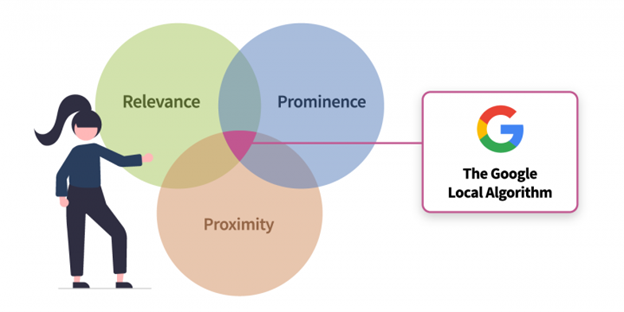
    Google algorithm uses distinct ranking signals to rank the local search results. Ranking signals are the elements that Google uses to determine your position in the search results. Thus it can be difficult for you to jot down where you need to spend your efforts to rank higher in Local SEO. Here are the factors that you should pay attention to, to let Google understand your location, thus improving your chances to rank in the local searches.

    Prominence

    Prominence is about how well your business stands out among others. Here you are trying to tell Google that you are a credible business that can be trusted. Search engines like Google pull data across the web to determine the ranking, thus you need prominent signals to rank higher. Here are some of the important signals that can improve your business’ prominence.

    • Creating and sharing relevant content
    • Having a strong and positive review profile
    • Getting listed in directories
    • Building local links

    Having active social media platforms like Twitter, Instagram.

    Proximity

    Proximity is how far you are located from the person performing the online search. If you are a business that is relevant as well as near, the chances of a good ranking are higher. Location is something you cannot change because it is where it is. What you can do is to show Google your exact location and relevancy so it can rank you higher. For this, you can generate local content, develop local review profiles e.g. Best Pizza in Brooklyn, and get local links.

    Relevance

    The most important ranking signal is relevance which means you are offering what the consumer is looking for. Sounds simple but businesses often go wrong with this factor. To enhance your relevancy, clearly mention your product or service on the website. Use the right keyword that the potential customers are often using.

    For example, if you are a cafe in New York, you have to make sure Google relates your business with different searches like, “Coffee New York”, or “Best coffee in New York”.

    To enhance the relevancy of your local business,

    • Use the related keywords in your website, content, and meta descriptions.
    • Make sure to select the right category of business in the local directories.
    • Use relevant title tags.
    • Add links from other industry-relevant websites.

    How to do local SEO for business?

    Optimizing your local SEO is important to increase website traffic, getting more leads and conversions. Local SEO is a great tool to compete against large brands that spend millions on their marketing. Following are the ways you can make your Local SEO strategy successful.

    Creating Google My Business Account

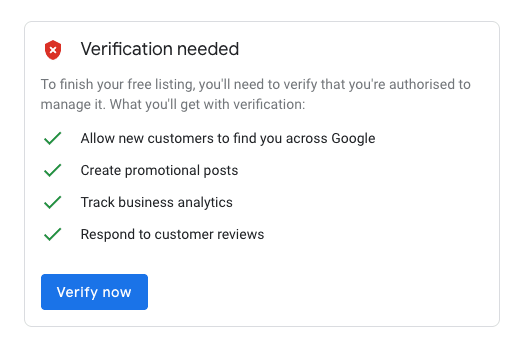
    Google My Business (GMB) is your business profile in Google. Optimizing this profile is by far the best way to rank higher on Google maps. Create a Google My Business Account and complete the Google business profile (GBP) by providing the relevant information such as; your service, contact information, business category, opening and closing times.

    The more relevant and up-to-date profile gets ranked higher in the local pack. According to 82% of experts, GMB is very effective in rankings of local packs.

    Besides factors like Q&As, and Google Reviews which are generated by consumers also adds value to your business profile.

    Keyword research

    Keywords make the most important foundation of local SEO. You need to know what terms your potential customers are searching for to create content around that. Here is why keyword search is very important;

    • It helps you create landing pages focused on searchable words.
    • Helps in finding relevant markets and expanding the business.
    • It helps to find more ways to attract potential customers.
    • A better understanding of the behavior of the target audience.

    For example; You are a drain specialist business in London. But your potential customers might not necessarily search this term. Instead, they can search for phrases like ‘drain experts in London’ or ‘drain cleaning in London’.

    Bing Places and Apple Maps

    Bing is another search engine that can help you improve your local SEO. Though it does not add value like Google maps it has its fair share of searches that you can use for your benefit. Bing is the default search engine of all the Windows 10 devices and it also powers two huge voice search engines, Alexa and Cortana.

    As you can see in the screenshot below, the binge search looks almost the same as Google search. You can even sync the bing listing so it can use data from your GBP.

    Apple maps are the default search engine on all Apple devices and MacBooks so it also has its fair share of searches. According to Statista, 23.3 million users use Apple maps every month.

    Therefore, you need to list your business on Apple Maps along with Google and Bing to ensure that this large number of apple users find your business.

    Local Citations

    Building local citations can help you enhance your local ranking. Citations are the links of local SEO. Whenever your business’s NAP (Name, Address, Phone number) gets mentioned online, a local citation occurs. The more citations, the easier it is to get ranked higher.

    There are different places to build local citations such as; local business directories and social networks. You can opt for different online directories for local citations, but here are some websites which US-based businesses can use;

    For example, if you search “plumber Nottingham” the results will show different business directories that are listing different plumbers in Nottingham. Providing the right information in the directories is very important because 68% of consumers say that they would not buy from a local business if the information provided on the local directory is incorrect.

    On-Page SEO

    On-site optimization is another important ranking factor for local SEO because according to data users trust a business’s website more than third-party apps. Here’s what you can do to improve your on-page SEO.

    • Localize your website by adding your location like region, city, or province name throughout your website content.
    • Optimize your website for mobile users by testing your website on different smartphones.
    • Improve your website’s loading speed because Google does not rank slow sites.
    • Make sure your website is performing well on three core web vitals which are Loading, Visual stability, and Interactivity.

    Link building

    Local link building is an effective way to rank on local searches. It is the process of getting backlinks from the relevant local websites. According to stats, local links have the second most important place in localized organic rankings and the third most important place in Local Pack ranking factors. Also, the link signals make the 27% of the localized organic factor as shown in the pie chart below.

    You can boost your ranking by getting links from the local websites and local organizations such as church groups, neighborhood watch websites, church groups, etc. You can get these value-added links by adopting the right strategy such as; sponsoring events, helping a local charity event, or contributing to the community.

    Reviews

    Your local SEO strategy is incomplete without review building. To ensure high ranking, your business needs to accumulate online reviews. This is quite tricky because customers usually don’t write reviews, therefore you have to make it easy for them.

    • Add links to your Google My Business page on your website, business cards, flyers, and emails that compel customers to write a review.
    • Ask customers to leave a review after each sale or transaction.
    • Reviews are important because;
    • They help in ranking higher in local search results
    • Develop trust with customers
    • Showcase brand’s value

    It’s no secret that online reputation can either make or break your business value, thus you need to create a strong online review profile. This is what a local customer review looks like.

    How to Rank in Map Pack?

    Google Map Pack is the term that describes the location-based search results that appear in front of you on the Google search results page. Whenever the consumer searches “Japanese food Chicago” the search engine shows multiple options with three top highlighted businesses. Each listing has an information summary including location, business hours, logo, and ratings. About 50% of the clicks on the Search Engine Results Page (SERP) go to the Google Map Pack. Therefore this spot can be very beneficial for you.

    Google ranks business on these three spots based on location, quality, relevance, and reputation. And SEO is also a very important factor. Here is what you can do to rank in the local map pack.

    • Connect to your Google My Business Account.
    • Build a strong review profile.
    • Maintain web listings with correct and relevant information.

    How to Optimize Google My Business Listing

    Google My Business (GMB) listing is a very useful tool to leverage your local SEO strategy. It has a great impact on local businesses because it provides ample information to the users like

    • Location
    • Ratings and reviews
    • Business category
    • Business hours

    Here’s what you can do to update and optimize your Google My Business platform.

    • Claim your business profile.
    • Complete your Google My Business account by providing all the relevant information.
    • Publish content and upload new photos weekly.
    • Answer all the queries in the QnA section.
    • Respond to all the reviews on the profile.
    • Add a detailed description of products and/or services.
    • Up-date your business profile now and then.

    These optimization strategies can help you use your Business Profile as a free customer acquisition tool.

    Conclusion

    Local SEO is a great way to enhance your business revenue by implementing localized SEO strategies. If done right, Local SEO can act as a free customer acquisition tool for you that you didn’t know you had.

  • 7 Growth Hacks For You To Boost Your Social Media Marketing

    Finding overnight success is every marketer’s dream. Publishing one post that gives them immense reach, that one tweet that can make them go viral.

    While it is impractical to hope for a marketing strategy that will churn out viral post after viral post and bring your overnight fame (and sustain it), some social media growth hacks for your business can help you kick-start your online success and build your social presence slowly but surely.

    In this article, we are sharing some practical and proven tactics that you can integrate into your social strategy to give it a much-needed boost.

    Read on till the end to find the hack that can boost your social media ROI!

    Social media growth hacks you can start using today!

    The best thing about social media is that it doesn’t differentiate between the rich and the… well, the not so rich.

    It brings equal opportunities for businesses regardless of their scale, size, and marketing budget.

    Even if you don’t have millions of dollars to allocate to your social marketing, here are a few low-cost, high-impact hacks that can help you grow on social media:

    Get creative

    93% of marketers use social media. From this statistic alone, we think it is safe to say that the social media scene is crowded with people trying to fish for attention.

    What makes the situation muddier is that there are an estimated 147,000 photos posted on Facebook, 347,000 stories uploaded on Instagram, and 555 hours of video posted on YouTube every minute.

    So, the social media content arena is saturated. Adding another similar piece of content to the large content pool will not help you stand out.

    So,  you need to get creative!

    Social media rewards creativity, sometimes more than you can imagine.

    One creative, out-of-the-box video can earn you millions of views. A single, fun Tweet can help you get the spotlight not even hundreds of pieces of regular content can bring.

    See what we mean?

    Therefore, the first social media growth hack is to get creative.

    Easier said than done? Not really.

    Creativity cannot be bought with money. It can only be brewed with inspiration. So, put your creative hat on and start looking for inspirations to create a killer Instagram post, an engaging LinkedIn post, or a viral YouTube video, like Dove did for their “You Are More Beautiful Than You Think” campaign.

    Dove, a massive advocate for promoting positive body image, launched this campaign eight years ago with a highly engaging YouTube video.

    Because of how out-of-the-box, intriguing, and insanely creative the video was, it got the brand featured in New York Times, Huffington Post and several other publications, earning it 4 billion PR and blogger impressions.

    But what’s more interesting is that today, this video has mounted a whopping 10 Million views on YouTube.

    We know what you’re thinking.

    You don’t have a budget as huge as Dove’s.

    But all you need for a creative and engaging piece of content is a bunch of creative brains.

    Here’s how a relatively small business, a subscription-based photo service, Chatbooks, won on social media with creativity.

    Chatbooks created a YouTube video perfectly aligned with their buyer persona and communicated profoundly with their target audience, acknowledging their pain points.

    The video launched two years ago acquired 200,000 Facebook likes, and at the time of writing, it has 7.8 Million views.

    When comparing with Dove, Chatbook results seem to be better, no? Did they have a marketing budget similar to Dove? Not likely. They still won with creativity, and you can too!

    Hire influencers

    Influencer marketing is one of the most effective social media hacks for small businesses. Why? Because it is incredibly affordable and supremely effective.

    And the best part is, the affordability is inversely proportional to efficacy. As the follower count drops, the influencers’ services become more affordable, and their impact increases.

    The lower the follower count is, the higher is the bond with their followers and the more influential the message they deliver. That’s probably why influencers with 1000 followers generate 85% higher engagement than those with 10,000 followers.

    Society6, an e-commerce store, collaborates with artists to create and sell fun products. They wanted to drive brand awareness, for which they hired 21 influencers.

    These influencers created 24 content pieces for their influencer marketing campaign, with an average engagement rate of 5.68%. Moreover, the campaign videos generated one million cumulative views, which is significant, especially when the goal was to drive brand awareness.

    However, influencer marketing can unlock your social success only when you hire the right people. And given that 39% of brands struggle with it, finding influencers must be hard.

    If you fear struggling with finding the right influencers, these tips here will help you out!

    Boost your Facebook post

    If you have ever posted on Facebook from your business profile, you must have seen the Boost Post button.

    With organic reach dropping day after day, your posts reach only 2% of your followers organically.

    Facebook Boost Post is the best choice for you if you want your posts to reach more people but do not have the budget or time to build and monitor an advertisement campaign.

    The Boost Post option converts your regular Facebook post into a sponsored post and takes it to more people. In this way, it enhances your reach significantly and earns your post the impressions it needs.

    Moreover, since Boosting Post comes with demographic-targeting, it also enables you to reach not just your followers but more people who may be interested in your offering but are not yet following you.

    Therefore, it drives engagement and brand awareness while being insanely affordable. You can boost your post for as low as 1 USD/day.

    Boosting a Facebook post is super easy as well. All you have to do is go to the post you would like to boost. You’ll see the Boost Post button over there. Tap on it. Facebook will help you with the rest.

    Deploy proven engagement tactics

    An engaged audience drives your social media growth.

    There are many things you can do to develop an engaged community. But for that, you first need a community.

    So, focus on building your social presence and community first. Once you have a substantial following, then you can apply these engagement tactics:

    • Host AMA sessions by coming on live on your social feed.
    • Post interesting polls and quizzes using social media widgets.
    • Create and publish interesting and engaging content, as Starbucks does:

    Check out the engagement on a really simple Starbuck’s tweet!

    The three we have mentioned are not the only engagement tactics you can apply. Again, think out of the box and brainstorm ways you can keep your audience engaged.

    Find what interests them, intrigues them or bothers them, and then create content that resonates with them.

    Always remember, engagement and authenticity go hand-in-hand. So, create authentic content and don’t be afraid to show your human side.

    Check out how Neil Patel takes us behind the scenes on his Instagram:

    Talking about showing your human side, get casual with your followers in the comments section, always listen to what they have to say and be there to help them whenever they need you.

    There is a specific time when most of your audience is online, called social timing. Researches indicate some “best” times to post on social media, but in reality, your social timing varies according to your audience.

    So, experiment with different times to find out your “best” time to post on social media so that your post can get visibility-driving engagement while it is still young.

    Increasing posting frequency and repurposing content also proven ways to increase audience engagement. And there is data backing their efficacy.

    Post Planner, a social media tool, increased its organic reach by 65% simply by increasing posting frequency.

    And MindStream Media Group, a social media marketing agency, drove high engagement rates for one of their clients by repurposing and reusing their content.

    They noticed that the second and third posts on LinkedIn for the same blog generated 197% higher interactions, while tweets with repurposed content had a 214% higher engagement rate.

    Experiment with any or all of these engagement tactics and see which one works better. Then continue doing what worked best.

    Use Visuals

    Our brain processes visuals 60,000 times quicker than textual information. That is probably why the brain needs 1/10th of a second to understand an image.

    These numbers build a solid case for the involvement of visuals in a social media growth hacks list.

    You see, using compelling branded visuals will grab attention. And if these visuals deliver a strong message, that too will be picked up quickly, garnering engagement.

    Consistently creating and publishing compelling visual content will eventually build a strong community that shares your message and drives your growth.

    So, make sure to include visually appealing content in whatever you post on your social media because Tweets with images get 18% higher clicks and 150% more retweets. Similarly, Facebook posts with photos get 3.2x higher engagement. And we all know the relation between engagement and visibility on Facebook. Higher engagement, more visibility.

    The best thing is, you don’t even have to budget in hiring an illustrator or a graphic designer to create your social posts. With social media graphics tools like Canva, you can easily create stunning posts in no time.
    Check out how this Instagram page has accumulated 1.5 million followers simply by creating quote posts that you can make in less than five minutes:

    Use hashtags and mentions

    Hashtags are like social media keywords. If used correctly, they can connect your content with the people who want to consume it.

    For example, you have a travel business and post your newest travel deals with the hashtag “cheap travel packages.” Now, someone jumps on Instagram to find affordable travel deals and types #cheaptravelpackages. This person, who is already halfway through the conversion funnel, will come across your post and be likely to convert.

    So, you see how using a hashtag can drive great results for your business simply by increasing your reach?

    But to truly harness the potential of hashtags, you have to use the right ones.

    Search the trending hashtags in your industry, brainstorm what your target audience could be searching with and then pick the right hashtags.

    Check out how this small business uses hashtags:

    Another way you can drive brand visibility, and experience resulting growth and exposure is by mentioning influential people in your Instagram stories.

    When you mention someone in your story, they have an option of reposting your story on their account. And if someone with a substantial following reposts your story, your brand gets exposure to a significant number of new people.

    Check out how Women’s Wear Daily mentioned Model and Entrepreneur Victoria Beckham in their story, which Victoria reposted:

    The interesting thing to note here is that WWD has 1.5 million followers while Victoria Beckham has 29 million. Since WWD tagged VB, its story reached millions of more people who it might not have reached if VB had not reposted their story.

    Never ignore data

    Data is the modern world’s currency. Therefore, if you don’t use it smartly, you will end up poor.

    Okay, maybe that’s a bit of an exaggeration. But data, especially in social media marketing, is critical because it can tell you what to do, what is working and what isn’t and when to optimize your strategy to yield better results.

    You can use Google trends and other such tools to find out what’s trending in your industry to create content that can enjoy excellent visibility and engagement associated with trends.

    To track the ROI of your social efforts, factor in social media analytics in your social media campaign and track the performance of your content.

    You can also use social analysis to learn more about your audience’s demographics and location and create content aligned with their interests.

    For example, you can create content celebrating the 4th of July if you have seen that most of your audience comes from the US.

    Conclusion

    Hoping for overnight fame on social media is impractical. You need to work for growth that may take time but delivers consistent results.

    The social media growth hacks we have discussed here are all tried and tested to deliver the results you want to see from your social media marketing efforts.

    But remember, consistency and experimentation are key.

    You cannot post visuals one day, see that it did not deliver the engagements you expected and give up.

    Be consistent with the hacks you adopt and continue to test their performance to optimize your strategy and find what works best for you and your unique brand. 

  • How to become Amazon affiliate? With 5 best Amazon affiliate sites examples

    In the digital era we live in, many people earn their bread and butter online. One of the most popular ways to generate cash is to use Amazon Affiliate sites. Learn all about Amazon Affiliates and how you can create one of the best affiliate sites.

    What are Amazon affiliate sites?

    Amazon Affiliate site is a website that is associated with the Amazon Associates Program. 

    When a person buys something through the link provided on these sites, the people running the website (usually the author) earn a small percentage of that money. This commission can range anywhere from 1% to 10%.

    With so many Amazon Affiliate websites, it is impossible to tell which ones are good – mostly do it for the money.

     Most people will simply give the links to those products which offer them high commissions. These websites do earn some money in the short run, but when it comes to generating consistent leads, they are not even close to those Amazon Affiliates which give unbiased reviews.

    Common thing among all the top Amazon Affiliates

    No matter what the niche is and how saturated it is, only those Amazon Affiliate websites succeed in the long run, which has this one common property. There is only one secret method to succeed in this field. Put simply; your website needs to have integrity. If you go for making money in the short run, you will greatly damage your reputation and potential to make more sales.

    What do I mean by having integrity? For whatever product you give reviews, make sure that your reviews are unbiased.

     Even if a specific product is giving you a high commission, but it has a lot of flaws, do not ignore the flaws just to get some commission. Sure, you may sell some of those; in fact, you may sell many of those. However, the customers who buy those products will never come back to you. Those potential long-term customers are no longer your customers. 

    Getting a little bit of commission but retaining your reputation and name is much more effective than selling some high commissioned products.

    With that being said, there are quite a few things that come into play. First, we’ll take a look at some of the most successful Amazon Affiliate stores and what made them successful. In the end, we will take a look at some Amazon Affiliate marketing strategies that you can use to get your program to generate more sales.

    5 Best Amazon affiliates sites

    Here’s a list of five of the best affiliate sites:

    1. PC Mag

    PC Mag has dominated the PC industry. Be it anything related to games, laptops, or computers, PC Mag has proved itself to be the king. PC Mag’s strategy is simple but effective. First, they connect with their consumers emotionally. 

    Created by Bunnel, Jim Edlin, and Cheryl Woodard, PCMag was originally a bimonthly magazine. But, over time, it earned its reputation and earned its name. Now an affiliate site, it still covers every tech-related thing. 


    Their unbiased and in-depth reviews make them one of the best Amazon Affiliate websites when it comes to technology (specifically computers).

      2. Dog Food Advisor

    This website is nothing fancy, unlike your expectations. But, if you’ve ever come across this site, it’s impossible to tell at first glance that it is one of the best Amazon Affiliate sites. 

    Interestingly, this website is really specific; it only writes on a specific topic in a specific industry. However, it has its priorities straight. Dog Food Advisor is what you would call an industry expert. 

    Every amazon affiliate follows a strategy that is responsible for its success. Dog Food Advisor follows one, too (which we will look into in the later section of this blog).


      3. Wirecutter

    Wirecutter is the opposite of Dog Food Advisor. Instead of focusing on a single item in a specific niche, it covers everything essentially. It is even said there’s nothing you can’t find about on Wirecutter. In addition, Wirecutter shows that you do not have to dig deep in one niche only – digging into multiple niches pays out as well. 

    By not covering only a single niche, it was very hard for Wirecutter to build its credibility. One might perceive The Wirecutter to be greedy because it covers everything it can get its hands on. However, that is not the case. 

    Assuming that is true, they would try to sell the most selling items on Amazon because doing so would simply bring them more cash. However, upon careful analysis of the website, you will find that not all of their recommended products are best-selling ones on Amazon.

     They follow the one principle of providing their readers with the best products – not the ones which could bring them some cash.


      4. Outdoor Gear Lab

    As the name suggests, this Amazon Affiliate covers outdoor gear. This follows a similar model to that of Dog Food Advisor. 

    By focusing on a single niche, you do limit your growth in the short run, but this pays off in the long run. Writing in one single niche has many benefits; you become an expert in that field and earn the trust of industry-level experts. 

    Earning the trust of industry-level experts is much more important than earning the trust of a few people (who can’t help you generate leads) for a short span.


      5. Home Grounds

    This is a website that focuses solely on homemade coffee – how to brew better coffee. One might think that coffee brewing can only be covered for so long before hitting a dead end. However, once you decide to go all out, you start finding so many things you would have never thought of as a regular customer. 

    Something as simple as coffee can have so many aspects to it; the possibilities are endless.

    Home Ground does not just go around implying the message that they are just there for the commissions. They teach baristas how to make better coffee and cover many more aspects than just the “Best [Coffee Type].” They provide value to their customers.


    Top Amazon affiliate’s strategy and their business models

    Every business uses a different strategy to get to the top. That doesn’t mean some are wrong and that some are right. To know what truly got a business to the top, one must analyze the A-players of that industry.

    Let’s take a look at the business strategies of these Amazon Affiliates.

    1. PCMagazine (PCMag)

    PCMag started as a magazine (as suggested by its name). By engaging its readers by giving them everything, they could possibly read, PCMag had created its name in the tech industry before the internet boomed. This prevented them from having to start from scratch. 

    We can learn from PCMag that by establishing your presence in a niche that hasn’t bloomed, there are high chances of success if that niche blooms.

    1. Dog Food Advisor

    Dog Food Advisor has succeeded by focusing only on a very specific topic. “Pets” itself is considered a specific niche.

     Dog Food Advisor took that two steps further: it went deeper not into the dog’s category but also by targeting a specific dog product. 

    “Dogs” may seem like a narrow term, but to your surprise, it has a monthly search volume of around …..

    We can learn from Dog Food Advisor that focusing on something extremely specific is crucial for your Amazon Affiliate to be a good one. 

    1. Wirecutter

    The Wirecutter, the polar opposite of Dog Food Advisor, shows us that choosing one niche and sticking to it is not the only thing that counts when it comes to making a good Amazon Affiliate website. Unbiased reviews, regardless of commissions, are the key to success in this field.

    1. Outdoor Gear Lab

    This one follows a model similar to that of Dog Food Advisor. A person searching for outdoor gear is most likely in shopping mode and looking for items with the best value for money. Again, user intent is taken advantage of in a brilliant and smart way by them.

    1. Home Grounds

    By engaging with their readers and conveying them the message that they are not just there to sell their products to their readers, they develop feelings of trust between them and their readers. People buy from where there is trust. 

    Bottom Line

    Upon understanding the business models of these top Amazon Affiliates, one will conclude that the following are essential ingredients to brew a good Amazon Affiliate website:

    • Unbiased reviews;
    • Specific niche; and
    • Trust (through how-to guides and blogs)

    So, if you want your Amazon Affiliate Program to succeed, you must adhere to these basic principles religiously. 

    What convinces you to buy something online (from an affiliate link)?


  • How to update Google My Business Listing?

    If you are an entrepreneur and handling your business website yourself, you must be aware of the Google my business listing. Then, you being the business owner, can decide if you want to close the business or end it temporarily. 

    In both cases, you need to update the business status in Google My Business listing. You can either permanently close or simply delete the business from Google Map (meaning a temporary shutdown). And this is one of the most asked or discussed questions nowadays. 

    People who switched between businesses but still have all businesses listed on Google Maps are confused about managing their business listing of Google. It is tricky but once you understand the concept of Listing, managing your listings will not be a problem anymore for you. 

    It is said that 49% of businesses from the United States have received 1k views on Search per month. That’s huge. 

    Different industries have different search-per-month impact factors. But everyone is happy with their identification on Google Listings. 

    This growth is then reflected to be a 5% increase in website clicks. In a time of 1 year, i.e., Q4 2017 and Q4 2018, 38% of business searches grew with the help of Google Listings. In addition, 29% of website accessibility increased due to Google Listings. 


    All these statistics are super existing, but the real question is, should you display your business even when you have shut it down (either temporarily or permanently). 

    The second question you should be very careful of is, what if a wrong business listing is done as if someone is pretending to you and illegally reflecting your business? What to do in this case.

    To avoid any suffering in your business, you need to be very careful with your Google My Business listing, and this is what we will be discussing today in this article. 

    Let’s dig in and understand how to erase or edit a business listing on Google. 

    You can use multiple scenarios, and we will be discussing many of them with examples. First, however, there are three main categories in which you can change your business listings on Google maps. Following are the details:

    1. You have the authority to verify an Unverified Listing in your account to control its activities. 
    2. You can un-verify a previously verified business listing in your account, which doesn’t need to reflect any activities.
    3. And then comes the listings which you are interested in controlling but can’t as other people are controlling these. 

    These are the three main types of actions you can do with Business Listings in Google Maps. But these actions are not just limited to these three action types. These can be further split down into 5 more categories. 

    But, first, let’s try to understand these three main activities. 

    Verify the unverified Listing

    It means that you are interested in controlling an unwanted listing as it is marked unverified in Google Maps. You can easily do that by following Google’s instructions for verifying a listing. However, to successfully verify this Listing, you need to ensure a couple of things:

    1. You don’t change anything related to the Listing (name, address, or business type) until Google sends you the verification postcard.
    2. Be patient with getting a code for verification. Don’t reapply.


    Once you have received the postcard and the Listing has been verified, you can now enjoy the liberty of managing the Listing as per your requirement.

    Unverified the previously verified business listing

    Why would you be doing that? First, you need to understand that any non-operational business should be immediately unverified from your Google Map listing. 

    This doesn’t mean that you will be deleting your whole account. It only means that you are removing a business from Google Maps.

    Why is it important? It is important to let your customers know that your business is not operational anymore to avoid any hassle. 

    This would also mean that you now no longer want to control that Listing in your Google business account. You can do that by simply going to your info tab in the GMB dashboard and click remove the Listing, select the Listing, click the checkbox, and hit delete account. 

    Once this is done, please note that now this Listing can be verified by anyone else and is available to be owned and controlled by anyone. 

    Listing which you are interested in owning but are already verified and controlled by others

    The process of owning a verified listing that is already in control of someone else is not as complex as it sounds. It’sa rather very simple procedure consisting of a Google-defined procedure. All you need to do is to follow Google’s guide for requesting the ownership of a Business. And click request ownership.

    Google will contact the owner, and if no response is received, Google will let you verify the Listing. Thus you will be the owner of that unwanted Listing verified in your name. 


    Let’s talk about some of the other possibilities through which you can get benefit from owning or disowning a listing on Google Maps.

    Duplicate Business listing

    The address is one of the most common factors in listings. And as it is directly affecting Google Maps, you need to be very clear about that. But this doesn’t mean that you can’t have more than one business outlet. They can be at two or three different places across the city. 

    This leads to the discussion of having a duplicate listing of your business. Of course, not every business will require a duplicate listing. But restaurants, bakeries, hospitals, and retailer-based businesses are more likely to use duplicate Listing. 

    Another factor in duplicate Listing is that industry that provides you services at your customers’ doorstep. Follow Google’s guide to having a service area listing in this situation. 

    Unwanted Listing for a Multi-Practitioner Business

    Let’s assume that you are a law firm, which means you will have multiple lawyers working in your firm, and every one of them has listed them on Google Maps along with you listing your organization. Now, this is all a duplication scenario all over again.

    In this scenario, what you can do is ask your employee to let you control his Listing. In case he has moved to another office or another location, then you can change the information yourself. But if in case the employee is deceased, then regretfully inform Google of the obituary and get control of that Listing. 

    When a Business Moves

    In case you have decided to shift to a new location, just update this information on your website along with clear driving directions. Also, update your listing address in the GMB dashboard. Please avoid creating a new listing. It will only make your customer confused and will not help you in any way. 

    Permanently Closed

    In case your business listing is marked as permanently closed, then it is advised to please unverify the Listing from Google Maps. 

    Fraud or Spam listing

    You should always be on the lookout for fraud or spam listings. You can identify this by observing the tactics and business shifts in between your competitors. Once you have the evidence that a fraud or spam listing is affecting your business, then do the following:

    • Search for this Listing on Google Maps
    • And then, you have to Click the “suggest an edit” optional link
    • Select and Click on “yes.”
    • Scroll down and select the radio button “spam” and hit enter
    • If Google finds this a fraudulent listing, you will be notified via email 

    Bottom Line

    Being in control of a listing or un-verifying your listed business holds the key importance for your business. Your Google business listing needs to be updated at all times to keep your customers updated with your contact details. 

    In case you are moving or merging or expanding or may be temporarily or permanently closing your business, your Google Listing helps you keep your customers updated. If it is updated, it will help you in growing your business rather than affecting it. 

    This article discussed three core listing options and a couple of other subcategories, which you can also further split into many more. But this is the baseline for optimizing local seo your small business.

    Are you still confused about Google My Business Listings? 

    What makes you believe that outdated Listing on Google Maps will help you grow your business? It is very hard for me to believe that you are still not convinced to update your Google My Business Listing information. 

    But amuse me as I am interested in knowing your reason for not using Google Listing in your favor, even after reading this article.


  • 6 Ways to Create More Social Content with Less Effort

    Stay active on social media. Post more often. Keep your audience engaged. This is the advice you must have heard when stepping into or managing your business’s social networks.

    But as a social media manager, posting often, staying active, and engaging your audience is easier said than done. Because all of this requires content, and not just any content, but good, engaging, and valuable content. And how can you create that every day without dedicating your entire life to social media?

    We’ll show you how.

    In this article, we are revealing some insightful ways you can create excellent content without much effort to keep your social media feed fresh and your audience engaged.

    Let’s dive in.

    Why do you need more social content?

    As a social media marketer, you already know you have to post often on social media. It has been drilled inside your brain, and the thought now runs in your veins. But have you ever wondered why you need more social content?

    Higher Conversions

    98% of marketers believe they make sales through social media. But to make a sale, you need an engaged audience so that you can convert your followers into leads and then funnel them through conversion. And to engage your audience and keep them engaged, what do you need? You guessed it. More content!

    When you post content more often, you increase your brand’s exposure to people. They become more aware of what you offer. Basically, you bring them into the top of your conversion funnel. And when the need arises or is triggered, they immediately think of you and turn into qualified leads, which are then easier to convert.

    Higher output greater engagement

    A fully engaged customer has a 23% higher share in the revenue. Why? Because engaged audience converts.

    Additionally, increased engagement enables you to build a community of your trusted customers to whom you can reach out for feedback and enhance your brand’s approach and boost customer loyalty.

    Keeping your audience engaged with good quality content enhances their brand experience, and 86% of people are willing to pay more for a better experience. Do you see how important it is?

    When you post content more often, you allow your customers to engage with your brand. With each content that goes live, your brand wins a chance to get likes, shares, comments, or retweets out of your existing and even new customers.

    More content, more data

    A successful social media marketing strategy is defined by social media analytics and data. You can estimate the importance of social analytics by the fact that 81% of businesses appear to use social publishing and analytics tools.

    You publish a post and then track its metrics to see how well it has performed with your audience. If it did good, you do more of what you did in that post. If it didn’t do like you wanted it to, you would optimize your content strategy.

    This means social media content is a source of critical data that helps optimize your social content strategy. The more content you post, the more data you can extract and optimize your strategy to create content that resonates with your audience and keeps them engaged.

    Improves customer satisfaction

    Do you know what your customers want? 64% of people surveyed claimed that they want brands to connect with them. And what’s better than social channels to reach out to and connect with your audience.

    As discussed above, high-quality content keeps the audience engaged, and when it keeps on coming regularly, it builds a connection between the brand and its audience. And since customers want you to connect with them, doing exactly that will boost customer satisfaction.

    Now you know why you need to post more content on your social media channels. Great. But where exactly do you bring ideas that can keep your content stream flowing like a fire hose? Let’s see how.

    How to create more social content?

    Creating social content can easily open a rabbit hole and suck your time away. You can spend days on end researching content ideas and creating social posts. But that’s not an efficient way to approach social media marketing.

    Here’s how you can craft excellent social posts quickly, and use the saved up time to boost your business, brainstorm ideas, or simply relax:

    1-      Get organized

    All time-saving methods start with getting organized. It helps you see your tasks clearly and work on them on dedicated times to save your entire day from being spent on doing one thing only.

    So, create a schedule and set aside a specific time in the day to focus on generating social media content ideas and creating social posts. Have a separate time slot for analyzing your posts’ performance and invest in a social media analytics tool that can help you assess all your social posts’ data through one comprehensive dashboard.

    When you have time slots dedicated to each task and a time limit to complete these tasks, you are likely to experience a boost in your productivity and get them done quickly.

    Secondly, create a content calendar to see which post will go live when and schedule all your posts using a social media publishing tools.

    In this way, you will be able to see how your content looks when arranged in subsequent order, and you will not have to worry about logging in to your accounts every time you need to post.

    Organizing your schedule and integrating an automated social publishing tool will help you stay focused and avoid wasting time on unnecessary research. All your tasks will be segregated, your content arranged, and ready to go.

    If you think this approach is useless in driving results for your social media, think again. Think results marketing, a social marketing agency, brought excellent results for Lazarex, a non-profit Cancer Foundation.

    They developed a strategy that included scheduling and creating a social calendar. And with this strategy, they saw a 242% increase in their Facebook reach, a 553% increase in Twitter reach and a 200% increase in engagement.

    2-      Collect content ideas

    Content idea generation is the most challenging part of a social media content strategy. You open link after link, go through post after post to get inspiration, some relevant post, a quote, but end up with nothing. This wastes a lot of time and drains all your energy.

    So, Neil Patel, the digital marketing guru, suggests collecting content ideas as you go. For example, you are scrolling your Instagram, and you see a cute cat video that you think you can repost on your stories later in the week. Save it for use later.

    Create a content collection system where you can save all the posts, links, and pictures etc., that you’ve found share-worthy.

    Neil Patel uses the Evernote app. You can too.

    Dedicate a part of the day to collect content ideas for the entire week. For example, Monday 10 am to 12 noon is your idea collection time. In this time, go through your social accounts, rummage through Google news to find relevant pieces you can share later on, and look through YouTube to find inspiration that can keep your stream running.

    Save whatever content you find in this period on a different folder, and then schedule it to go live on your feed as it is. Or use it as an inspiration to quickly create your own content.

    Completing the research beforehand and having content ideas handy help you create exceptional content effortlessly.

    3-      Repurpose your existing content

    You spend hours upon hours creating and perfecting a social post, only for it to be missed by your target audience. What do you do? Flush your efforts down the drain? No! You reuse this post.

    50% of your articles receive eight or fewer shares. If you have posted something on social media, that doesn’t necessitate that your audience has seen it. Most of the time, they just scroll past it. You have to make your peace with these facts and use them to convince yourself to reuse your existing content.

    There are many ways you can reuse and repurpose content.

    You can either share the same blog post multiple times, share the same tweet again and again or convert a blog post into an infographic.

    When it comes to repurposing, the ideas are unlimited

    And repurposing does not only provide you with more content to post. It also helps convert visitors because repurposing helps re-targeting your audience with a post, and there’s a 70% higher chance of converting re-targeting visitors.

    Let’s explain it with an example.

    Say you created a blog post that did not get too many views. Instead of wailing about lack of views, you reshared the blog post after some time, and it came across people who saw it the first time but scrolled past it. Now, when they see it the second time, they’ll be intrigued. They may scroll past it again. But when they see it the third time, they’ll be compelled, almost convinced, to click it.

    So, never ignore the power of repurposing. However, tread carefully with reusing content. You don’t want to come off as spammy, annoying, or lazy.

    4-      Leverage user-generated content

    Customers are 2.4% more likely to view user-generated content as more authentic than brand-curated content. And that’s your cue to rope in your users and leverage UGC to keep your feed brimming with authentic and compelling content without much effort. Or no effort at all. There are many ways you can build upon UGC. You can use your customer reviews and post them on your feed with a compelling caption. Or ask your users to take pictures of your products

    and share them with a branded hashtag that you can reshare. Or you can hire influencers to create content for you in exchange for complimentary products (nano influencers may do that, you know).

    Here’s how Doritos Canada leveraged UGC with a branded hashtag:

    Just make sure to always ask permission before sharing a user’s content and give something in return. For example, you can announce a giveaway contest where the user who created the best branded content wins something. That’s what GoPro did, and it worked wonders for them.

    GoPro has always leveraged user-generated content. Their Instagram feed is flooded with content sent in by their customers.

    However, at the launch of their Hero8 black and max camera, they started the GoPro Million Dollar Challenge. They asked their users to send in videos shot with Hero8, and all the best video creators will get an equal share of a million dollars.

    At the end of the campaign, they created a promotional video by compiling all the user-generated clips and used it on their social channels.

    This campaign did not only drive higher sales for the new camera, but it provided GoPro with video content that won them the Shorty Award for Best UGC and, not to forget, lots of free publicity.

    Check out their YouTube views:

    5-      Host an AMA

    AMA or ask me anything is a customer or followers engagement tactic native to Reddit. But it has now gained popularity among other social channels as well.

    Facebook and Instagram have made it a lot easier for their users to host AMAs. Instagram users use the “Ask Me A Question” story widget to collect questions from their followers and answer them on their stories. This gives them a massive collection of content to keep their audience engaged.

    You can plan and launch an AMA campaign in the same way by collecting the questions beforehand through your social channels. Or you can announce that you are going live and, if you are brave enough, field the questions live.

    Just make sure to promote your AMA properly, prepare for it, and brainstorm some FAQs that you can answer in case no questions come up (embarrassing).

    Hosting AMAs requires minimal effort and is an excellent way to keep your community engaged with authentic and valuable content.

    6-      Use Memes

    If you think meme marketing is a fad, you are mistaken. Memes have taken business social media by storm, and big social media profiles have started using them as an attempt to keep their audience entertained and engaged.

    Memes are unmatched when it comes to low-effort content. The template is already there. You just have to fill it in with relevant text. And that too has been made easy with tools like Canva.

    You can create memes relevant to your brand or post random memes here and there to engage your audience, help them see your human side, and build a connection.

    Here’s how dog products and services provider uses memes:

    Just be sure to create original content, even if you use one of the stock memes images. Stay on brand and avoid foul humor, and your audience will love you for your meme marketing!

    Here’s how we created a meme in under five minutes using Canva:

    Conclusion

    Many social media creators struggle with keeping their feed fresh with authentic and valuable content. And rightly so, because creating such content requires extensive research and smart creation tools.

    But, there are content ideas that you can execute to keep your social profiles brimming with interesting and engaging content without too much effort or investment.

    You can repurpose your existing content, leverage user-generated content, or even include memes in your content strategy.

    No matter what you do, always begin with getting organized by creating a content calendar and scheduling your post. And collect content ideas as you see them, so you don’t burn your time and energy in content research.