Blog

  • How to Get More Social Shares on Your Blog

    The efforts you invest in a blog are returned only when it has views. And you get ROI-generating views once you have sufficient web traffic. But if you rely solely on search engines to bring you traffic, you will be disappointed.

    You have to make sure that your blog content gets shared across multiple platforms to attract sustainable web traffic and achieve appreciable views.

    And while sharing your content from your own social profiles is a great idea, you have to reach a broader audience to see real traffic and incredible interactions.

    To make sure that your readers share your content with their friends and consequently increase your exposure and clicks, you have to create content that’s so irresistible that your readers can’t help but share.

    You have to make your content shareable.

    In this article, we will show you how you can create a blog post that’s worth sharing. But first, let’s talk about why you need to focus on increasing your shares.

    Why should you care about getting more social shares?

    When your website visitors share your content on social media, more and more people get to know about you. If your content is good, an increasing number of people begin to trust you as a thought leader, and you are likely to experience a spike in social engagement.

    But if all of these reasons are not enough to convince you of the importance of social shares, here’s a bunch of more reasons as to why you should care:

    Provide social proof

    We have talked about social proof in another blog and have mentioned how social proof compels people to convert.

    Social shares provide you with social proof, which validates your business in the eyes of its prospects. When people see that thousands of people share your content, they immediately think of you as a value provider.

    And in an age where 54% of people turn to social media when researching products, people coming across your content and noticing the high number of shares can prove to be highly profitable for your business’s bottom line.

    Track the success of your content strategy

    48% of marketers use social shares as a metric to track the success of their content strategy.

    Why?

    Because social shares can reflect the value of your content, if your content succeeded to compel a large number of people to share it, that means you must have done something good. However, if it fails to garner an appreciable number of shares, you need to optimize your content strategy.

    Share increase engagement

    You know, beyond an ounce of doubt, that you need to engage your social media followers to get them through the conversion funnel.

    Social shares can help you drive engagement. How? Let’s explain with an example.

    Say that you have written exciting content and manage to get a couple of social shares on it. Now, the friends and followers of the people who have shared your content come across what you’ve written, engage with it, like it, and may as well share it.

    Do you see how one share can trigger a chain reaction and generate increased engagements? Now imagine the engagement and reach of your content if a single share is multiplied by a thousand!

    This was a made-up example.

    Now, let’s consider a real-life case study in which a brand experienced exceptional engagement and awareness metrics along with social shares.

    Heinz, a food processing company, launched a new product, five new flavors of beans and to promote it, they created a Facebook quiz named “which bean are you?”Since people enjoy taking these silly quizzes, and Heinz offered a goody bag for people who shared it, therefore, their Facebook quiz quickly generated 10,000 shares.

    Along with the massive number of shares, they also got 22,000 likes and reached around 11 million people.

    We suppose we can attribute the likes and reach in this case study to the massive number of shares.

    Do you think the quiz had reached that many people or generated such likes had it not been shared 10,000 times, to begin with? We don’t think so.

    Get your message across

    In a survey conducted by Harris Interactive, 82% of the respondents admitted they ignore online ads.

    In an era where online ads have become invisible, social shares help your content and hence your brand name be seen by people who matter.

    When your content generates more social shares, it does not only drive brand awareness for you. But since people are more inclined to check out the things shared by their friends, the number of web visitors is also likely to increase.

    Increases web traffic

    9/10 marketers believe increased web traffic is one of the benefits of social media.

    Social shares can help you tap into the 3.5 billion huge social media crowd and bring some of it to your website.

    In this way, your website sees growth in visitors, and you have a more significant number of leads to drive through your sales funnel.

    Social media strategist, Rachel Beany, tackled the challenge of increasing her client’s web traffic and sales by leveraging social media. She focused on creating compelling LinkedIn posts, and as a result, managed to improve the website traffic by 800%.

    Steps you can follow to get more social shares

    The folks at OKDork conducted research in which they found that only 10% of the 1 million articles analyzed had over a hundred shares. And it got worse when they discovered that the articles with more than 10,000 shares formed only 1% of the group.

    Here are a few tips that can help you create content that avoids the unfortunate 89% and ranks in the better-performing 11%:

    1-      Get more readers

    Before you can start getting those shares, you have to make sure there are a good number of people visiting your website and reading your blog. Because readers will ultimately become sharers, right? Right.

    If you have a healthy amount of readers already, feel free to skip ahead.

    But if you need help building your website traffic, here’s what you should do: email marketing.

    Here’s what marketers think are top benefits of email marketing:That’s right. Email marketing, with an appreciable conversion rate of 15.11%, is the best way to attract more visitors to your website and generate leads.

    We have already written an insightful blog on successful email marketing, so we won’t go into much detail here.

    Just remember, whenever you publish a new blog, inform your email list subscribers of it. In this way, you will have a wider distribution of content and better chances of increased traffic.

    But wait. Where do you get email subscribers from?

    You can either ask for an email address when people are exiting your website. Or, you can use pop-ups asking for your visitors’ emails, in exchange for something valuable, like a case study or an ebook.

    2-      Choose a relevant topic

    Say you are a sports enthusiast. Will you ever consider sharing a post from, say, Kylie Cosmetics? No. Because that won’t be relevant to your interests.

    Therefore, you have to focus on creating relevant content so that your target audience has a reason to share it on their social handles.

    Apart from creating relevant content, focus on following the trends as well.

    Cashing in on trends can help you ride the high wave and tap into the masses talking about a particular topic at a given time.

    You can use social media tools to help you with social listening and stay informed of what your target audience is talking about.

    Then create content on what you know your prospects will be interested in, and the shares will come easy.

    Playstation, a gaming console brand, has a blog to talk about relevant news and stories that its audience might be interested in.

    Check out the engagement on the blog post, even though it is barely a few days old at the time of writing.If PlayStation hasn’t convinced you of the importance of relevance, this case study will.

    Porch, a home improvement brand, wanted to improve their visibility, and for that, it teamed up with Fractl to drive traffic to its website.

    Fractl created content relevant to Porch’s audience, solved their problems, and resonated with them.

    As a result, they attracted 20,000 monthly visitors, 37,000+ social shares, and more than 3500 mentions.

    Do you see how relevant content influenced shares?

    3-      Create a compelling title

    61% of the consumers say that they have purchased a product after reading a blog post about it. But to make your consumers read the blog post and then take action – share it or buy from you – you have to get them through the door first.

    Given that 8/10 people only read the headline, you have to make sure it is a good one that compels them to click through and read your content.There are a bunch of best practices for writing compelling, “click-worthy” titles. We are listing some of these here for your convenience.

    Title length is most important because longer titles are at risk of being truncated. The ideal title length is up to 56 characters.

    However, the folks over at Backlinko found that titles with 14-17 words generated 76% more shares than shorter headlines.

    Try and write a title that summarizes the entire article and tells the reader exactly what to expect.

    Example of such titles:For example, when writing about compelling blog titles, instead of going with the title “blog titles”, try and come up with something like “3 tips to help you write compelling blog titles.”

    Notice how we have used a number in the example title above? That’s because titles that start with a number (an odd number, to be more specific) tend to generate higher clicks.

    Moreover, Backlinko also found in their study of 9 million headlines that the ones ending with a question mark attracted 23% more shares.

    Write headlines that are action-oriented and contain an emotional trigger. For example, “23 unbelievable statistics about social media” or “This is the saddest thing you’ll see on the internet”, like people at Buzzfeed are known to do.Finally, never promise in the title what you can’t or won’t deliver in the article. Experiment with different headlines to see which one works best and then stick to it.

    4-  Focus on creating long-form content

    As opposed to what you may think, long-form content – content exceeding 2000 words – performs better than its short-form counterpart.

    It not only generates 9x more leads but also offers better SEO performance, garners greater engagement, and delivers more value than short-form content.

    This is why 54% of bloggers claim that they have seen good results with content exceeding 3000 words.

    So, aim at writing long-form content, which packs a lot of value within it. So that the reader reads it, finds it useful, and shares it on their social media.

    If you think all of this is a fad, here’s a case study to prove all of what we have said above about long-form content.

    AZ family dental, a dental clinic, created four long-form articles to boost their website performance. One of these articles, titled “21 famous people who had cosmetic dental surgery”, received 140 social shares and more than 4000 views.Notice how the title starts with an odd number and has the word “who”?

    So, it’s time to put your research hat on and get to churning out longer content. But remember, never exchange quality for quantity. A 500-word valuable and informative article is a zillion times better than 3000 words of fluff.

    5-  Increase content readability

    The good news is, if you deliver value, people will be more likely to share your content. The bad news is no one reads the entire blog. Most people just skim through it.So, you have to pack value in a way that even skimmers don’t miss it out.

    You see, a person spends 37 seconds reading a blog. That means you have to deliver value within this time. And to do that, you have to make your article easily scannable and highlight the informative points.

    Use large headlines and shorter paragraphs to make your content skimmable. Try and use bullet points because they make the content easier to read.

    Finally, optimize the readability of the blog post using tools like Grammarly and Yoast SEO.

    Here’s the readabilty of this blog:

    Promote your content

    Once you have created a shareable blog post, the job isn’t done. Now it’s time to promote it. How will people know that you have done a fantastic job unless you tell them?

    Share your blog post across all your social channels.

    But make sure to add a catchy caption along with the blog post when you share it on social media and include a sneak peek into what the article offers

    Check out how Brian Dean’s social engagement changed when he started writing powerful captions for his blogs:

    6-  Use social share buttons

    You’ve done everything to get your readers to share your articles. But if there are no social share buttons on your blog, how do you expect them to share it?

    Don’t forget to include share buttons for your social media handles so that your readers have a way of sharing your articles with their friends.

    Try and make the sharing process as frictionless as possible. Make sure your social share buttons are not stuck at the beginning or end but move with the scroll. So the user can quickly locate them.

    That’s how Neil Patel’s social share icon’s move with the scroll:Include a compelling caption that the readers can use as they share the blog, and make sure that the colors of your share button match the colors of each platform so that users can identify it quickly.

    Activate a share counter once your shares hit an appreciable amount to leverage social proof.

    And, to give your shares a head start, ask your friends, family, and followers to share your content on their social handles.

    Conclusion

    Blogs are your business’s valuable investments. To make sure that they serve their purpose and generate an ROI, you have to leverage social shares so that your blogs reach a broader audience and become a source for increased web traffic.

    A piece of content becomes shareable when it offers something valuable to the user. So, pack a lot of value in your content and make sure that the title you use reflects it.

    Pay special attention to your blog’s readability, and don’t forget to add social share buttons.

    As a final note, don’t forget to track the performance of your blog posts, so you can find out what works and double down on it.
     

  • How to Find Social Media Growth as A Small Startup?

    Ruling the social media platforms is the ultimate dream of every business owner. But with these networking platforms getting crowded day by day, it isn’t easy to stand out from the rest without creating amazing content.

    With millions of dollars in their marketing budget, the bigger brands go high and beyond and gain a lot of attention by pulling obnoxious social media marketing stunts – like hiring anyone from the Kardashian – Jenner clan to endorse their products.

    But being a small business owner, can you afford such marketing stunts? Of course not!

    So, how can you harness the powers of social media and use it to grow your small business? Let’s find out!

    Can Small Startups Make It Big on Social Media?

    So, do small businesses stand no chance on social media? Don’t be silly!

    The best thing about social media is, it doesn’t side with the rich. That means it offers a level playing field to all businesses, big and small, and provides them with fertile grounds to grow their business.

    The essence of social media growth is creativity. If you can hatch some out-of-the-box content ideas and mix them with an understanding of your target audience, you can experience social-media-driven business growth without emptying your pockets.

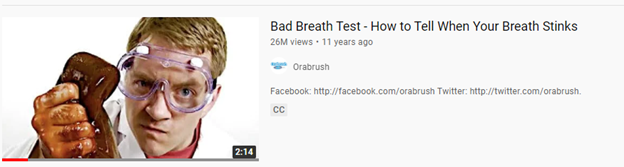
    A great example of how small businesses made it big through social media simply by doing something different is Dr. Bob Wagstaff’s Orabrush Tongue Cleaner startup.

    In 2009 Dr. Wagstaff turned to YouTube, a relatively young and untouched-by-marketers platform, after sinking $40k on television ads and generating no return.He launched his brand on social media with a quirky and hilarious video that took a little over $500 to shoot.

    The result? His video went viral.

    Why? Because it offered something fun and unique.

    Within a year of his success on YouTube, Orabrush closed millions of dollars worth of sales, and the small business experienced unprecedented growth.

    Of course, this is over a decade ago. The social media scene has evolved dramatically since then, and what worked back then won’t work the same way today.

    So, what can you do to help you find success through social media today? Take a different approach. Let’s see how.

    How Can Small Startups Find Social Media Growth Today?

    Social media is great for marketing. But what’s not so good is the fact that everyone has now discovered this “growth hack.” Social platforms have become advertisement channels, with businesses having a small marketing budget struggling to gain traction.

    Here are a few time-tested growth hacks that you can leverage to develop a social media marketing strategy that generates tangible results:

    Influencer Marketing

    More than 67.9% of US marketers are expected to invest in influencer marketing this year. That means something ought to be good about it, right? Right.People trust the people they follow. They are more inclined towards buying what their favorite influencers recommend. And that’s one of the sole reasons why influencer marketing is a massive success.

    Another great thing about influencer marketing is that its efficacy increases as the number of followers of an influencer go down. Yes, down. That’s not a typo.

    So, it is excellent for small businesses with a limited budget.

    You see, a micro-influencer with 10,000 followers may have a smaller reach than Kim Kardashian with her millions of followers. But what the former has, and Kim doesn’t, is a tight-knit community of highly engaged followers.

    That’s the reason why micro-influencers offer 60% higher engagement and 20% more conversions than macro-influencers.

    Additionally, you can hire the smaller influencers with only a fraction of the amount needed to hire celebrities for marketing campaigns or creating TV ads.

    Therefore, influencer marketing makes for an excellent channel for driving conversions and brand awareness, even if you have a reasonably limited marketing budget.

    But does it work? Here’s a case study to help you find out.

    Youfoodz, an Australian fresh food company, wanted to promote the launch of their winter menu. For this, they decided to give influencer marketing a go.

    They teamed up with 81 influencers who created 167 content pieces. Their influencer marketing campaign generated:

    • More than 70,000 direct engagements
    • 500,000 impressions,
    • and reached 1.5 million people.

    Do you still doubt the efficacy of influencer marketing?

    Gamification

    Leveraging human psychology for social media is a sure-fire way of success, and that’s what gamification does. It plays with minds and alters user behavior. That’s why 93% of marketers love it, and it has become a billion-dollar industry.

    Now, why should you care? Because you are looking for driving social media success and gamification can help.

    You don’t need to hire big gamification companies to leverage its potential. All you have to do is create opportunities for your audience to take action and give them rewards in return.

    Here are a few ideas to get you started:

    • Ask your followers to share your brand in exchange for a chance to enter in a giveaway (people love free stuff. We are people.)
    • Create a sense of urgency by putting a time limit on deals. Have you experienced stress at the last minute of a football game?
    • Give your followers FOMO.

    You can execute these ideas with a nicely written copy of social media posts and great social media graphics. Here are some tools you can use for creating stunning social graphics.

    Dropbox, the cloud file storage platform, employs social media gamification to encourage its followers to join their social community. They ask their users to connect with them on Facebook and Twitter in exchange for extra storage space.You may not be as big as Dropbox, but you can think of a gamification strategy to give your customers something in exchange for a value-driving action.

    Pay Attention to The Unpopular Platforms

    Have you seen those movies where the unpopular kids turn out to be the coolest people to hang out with? That’s true in the case of social media platforms too.

    There is a world of social media beyond Facebook, Instagram, and Twitter, and guess what? It is not as crowded and bursts with engagement and growth opportunities, minus the competition.

    Here are some of the less-used social media platforms you can capitalize on and grow big:

    Reddit

    With 52 million followers, Reddit brims with opportunities for you to engage with your target audience.

    Reddit is unlike the conventional platforms. People come together in communities to discuss issues of interestRedditors are a bunch of helpful people, but they can turn vicious as soon as they spot marketers being all sales-y instead of being helpful.

    Therefore, the best approach to making it big on Reddit is to prioritize value. Let helpful content take the driving seat and make your website take the back seat. Trust us. People will gravitate towards you once they start seeing you as a helpful authority figure.

    Create a Reddit account and start engaging with relevant people. You can start an AMA post and incorporate links to your website or answer questions and subtly refer to your website.

    Or do what Arielle Dyda did.

    She created her personal account under the brand representative tag and started engaging with people on Reddit in a light-hearted and fun manner. She would post about deals, Uniqlo meetups, and product launches without being too sales-y.Her approach drove great results for Uniqlo. Of the 3% sales that the brand got from social media, 64% came from Reddit.
    Medium

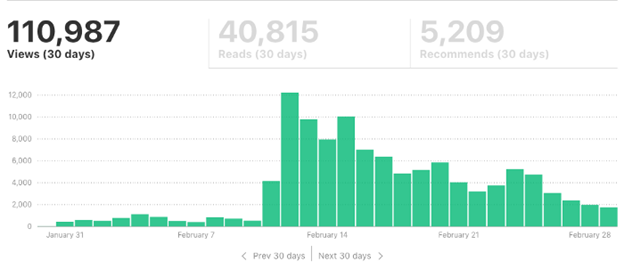
    Medium has more than 60 million active users. It is an excellent platform for businesses with blogs because it has the potential to drive referral traffic.

    It takes nothing more than time, effort, and maybe a paid medium membership to make it big on the platform.

    If you think blogging can help your marketing strategy, join Medium and build a community. Interact with people and engage with their blog.

    Then, dive into posting on Medium.

    You don’t even have to create new content for this platform. Republish your existing and high-performing blog pieces on Medium, add a link to your original website and promote it to your followers. This way, you can easily open another channel for driving traffic to your website and drive brand awareness among a new bunch of people.

    And no. Google won’t penalize you for duplicate content. Medium itself clarifies that they create canonical links to the original post. So, republishing on Medium only boosts your SEO efforts.

    Brands as big as Buffer understand the potential of Medium and experienced a 1215% increase in their page views when they republished one of their old blogs on Medium.There is literally no investment here other than time, creativity, and effort. And to make it big as a small business, that’s the least you can do.

    About.me

    Over 1 million entrepreneurs use about.me. And with that many people using it, you should care about it too.

    It allows you to create a niche profile on its platform and link it to your business site. This opens another point of contact between you and your prospects and gives you another channel through which you can gain web visitors.It is integrated with Google Analytics so that you can track the performance of your about.me profile and see how many visitors it is driving to your website.

    You can start an about.me for free. But with a premium account, you can access better profile customization options.

    Tumblr

    Tumblr received 327 million visits in January 2021. Can you imagine what it could have meant for your business if you had a thriving Tumblr presence? It’s not too late, though. You can still leverage Tumblr’s potential because it is gaining traction. It now has more than 500 million blogs, which grew from 480 million in 2019.

    So, if you want to grow your social media presence, and have more people visit your website, now is the right time to get on Tumblr.

    But before you jump into Tumblr, perform an audience analysis, and see which kind of content would work best with them.

    Additionally, Tumblr is populated with Gen Z and millennials, so it has a fun and quirky theme going on all year round. Therefore, go in only if you can “fit in.”

    Creating an account on Tumblr is pretty straightforward. However, posting has a couple of best practices.

    Tumblr SEO does not work like conventional SEO. Therefore, you have to optimize each post with Tumblr tags. Neil Patel recommends using 7-12 relevant tags per post so that your user can find it through search.

    Additionally, you cannot ignore social timing for Tumblr. Given its young population, the best time to post on Tumblr appears to be late in the evening or early in the morning. But you will have to do a bit of experimentation to find your optimal time.

    If you think Tumblr is dead or useless, the following fact will convince you that it is anything but.

    Many big brands like Apple, Lexus, and Penguin Random House are using Tumblr to engage with their audience. But of course, Penguin Random House only hopped on Tumblr after they found it has many librarians as a part of its audience.So, make sure your audience is using Tumblr before going in. And go in only if you can commit to it in the long run.

    Conclusion

    You don’t need to have millions of dollars in your marketing budget to make it big on social media. Lots of creativity mixed with the right social media marketing strategy can set you up on a path towards social media success in no time.

    The tactics we have shared in this article barely require any investment other than time, effort, and creativity. Therefore, you can shape your social media strategy using these tactics and grow your business.


  • What is CDN?

    On a daily basis, we use the Internet and surf the whole world from sitting at our desks. Have you ever wondered how the content from one part of the world is delivered to us in just a snap of a second? If Yes, let me tell you about CDN and how it makes our life easy.

    What exactly is a CDN?

    Content Delivery Network (CDN) refers to the backbone of the Internet to deliver content to the users. Whether you know it or not, we use CDN every day.

    In simple terms, it is a geographically distributed group of servers around different areas to provide fast delivery of Internet content to the users.

    A well-configured CDN helps users to get Internet assets like files, sheets, images, videos in a quick time. Similarly, it also helps users against common malicious attacks like Distributed Denial of Service (DDOS) attacks.

    How Does It Work?

    If you are not familiar with CDN from before, you may still have some doubts about understanding CDN even after reading the above paragraphs. Therefore, we have included an example to understand CDN easily and how it works.

    Imagine you are in Dallas, and you want to view your favorite store’s website content that is in Tokyo, which is hosted on a server in Japan. So if the content had to travel this distance, it would take higher delivery time, right?

    So to avoid these kinds of problems, CDN is set up around different areas of the globe, which contain cached versions of the website. These points are called Points of Presence (Pops).

    Now, when you want to access your favorite store’s website’s content in Tokyo, you will be connected to the point near you, which contains the cached version of the website, hence the website content is delivered to you in a short time.

    Main Purpose of CDN

    After reading the example, you may have an idea of what CDN’s primary purpose is. Yes, it is to provide Internet content faster to users, making them happy. It’s annoying when you experience some delay when some content takes a lot of time to deliver to you, right? Even a few seconds like forever.

    So to avoid problems, most CDNs solve these problems by reducing the physical distance the content needs to travel. Therefore, the more the distributed servers around the area, the quicker the files are delivered.

    The files you send once in the CDN are cached and stored there. The files include all the files, sheets, media files that may be of 4k and HD-quality too. And, whenever someone on the Internet requests these files, they are sent from CDN.

    Even if the files may be outdated, the CDN stores newly fetched content to serve future requests.

    How is a CDN built?

    So now you know what CDN is, how it works, and all. But how is a CDN built? The building blocks that are used in creating CDN are:

    1.   Points of Presence (Pops)

    As mentioned earlier, Pops are strategically located data centers around different locations responsible for connecting the users inside its radius.

    The main goal of Pops is to reduce the round trip of the user’s request to the original server and bring the content closest to the user, resulting in faster delivery  of the content.

    2.   Caching Servers

    Each pop contains numerous numbers of caching servers in them. The caching servers are responsible for storing and delivering those held cached files to the requesters.

    The primary purpose of the caching servers is to reduce bandwidth consumption and reduce website content load times.

    3.   RAM & SSD/HDD

    Storing those large numbers of cached files needs ample space. Therefore, CDN is built-in with the hard-disks (HDD & SSD) or RAM (Random-Access Memory). Comparing the three, RAM is the fastest and is used by most CDN to store the most frequently accessed data files.

    Benefits of CDN

    So what are some of the benefits you can get with CDN? Is it that important?

    The benefits of CDN can be categorized into different components depending on the size and needs of your business.

    Some of the components are as follows:

    1.   Improving Website Content Delivery Time

    By using nearby CDN, the website contents are delivered faster, which means an excellent experience to the users. Users who experience this tend to stay on the website longer than the slow-loading web pages.

    According to the Unbounce Report, 70% of users admit that if the website content is delivered to them faster then it impacts them to buy from those online stores or retailers. So you can clearly see that your business is affected.

    2.   Reduce Bandwidth Costs

    Using CDN is not free; it costs money. Whenever an origin server gets requests from website owners, bandwidth is consumed. According to the data consumed by the origin server, this bandwidth costs to deliver content to the owners.

    First of all, the distance is reduced by using the nearby CDN. Then, by caching process and other optimizations, the amount of data used by the origin server is minimal, reducing the costs for website owners.

    3.   Content Availability

    There is a high chance of website traffic or hardware failure when a content must deliver from a long distance, and various things can harm the flow of the content from a source to its destination.

    So looking at these problems, well-distributed CDNs are set up. These CDNs help to handle website traffic and other hardware failures. Even if one or two CDNs are down or go offline for some reason, other CDNs can pick up their website traffic for a specific time to let the system uninterrupted.

    4.   Improve Website Security

    As I said earlier, CDNs help to deliver content to the users faster but also helps protect your website data from various things.

    Let’s have a more in-depth discussion about it, shall we?

    By Providing TLS/SSL Certificates

    Whenever data must be sent from one place to another, it becomes vulnerable and can be hacked on the way by malicious personnel. So a particular protocol must be used, which helps encrypt these data, and only a designated person can encode and read the information.

    Transport Layer Security (TLS) and Secure Sockets Layer (SSL) are such protocols that are used for such encryption of data. These certificates ensure that specific protocols are used during the transfer of data between the website and the user.

    So CDNs provide these certificates to the websites, ensuring the highest level of authentication, encryption, and integrity.

    To check if the website is well secured or not, check if it starts with HTTP:// or HTTPS://. The HTTPS:// means that it is TLS and SSL certified, and HTTP:// means it is not secured.

    Block Crawlers and Bots

    As aforementioned, bandwidth consumption costs money, and you cannot let others use it.

    So CDNs help websites block threats and limit the crawlers and bots from using the bandwidth and other vital resources.

    As a result, it avoids hack and spam attacks and keeps the bandwidth cost low every time.

    Mitigating DDoS Attacks

    The CDN functions as a virtual high-security fence against attacks on your website and web application since it is put at the network’s edge. Due to its dispersed architecture and on-edge location, a CDN is perfect for stopping DDoS floods.

    Because these floods must be dealt with outside of your primary network architecture, the CDN will distribute them to multiple points of presence (PoPs) based on their origin, avoiding server saturation.

  • B2b SaaS Content Marketing

    Are you a SaaS business owner and want to promote your business and grow revenue?

    Or suppose you are struggling with establishing your business. In that case, this article will help you know excellent techniques for paving your way towards success.

    The best way of attracting customers online is to buy beneficially using digital tools. The best digital weapon in this regard is marketing, particularly content marketing.

    SaaS Growth Statistics

    SaaS Growth numbers and benchmark rates can provide valuable insight for software businesses in relevance to how widespread the use of SaaS applications is, as well as the effect of such expansion on the modern workplace.

    1. The average number of SaaS apps being used by various establishments has doubled up from 8 to 6 between the years 2015 and 2017. (BetterCloud)
    2. In the year 2018, the global workload of SaaS organizations reached $206 million. It’s expected to continue growing and reach $380 million by the year 2021. (Statista/Cisco)
    3. During the period between 2019 and 2021, the global SaaS market is expected to be worth $60.36 billion, amounting to a 9% CAGR with the 4 years. (Technavio)
    4. Since the year 2010, the average money spent per company on SaaS apps has increased on a yearly basis. (Blissfully)
    5. In the year 2018, the average cost of SaaS subscriptions per employee was $2,884, which is higher than the cost of buying a new laptop (an Apple MacBook Pro at $1,299). (Blissfully)
    6. The forecast compound annual growth rate of the SaaS market is calculated to be 18%. (MarketsandMarkets)
    7. In the year 2007, there were only 500 apps for marketing. By the year 2017, the number of marketing apps grew to over 8,500. (PriceIntelligently)
    8. The lack of skilled workers, as well as cyber-attacks, could hinder the growth of the SaaS sector. (MarketsandMarkets)

    If we talk about the past, you could start your business and establish your business without any issues. But with the advent of more competition and higher customer expectations, you have to put in more effort for customer engagement and brand awareness. Therefore, eye-catching design and cohesive branding are no more extended options.

    What is B2b SaaS Content Marketing?

    B2b SaaS is also known as business-to-business Software as a Service. It incorporates cloud-based Software that companies use for various tasks such as office productivity, customer relationship management (CRM), and other work-related activities. Businesses often subscribe to B2B SaaS solutions and regularly pay, usually every month or annually.

    It is predicted that about 78% of companies will be running purely on B2B SaaS till the end of 2022. Interestingly, the growth of the SaaS market will reach $76 billion by the end of 2022.

    Using traditional marketing methods such as Adblockers is useless as About 30% of internet users are using ad blocker. Therefore, you will be facing increasingly complex purchase journeys where you need to engage your customer.

    In short, B2B promises high average values and long-term commitments.

    Importance of B2b SaaS content marketing strategy

    In this digital era, you need to offer an efficient B2b design that is an actionable copy that concisely makes your Software functional.

    Recent research shows that about 92% of marketers consider content a crucial part of business assets. Likewise, SaaS companies focusing on content marketing show higher growth rates than others.

    Experts estimate that the overall SaaS market is growing at a staggering rate of 18% annually. Moreover, 99% of businesses use at least one SaaS tool. Besides, about 78% of small businesses are also using it.

    Why should I adopt a B2b SaaS content Marketing strategy?

    If you are wondering will working on B2b Saas content marketing will be beneficial for me or not, then here is the evidence.

    In the year 2019, Emily Byford conducted research regarding SaaS content marketing. Following are her research conclusions:

    • About 23% of SaaS blogs receive lesser than 500 visits per month.
    • Roughly estimating, an average SaaS blog receives about 1800 organic visitors monthly.

    In a nutshell, a B2b SaaS content strategy enables you to focus on your content marketing efforts. Additionally, it paves the way to form effective content that will help you engage your customers in responding the way you want.

    Before making your content strategy, you should make sure that it answers the following questions:

    • Who is your target audience?
    • What goals will your content help achieve?
    • What are the critical questions that your content should address for brand awareness?
    • What makes your content unique?
    • Through which channels will you promote your business?
    • How will you keep track of your business success?

    Some of the critical aspects of B2B Content marketing strategy are:

    • Brand positioning
    • Owning media value proposition
    • Business case
    • Strategic plan

    Steps to build a b2b content marketing strategy

    Do you want customer engagement for your business and Software as a service app with digital marketing every month?

    If yes, you need not worry, as the following guidelines will help you build a B2B content marketing strategy.

    Start with knowing your customers

    Usually, SaaS companies mistake turning to tactics like content creation, social media promotions, or building a marketing funnel. All of these ideas have their place. However, these cannot be considered as a starting place. Instead, it would be best to start by defining your ideal customer profile.

    You can start knowing your customers by:

    1. Applying intelligent customer engagement
    2. Creating more robust buyer personas
    3. Generating data via customer analytics
    4. Anticipate, predict and plan future
    5. Transverse the path of your customer

    These ideal customer definitions include:

    What are customers’ needs and their problems?

    For instance, a marketing team may have an issue with high customer acquisition costs.

    What are the typical qualities of an ideal customer?

    For example, a marketing team may post questions on Reddit, thereby asking for advice on optimizing content strategy or managing user-generated content. Reddit enables you to better understand SaaS companies and SaaS customers.

    Where do the potential customers gather together?

    Ideal customer profile includes marketers at software companies. You can get this via:

    • Review sites
    • Content publishers

    What is the main issue that your end-user is facing?

    Showcase how simple it is for your Software to fix this issue via presentations, infographics, or other content offerings. If you try to shove everything. These issues can be addressed by:

    For this purpose, you can use the latest technology. According to the survey by Ultimate Software in 2016, about 92% of the workers say that having the right technology for helping their customers results in job satisfaction.

    Decide your goals

    Deciding your goals is an essential component of forming a successful content marketing strategy, yet this is an area where most marketers struggle. A simple way to start is to make sure your goals are SMART, that is:

    Specific: Goals should include measurable KPIs, numbers, results, and deadlines.

    Measurable:  Goals can be measurable and recorded quickly for identifying success or failure rates.

    Attainable: Goals should be challenging yet possible to achieve.

    Relevant: Goals should be relevant and align with your business’s aims and objectives.

    Time-bound: Goals should be based on annual, six-monthly, or quarterly goals. Furthermore, your goals should include the following characteristics:

    Know your targeted Audience

    When creating personas, you should consider information such as:

    • Demographics, location, and age of customers
    • Industry, which provides for their job role, challenges, and goals
    • Decision-making factors and responsibilities such as where they go for the information on the internet.

    Understanding your Buyer’s Journey

    So, are you ready to implement your goals and know who your potential customers are? It’s time to find out from where your Audience belongs?

    A typical buyer’s journey or funnel mainly involves three stages that are:

    1. Awareness
    2. Consideration
    3. Conversion

    As the buyers move from one stage to another, they need to alter, and so is the requirement for change required for content you provide.

    In the 1st stage, the Awareness stage, your content emphasizes their pain points and helps buyers address their issues.

    In the 2nd stage, the Consideration stage, you provide your customers with the solution via your content.

    In the 3rd stage, the Conversion stage, you tend to focus on brand-specific content to illustrate why your service or product is best among all. Here, you need to offer a memorable and unique experience. This will turn them into repeat customers and encourage them to promote you to their social circle by leaving positive reviews.

    Experts say that more people consider positive reviews of the customer service online than negative ones, which is about 6%. Also, 90% of customers are influenced by positive reviews. Moreover, a 5% increase in customer retention can help you get 25% more profit.

    Develop a Promotional Strategy

    When you have successfully formed your B2b SaaS content marketing strategy, now is the time to promote yourself. Effective team collaborations will play a vital role in creating and promoting your content strategy.

    How you promote your products or services varies widely according to your business. B2b businesses and decision-makers primarily maintain their digital presence on social media platforms such as LinkedIn, Twitter, Facebook, and Instagram.

    According to the statistics, about 66% of the content marketers rate LinkedIn as an effective platform for B2b promotion purposes, followed by YouTube 51% and Twitter as 55% effective.

    Here is a process to promote yourself on social media:

    1. By creating a list of relevant decision-makers at the businesses, you want to work with.
    2. Finding the contact details of these decision-makers.
    3. Sending a short informative introduction email showcasing your work.

    Other than this, you can:

    • Share posts on social media platforms
    • Tag expert sources when sharing posts on social media
    • Use content promotion platforms
    • Use your content for answering questions on various forums
    • Syndicating content

    Sending multiple emails to a person over a set period increases the response rate. The success rate of email marketing is 42%. Stats suggest that about 64% of small businesses use email marketing as a tool to approach customers. Additionally, 35% of the marketers send 3 to 5 emails per week to their customers.

    Track and Optimize

    The digital marketing world is developing at a rapid pace. Therefore, we need to update our B2b Saas content marketing strategy. It is essential to stay updated about the relevant trends to ensure your content is working or not. Moreover, tracking trends help you to adapt your strategy in a meaningful way.

    Additionally, you should continue reviewing your results, thereby making sure your content marketing strategy evolves as market and landscape change. Also, you should keep on doing a competitor analysis to know where your competitors are standing and what they are doing. In short, the ability to adapt excellently is the important secret to ensuring that your brand stays competitive, relevant, and at the top of its game.

    Case studies

    Research says that the SaaS industry is expected to grow at the annual rate of 12% in 2018-2022. Therefore, we can say that the SaaS industry is the fastest growing industry. The following statistics show the growth trend:

    Here are a few case studies that illustrate how the Audience can lead to excellent results.

    • Shutter stock is a self-serve platform that licenses images and photos as a big adopter for SaaS strategies. It has gained significant organic traffic as a lead generator. An accompanying infographic alone produced 160,000 page views within two weeks, and the email announcing the reports shows a 22% open rate.
    • Similarly, Coding Sans’ gated is a State of Software Development report created in six weeks. But the results were overwhelming as they got 291 backlinks, 5,000 downloads, and $300,000 in new projects.
    • LogoMaker is another online platform that produced organic search with the help of great content. They started in 2012 and wrote on creating a Gmail signature with a logo and attracted more than 5,000 visitors monthly, eight years later.

    Conclusion

    About 69% of the companies with a well-formed content strategy consider themselves the best content marketing players. B2b SaaS content marketing is inbound marketing that provides customers with the right content at the right time. It’s one of the most essential elements of SaaS marketing.

    You can build a successful b2b by deciding your goals, identifying buyers’ persona, and tracking the result of your plan. Besides, several promotional techniques can be helpful in this regard. Most importantly, you can add value to the reader, write purposefully, track your results, and tailor your approach to your targeted audience.

  • How to rank faster with low competition high traffic keywords list in 2022?

    Keywords, the Holy Grail of better website rankings on any search engine.” You must include keywords in your content to rank better in the search results,” a statement all website content writers have heard before.

    Knowing that you should add keywords to your content and having the proper knowledge about researching and choosing different keywords are two completely different things; if one is an apple, the other is orange.

    Almost 26.9 percent of mobile users end up clicking on the first result in their search query.

    Close to 91 percent of web pages receive no organic traffic from Google.

    Look at the contrast between these two statistics, and it won’t take you long to figure out that web pages ranked on the third or the fourth page in search results hardly get any organic traffic.

    The farther your web page is from the first web page in the search results, the lesser is its chances of generating any organic traffic.

    According to Ahrefs, they discover 1.8 million additional/new web pages using their tools every day.

    If many web pages are being created every 24 hours, do your web pages even have a chance of getting ranked on the first page of a search result?

    The answer to this question will depend upon the kind of content these web pages hold. I hope it doesn’t sound too cliché when I say, “Keywords hold the key to your success,” at least for ranking your content within this sea of content which is quickly transforming into an ocean.

    Now that you have gotten a pretty good idea of what you’ll learn in this article let’s start with our first tip.

    Target Low competition keywords

    If you are just starting and have no idea what kind of keywords to target, your instincts will tell you to write about the things people are most searching about. And right here is the most common mistake that website writers make when choosing a primary keyword for writing their content.

    Everyone wants to write on the hot issues or hot topics in hopes that some of the traffic will trickle down to them from the top search results. But in reality, internet users hardly ever click on the web pages presented on the 10th or 11th page of their search results. 

    It is better to target a keyword with a search volume of five thousand searches per month and a keyword difficulty or SEO difficulty of 10 or less than targeting a keyword with keyword difficulty of 50 plus and a search volume of 5 million searches per month.

    If you target a low-difficulty keyword, your web page will have a better chance of getting ranked on the first page in relevant search results. Since web pages on the first page of search result gain almost all the traffic, you’ll have a better shot at generating organic traffic.

    Ranking for competitive keywords is almost impossible if you are just starting your journey. However, even if your website has been up and running for many years, ranking for competitive keywords will be a lot more difficult than you think.

    Target long-tail keywords

    If you have been working on the SEO of your website for quite some time now, chances are you already know what a long-tail keyword is.

    In case anyone present here is unaware of this term, Let me explain it to you.

    Long-tail keywords are keyword phrases. They are made up of three or more words. Long-tail keywords are targeted towards more specific topics, and they include many short-tail keywords within them.

    For your convenience, let’s look at some examples. 

    “Apple” is a short-tail keyword, and “Honey crisp apples” is a long-tail keyword.

    “School” is a short-tail keyword, and “Primary schools in Addison” is a long-tail keyword.

    “Mobile phone” is a short-tail keyword, and “Mobile phones under $800” is a long-tail keyword.

    As you can see from the examples above, long-tail keywords are targeted towards more specific search queries, and short-tail keywords are targeted more generally.

    What I have typed in the search bar is an example of a short-tail keyword, and all the auto-complete suggestions provided by Google are long-tail keywords.

    Auto-complete is a great tool for generating free long-tail keyword ideas.

    Out of all the web searches, almost 70 percent contain long-tail keywords.

    You can search for low competition long-tail keywords using any paid or free keyword research tool you prefer.

    Target Questions

    What happens every single time you are stuck on a problem and can’t seem to find the right answer?

    You open up your laptop, computer, or mobile phone and search for a solution using Google, Bing, or any other search engine.

    People often do searches like” Why is my mobile phone getting stuck?”, “Why is my geyser not heating the water?” or “What laptop should I buy?”

    I bet you have done similar searches to the ones mentioned above.

    Just like us, our targeted audience also searches for answers to their queries through the web.

    This presents a great opportunity for web content writers. Almost all of the keyword research tools allow you to generate ideas for questions regarding your primary keyword.

    If you type in computer in the keyword search bar, press enter, and then choose “Questions,” the keyword generator will present you with commonly searched questions regarding your keyword.

    For example, if you type in “Computer” in the keyword search bar and search for questions. Keyword generator will come up with results like “What are the best computers you can buy in 2021?” or “Should I replace my Core i3 computer with a Core i5 one?”

    Once the results are displayed, you can go through them to find low competition topics and start writing your content.

    You can also find these question keywords through Google Auto-complete

    Just type in “What,” “Where,” “When,” or any other question word followed by your targeted keyword like “computer,” “school,” or “life.” And Google auto-complete will suggest some question keywords you can choose from.

    Target comparison keywords

    Comparison keywords are used by consumers looking for a comparison between two different products to find the best fit for themselves. Unfortunately, as frequently as these comparison keywords are searched, many web content writers are still unaware of their existence and use.

    This provides a great opportunity for you to capitalize.

    These comparison keywords contain words like” versus” and “or.” 

    • HP vs. Dell
    • Android vs. IOS
    • 9 to 5 job vs. Freelancing
    • Apple vs. Samsung
    • Dishwasher or washing machine, which one should I buy first
    • Laser printer vs. an Inkjet printer

    Are examples of comparison keywords.

    If you have a fairly new product that you want your potential customers to know about, just add your product at the end of these comparisons and tell your customers why they should choose your product over the more popular ones you have compared in your blog or article.

    Most keyword tools give you the option of generating comparison keyword ideas based on your primary keyword.

    Generate comparison keyword ideas and choose the one with a good search volume and low SEO difficulty.

    Target keywords containing prepositions

    Prepositions are words like at, on, of, and to; these words are used to add some kind of description to the subject. Keywords containing prepositions are more elaborate; they show up in very specific search results, which is why web content writers usually ignore them.

    If you target keywords with prepositions, your web page will have a good chance of showing up on the first page of search results. Just like questions and comparisons, keyword research tools allow you to generate keyword ideas containing prepositions.

    See in the image above, this keyword research tool has generated ideas for keywords containing prepositions, for the primary keyword “iMac.”

    Take a look at the examples given below to clear any confusion

    • Computer for gamers
    • Laptop for students
    • Bags for women
    • schools near me
    • Schools in New York.

    Bottom Line

    There is a huge difference between knowing that you should use keywords for a better search engine ranking and having the knowledge on how to research and use these keywords.

    Keywords are a very powerful tool, but only if they are correctly used. Unfortunately, ranking your web pages for keywords is not easy, but if you try a couple of tricks that SEO experts swear by, you can hit the jackpot.

    If you are just starting your journey, Low competition keywords should be your way forward. Including questions, prepositions, and comparisons as keywords in your content can increase its chance of ranking on the first page of search results.

    What techniques and tricks do you use to find keywords for your content?

  • How to Build a Profitable Social Media Sales Funnel?

    Social media has evolved from being a top-of-the-funnel strategy to touching and influencing all stages of the buying process. And now, it needs its own sales funnel.

    The social media sales funnel helps you create personalized content for your buyers for all stages of their journey. And since targeting users with content personalized to their stage in the buying process boosts conversions by 72%. Therefore, you must build a social media sales funnel to drive conversions from your social channels.

    However, learning about the social media sales funnel isn’t as easy as you may think. You go in thinking, “okay, this is simple. Awareness, intent, buy.” and come out doubting the very existence of the social sales funnel.

    In this article, we will help you build a customized social media sales funnel for your business and present our own two cents on the debate around this tactic.

    What is a social media sales funnel?

    Let’s begin with a simple definition of what a sales funnel is. Your social media sales funnel defines your customers’ path in their journey with your brand. And, when we talk about building a sales funnel, what we mean is the practice of designing a series of steps to guide your users in that journey.

    Social media sales funnel looks similar to any other sales funnel. However, due to the inherent uniqueness of this marketing channel, and the change in user behavior, different marketers have different opinions on a social media sales funnel, with many people going as far as to say that “sales funnels are dead.”However, we believe that social media sales funnels aren’t dead. It’s a century-old strategy that has stood the test of time, and it cannot be kicked out of marketing just like that.

    The sales funnel may not be as simple as it used to be because the buyer’s journey isn’t always linear. Many buyers flow through the funnel traditionally, while many jump up and down in an unorthodox manner.

    Yet, declaring the social funnel to be “dead” would be a mistake that can lead your content strategy to go haywire.

    Your buyer still has a journey and would love for you to create content that helps them in it. Creating your customized social sales funnel will give you a basic framework about how you should approach your customers. It helps you build your customer touchpoints according to where the customer is in their journey and target them with the right kind of content.

    With 64% of customers expecting engagements based on past interactions, your sales funnel will boost your customer satisfaction.

    Different stages of the sales funnel

    Your typical sales funnel is divided into three categories conveniently called top-of-the-funnel (TOFU), middle-of-the-funnel (MOFU), and bottom-of-the-funnel (BOFU). Each of these categories includes a different stage of the buyer journey.

    TOFU

    TOFU is the widest part of the funnel in your typical inverted pyramid funnel. It involves the awareness stage of the buyer’s journey, where the buyer first discovers their problems and then comes across your brand.

    The strategies for this category are strictly educational, aimed at providing value to the user and building trust.

    This is a lead acquisition category. The leads at this stage are unqualified, but they are leads, nonetheless. So, you have to focus on perfecting your TOFU strategies because it ultimately shapes the outcome of your BOFU strategies.

    Let’s explain with an example.

    Say you have focused all your efforts on optimizing BOFU, but your TOFU is weak. In this case, even if your conversion rate is 2%, but you are bringing in only 100 leads, you’ll be converting only 2 of them.

    Here’s an excellent depiction of this example:

    So, prioritize your TOFU as much as BOFU.

    MOFU

    Once you have acquired a lead, you have to keep them engaged and help them choose you over your competitors.

    That’s where MOFU strategies come in.

    MOFU strategies aim to introduce your brand as the “solution provider” and helping your users see everything that makes them pick you over your competitors.

    BOFU

    When MOFU strategies nurture leads, BOFU strategies score the winning goals and attempt to nudge the customer towards conversion.

    But since your interaction with your customer does not end with a sale. Therefore, MOFU strategies also cover post-sale engagement tactics to help you retain your users and make them love you enough to come to you again and again.

    Here’s how you can build your personalized social media sales funnel

    Your business and customers are unique. Therefore, you need personalized strategies, and your very own sales funnel to attract, engage, and convert them. In this section, we will discuss exactly how you can build one. That, too, in only three steps.

    Step # 1: Define goals related to each category of the funnel and identify your tactics

    If you don’t remember, funnel categories are TOFU, MOFU, and BOFU, and tactics are how you execute your strategy, using Facebook ads, Instagram stories, or by resharing your blog posts etc.

    Each funnel category has its own goals, as we discussed above. And you have to pick your tactics to bring your social media outcomes closer to your goals.

    Let’s look into it in detail.

    Goals and tactics for TOFU

    We know that TOFU goals are to drive awareness and garner the audience’s interest in your brand.

    You have to deliver value at this stage because no one would appreciate being sold to even before they are fully aware of what their problem really is.

    Aim at creating content that helps customers identify what their problems are and how they can solve them. You can create blog posts answering your audiences most asked questions and share them on your social media. Or you can repurpose your existing blogs and convert them into short carousels to help the audience derive value quickly.

    Since social videos generate greater engagement, you can include them too in your TOFU content strategy and create short, interesting videos that can offer valuable information to the user.

    You can gauge the importance of videos from this graphic:Just be sure to make it interesting and avoid being blatant about selling. Remember, at this point, your sole focus is to engage your audience.

    Hubspot, a marketing software provider, did just that, and guess what? They experienced astounding results.

    Back in 2017, Hubspot shifted its focus from creating sales-oriented social videos to posting engagement-focused video content. They wanted to engage their audience and win trust, hoping it wouldn’t be too hard to convince people to buy from them once they had won their trust.

    They adopted an audience-first approach, brainstormed content ideas they knew their audience would love, and converted them into videos.

    As a result, their views jumped from 50,000 to a whopping 1 million.

    Goals and tactics for MOFU

    54% of people use social media to research a product. And this is the one statistic that MOFU strategies leverage as they nurture cold leads, filtering out the uninterested audience and converting the rest into qualified leads ready for the next stage.

    At this point, your customers are in the consideration stage. They are evaluating their choices and considering the options they have. And you have to convince your users that you are the answer to all their problems. You have to show them that you are better than the rest. And social media offers various channels for you to do that.

    You can provide social proof by highlighting positive reviews on your Facebook page, or leverage your customer testimonials, share them on your Instagram to show people that your customers really love you.
    Another proven tactic involves hiring social media influencers. You can hire social media “celebrities” to drive awareness about your product and talk about how great you really are.

    For example, if you sell an anti-acne face balm, you know your audience struggles with acne. You can hire a social media influencer and have them mention how your face balm helped them fight acne. However, try and be authentic. Don’t promise what you can’t deliver. You want to win long-time customers, not one-time sales.

    There are many other low-effort but amazing content ideas you can execute as a part of your MOFU strategies.

    If you still think social media is better off sticking to the TOFU and other channels that are good for MOFU and BOFU, this case study might change your opinion.

    UWheels, a self-balancing board scooter brand, generated significant revenue through Instagram.

    They hired influencers to talk about their new Uwheel boards and created a lot of buzz around the product’s launch. Differentiating their product with unique messaging, they managed to stand out from their competitors. Their MOFU strategy helped generate over a million dollars!

    How do we know this was a MOFU strategy? Because it attracted unqualified leads, turned them into warm leads who then converted on the website.

                Goals and tactics for BOFU

    Once you have nurtured the leads through the evaluation/consideration stage, it’s now time to sell your products.

    Why does social media come in BOFU when the sale has to happen at the website? Well, for one, many social networks have now introduced platform-native stores, Like Facebook and Instagram Shops.

    Second, you have to convert your users on social media. And for that, you need BOFU strategies.

    Based on what conversion means for your brand, you can adopt various tactics. Like, if your goal is to drive sales, you can run targeted ads promoting limited-time discounts, or you can create Instagram stories promoting a sale. 61% of customers claim that surprise gifts and offers are the best way to engage customers, so this might not be a bad idea.But if conversion means more traffic on your website, you can post a teaser of your web content, say a blog post, with a link to your website and drive traffic.Here’s how Adobe does it on Facebook.

    Since building loyalty is also a part of BOFU strategies, you have to include post-sales engagement tactics at this stage.

    We all know upselling to an existing customer is easier than selling to a new customer. The chances of converting an old customer hover around 60-70%, while those of converting a new customer stick to a meager 5-20%.

    So, you have to pay special attention to the advocacy stage of BOFU and develop strategies to keep your audience engaged, even after they have purchased from you.

    As a parting note, remember to pick a couple of tactics for each stage of the buyer journey and stick to them. Optimize it and perfect it before trying on something else.

    Step # 3: Assign the right metrics

    Once you have decided on what tactics you will use in each stage of your buyer’s journey, it’s time to assign metrics to track the performance of your tactics with the right social tools and see how they are bringing you closer to your goals.

    For example, if you are using blogs and carousels for your TOFU strategy, you might want to track their results using metrics like reach, impressions, and engagement rate.

    For each metric, benchmark the industry standard and optimize it to hit that mark.

    Step # 3: Test, test, and test

    You thought you’d get away with a marketing strategy without testing and optimizing?

    Once your tracking metrics are decided, it’s time to analyze them regularly and see what’s working and what’s not. Continue experimenting with different tactics to find your “sweet spot”.

    For example, you’re using Instagram Stories to promote limited-time offers, but tests show that feed posts drive better conversion. So, you can switch to feed post and continue optimizing your strategy.

    Importance of retargeting

    Talking about retargeting is important here because it is a critical part of your strategy to keep your customers moving through the sales funnel.

    Given that only 2% of shoppers convert on the first visit. At the same time, retargeted customers are 3x more likely to click on your ad. So, you must include retargeting in your social media sales strategy and enhance your brand’s exposure to your content.You can include retargeting in all stages of the buyer journey. For example, you can show retargeted ads to customers who have shown initial interest in your brand to help them see how you can bring value to their lives.

    If you think this won’t work, know that Neil Patel leveraged social media retargeting and increased the deal closing ratio at QuickSprout to 28%, which is pretty impressive.

    Conclusion

    There’s a lot of noise around the social media sales funnel. Many say it is dead. But we believe, a sales funnel is still pretty relevant because it gives a basic roadmap for your content strategy.

    While building a social media sales funnel, you have to make sure to focus on every stage of the buyer’s journey and have a unique tactic for each of these stages.

    Your marketing funnel should work as a whole. Each stage should blend seamlessly with the next so your customers can flow through it without friction.

    Don’t forget to assign metrics to each of your tactics and analyze them regularly to optimize your sales funnel for better results!


  • Everything you need to know about social media tracking

    Social media is profitable for your business. You know that, but you have to prove it. You have to see if the time, efforts, and money you are investing in that channel are yielding profitable results.

    That’s where social media tracking comes in.

    Social media tracking is the one practice that can shape your social strategy, set it up for success, and help you show your stakeholders that your social investments are not for nothing!

    But, many marketers struggle with tracking and reporting their social efforts. So, we have designed this article as a guide in which we will talk about everything there is to know about social media tracking, from why you should do it to how you can track some common metrics.

    Let’s go!

    What is social media tracking

    Social media tracking is the process of monitoring your social media campaign’s performance, strategies, and content to obtain data that can drive future marketing decisions.

    For example, your marketing intern told you how meme marketing is a thing, and you decided to see how well it would work for you. So, you start uploading memes on your social handles.

    Now, how will you know whether meme marketing is working for your brand? You will dive into your social media analytics and see if memes have a higher engagement rate than regular content. If they do, you have your answer!

    That’s how Dash Hudson found that The Klog, a K-beauty Instagram handle, does better with meme content.

    They tracked their Instagram content and analyzed the performance of memes and regular content separately.

    From their tracking and analysis, they found that memes had 59% higher engagement.

    That’s how social media tracking helps in identifying what type of content works.

    Why is social media tracking so important?

    You cannot know if something is working in your favor unless you measure it, right?

    Your thousand dollar investment could be contributing peanuts to your business. And unless you track it, you might go ahead and make the same unfruitful investments again.

    That makes social media tracking critical for your business. But if you are still not convinced, here are a bunch of more reasons:

    Gauge the performance of your campaign

    Social media marketing helps you see which campaign is working better, so you can double down on the strategies involved in that campaign and optimize your results.

    For example, your Instagram campaign generated great buzz around your brand, but your LinkedIn campaign failed to yield similar results. Through social media tracking, you will know that you should either drop your LinkedIn campaign or change your strategy.

    We went over Microsoft’s Twitter and LinkedIn handles and saw a clear difference between the apparent engagement on both channels. Check it out:Microsoft needs to up its Twitter game, no?

    Helps with community development

    We talked about the importance of community development in another one of our blogs. An engaged community is a key to unlock conversions.

    Social media tracking and analysis helps you build an engaged community by informing you of your loyal followers.

    If you use the right tools, you can figure out who engages with your posts the most so you can reward your top followers and build a community of brand advocates.

    Highlights best performing content

    In the fast-paced social media scene, you have no time for guesswork. As we highlighted with the meme marketing example above, you have to know what works for your brand to invest in it seriously.

    Social media analysis eliminates guesswork and tells you exactly what type of content works best with your followers so that you can create more of that.

    For example, you find out that your followers love it when you post memes, so you double down on creating them.

    Additionally, helping you figure out the right kind of content is another way social media tracking helps with community development.

    Funny one-liners appear to be Starbuck’s best performing content, apparently, rather than regular promotional content:When you know what message resonates the most with your audience, you get an idea of their thought process, interests and dislikes and can use this information to your advantage.

    Aids social strategy optimization

    Social media tracking helps you optimize your strategy. By revealing content performance data, it gives you the insights you need to adjust your plan in a way that makes it more profitable.

    Once your strategy is optimized, you save your resources from being spent on ineffective and inefficient channels.

    In this way, social tracking converts your social media into a two-pronged profit channel. Firstly, with optimized strategies, you do what you know will work and drive results. Secondly, you avoid wasting money on non-profitable strategies.

    Win-win!

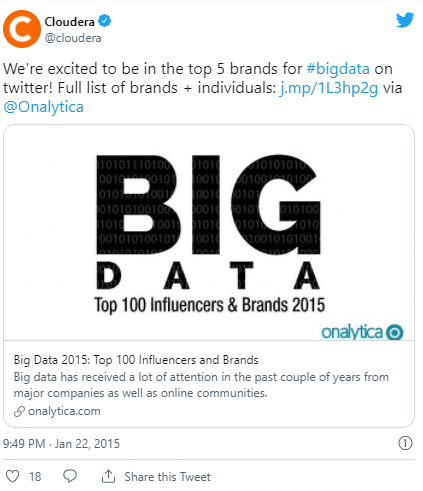
    Cloudera, a Data solutions provider, invested in a social media analysis and monitoring software to help them optimize their social strategy.

    As a result of their social tracking, they figured out that edge and Internet of Things content get more engagement than their typical big data content.

    This led to them optimizing their strategy and experiencing a 164.4% increase in social followers, 78.4% increase in social engagements, and 78.6% increase in impressions.

    The social media metrics you should track:

    We have been going on and on about why you should be monitoring your social performance. Now that we have built a solid case for it, it’s time we get into details.

    In this section, we will share all the metrics you can track on social media:

    Engagement

    The parameters that make up the engagement metric include Likes, Shares, Comments and Clicks. All of these parameters come together to create an engagement rate that tells you how involved your followers are with your content, how receptive your audience is to your message, and if it resonates with them.

    Brand awareness

    Brand awareness metric comprises reach and impressions as critical parameters that tell you how many unique viewers your content came across and how many eyeballs it got overall, respectively.

    Share of voice is another parameter often included in the brand awareness metric that estimates how much conversation is happening around your brand compared to your competitor’s.All of these parameters indicate your brand’s popularity among the audience and serve in the top-of-the-funnel strategies, which aim at making people aware of their problems and solutions.

    ROI

    The ROI is the most important metric that tells you whether your social investments are contributing to your business’s substantial growth or not. Money is what matters at the end of the day, so you cannot and should not ignore ROI.

    ROI is built mainly upon your lead conversion rate, which indicates how many prospects converted into customers through your social campaign.

    Tracking ROI is not as simple as it sounds. But we will get into the complexities in a while.

    Customer care metrics

    54% of people have a better opinion of a brand that responds to their complaints and queries on social. This could be why not replying to comments on social media can lead to a 15% churn rate.

    So, you cannot let your social media customer care slide.

    Thankfully, there are metrics you can track to make sure that your customer care is top-notch and is serving your business well.

    These metrics include your response rate, which is the number of times your brand responded divided by the total number of queries it received, and response time or the time it takes for your brand to reply to messages.Needless to say, both of these metrics should be above average.

    CSat or customer satisfaction score is yet another metric you should be tracking to know how satisfied people are with your social media services. You can calculate this score by asking your followers to rate your brand out of 10.

    How to track your social media campaign

    Only 41% of marketers can measure their social media activities. But, having read all the benefits of social media tracking, you don’t want to be from the 59% of the people who can’t track their social media, right?

    In this section, we will dig deeper into the process of social tracking and will talk about some technicalities as well.

    There are two types of social media measurement:

    • Ongoing measurement
    • Campaign specific measurement

    Ongoing measurement involves setting up your social media tracking tool and continuously analyzing the results for your usual social activities. Campaign-specific measurement means that you will measure the campaign results against campaign goals.

    You must include both types of analysis for your social success.

    The steps involved in setting up your social media analysis are pretty much the same in campaign-specific and ongoing measurement, and we have outlined them below:

    Determine your social media goals and select the right metrics

    You have to have specific objectives that you want your social strategies to meet.

    Maybe you want to increase brand awareness, garner engagement, or drive web traffic?

    Figure out why you are using social media for your business and determine the results you expect to see.

    Then set up specific, measurable, attainable, relevant, and timely goals which abbreviate into SMART goals, that can bring your closer to meeting your social objectives.

    For example, your social media goal could be “I want to increase my website traffic by 10% in the next two months”.

    Identifying your goals at the beginning of your social media campaign is critical because goals determine the key metrics you should track.

    Selecting the right metrics is critical to see how your social efforts bring you closer to your goals.

    For example, if your goal is to increase web traffic, you will have to track the number of clicks on the website link you share on your social and not your reach or impressions because they tell nothing about web traffic, right?

    Similarly, suppose your goal is to increase revenue through social media. In that case, you will have to measure your conversions because tracking likes, shares, and comments will not tell you anything about how close you are to your sales-oriented social goal.

    Here’s a table of some typical business goals and the relevant metrics that you can track:

    Analysis and tracking

    Once you have identified your goals and selected the metrics you want to track against these goals, it’s time to get to the nitty-gritty.

    You need analytics tools to track your social campaign. And while major social platforms like Facebook and Instagram have social media analytics dashboards integrated within the platform, you can invest in one of the many social media tools if you want enhanced measurement and have the budget.

    Once you have integrated your social tool with your social handles, let it work in peace for a few days.

    Continue checking up on it and analyze your results once a sufficient amount of time has passed or your campaign has come to an end.

    Pro tip: set up your measuring tool a few days before the campaign begins so that it has a pre-campaign value for you to gauge the efficacy of your strategies.

    For example, your social media engagement rate hovered around 1.2% before you began your video marketing campaign, after which it jumped to 5%. You can discover this difference only if your social media tracker was at work before the campaign begun.

    Reporting and optimization

    Reporting is the final and most critical part of your social media tracking because this is where you either justify your investments or find out what needs to improve in your social strategy.

    Almost all social media tools come with a reporting module through which you can easily generate significant social media analysis reports.

    Here’s an example of how your social media report might look like:

    Once you have the report on hand, find out which of your decisions led to the best results and what strategies didn’t work as they were supposed to and optimize your campaign accordingly.

    Social media tracking, monitoring, reporting, and optimization is not a one and done process. Once you are through optimizing your campaign, set it up for monitoring once again and continue with the analysis and adjustment procedure outlined above.

    The three steps outlined in this section work perfectly if you are tracking any of the metrics we discussed in our important metrics’ section, except for ROI.

    Tracking ROI is a lot more complicated and requires a couple of additional steps.

    So, in the next section, we are discussing how you can set up social media attributions and track your social ROI accurately.

    Social media attributions – how to track your social revenue

    Contrary to popular belief, social media is not just a top-of-the-funnel channel. With all the latest developments in the social scene, it has evolved to cover the entire sales funnel and actively drive business sales.

    Coffee Groundz, a small coffee shop, built a vibrant community on social media before using their Twitter handle as a direct sales channel. And as a result, their sales increased by 20-30% via Twitter.More than 7000 followers for a neighborhood cafe? Pretty impressive, isn’t it?

    So, apart from using social media as a bottom-of-the-funnel channel, you should take steps to attribute some part of your revenue to your social media so that you can see a tangible ROI on your social efforts.

    42% of marketers believe that social media has a positive impact on their business. But only 23% of these people can prove the impact of their social efforts quantitatively. And it is not them. Tracking social media ROI is notoriously complicated.

    We have gathered some insightful, time-tested tricks that can help you with it:

    Use UTM parameters

    UTM parameters are small nuggets of code that you can put into the web URL that goes on your social handles and track referral traffic and conversions. They help you gain insights into the source of the traffic that arrives on your website.

    There are five different types of UTM parameters, each helping to identify a specific source component, helping you gain a granular view of your web traffic. Three of the five parameters are compulsory for you to use if you wish to track your web traffic and conversions, while two are optional.

    These parameters include:

    1. Campaign source, which tells you about the origin of traffic, i.e. UTM_source=Facebook.
    2. Campaign medium, the type of medium used to drive traffic (paid, organic, email, etc.), i.e. UTM_medium=organic_social.
    3. Campaign name, which is the name of your campaign to help you identify exactly which campaign is contributing to an increase in traffic, i.e. UTM_campaign=eBook_download.

    You can also use campaign terms to track paid keywords and campaign content to track different ads within your campaign.UTM parameters are perfect if your social campaign is meant to drive web traffic only. But we have to track monetary ROI. Even then, once you have a clear overview of where the traffic comes from, conversion attribution becomes a bit easier.

    Before you get worried about having to type all the complicated UTM parameters in your URL, let us give you some good news.

    There are automatic UTM builders you can use to create a tracking-enabled URL.Here’s how you can build a URL with UTM parameters using Google Analytics:

    • Open the Google Analytics campaign URL builder. You can just type Google URL builder in the search bar and the URL builder will appear at the top.
    • Enter the URL of the page you want to link to in the website URL box.
    • Enter the campaign source in the respective box.
    • Enter the campaign medium and campaign name in their respective boxes.
    • Now generate your URL.

    That’s it!

    URLs containing UTM parameters are usually long and unsightly. Check out this URL from CoSchedule (don’t miss the UTM parameters within the URL!):But that’s not how CoSchedule has used the link on their Twitter handle:They have shortened the URL so it doesn’t look bad in their Twitter caption.

    To avoid pasting a long chain of code in your social caption, you can use one of the many URL shorteners, which will minimize the length of your URL while ensuring it serves its tracking purpose perfectly.

    Set up your campaign in Google Analytics

    Once you have included UTM parameters in your website URL, it’s time to set up your campaign in Google Analytics, where the magic will happen.

    Here’s how you can do it:

    Identify your campaign goals in Google analytics. For each new campaign, you will have to create a new goal.Determine and enter the description of the goal and keep it relevant with what the campaign is meant to do. For example, “driving sales”.Make sure you have a landing page that is set to be displayed only to people who have purchased something from your website, like a “thank you for shopping with us” page. Then, choose the URL of this page as the destination for your goal and enter it into the destination box.

    Hit the save button once you are done.

    Now, whenever someone lands on the “destination”, it would mean that they have made a purchase, and Google will track it as a conversion.

    Conclusion

    Tracking your social media activity is critical for social media success for many reasons. But it is not as easy as it is important.

    There are many important metrics that you have to monitor while tracking your social media campaign. These metrics include engagement, awareness, ROI, customer care etc. and are further divided into parameters unique to each metric.

    The metrics you choose to focus on differ from your social goals, as we have discussed above. That is why social tracking cannot be helpful unless you have identified specific goals.

    Every metric except for ROI can be tracked using platform-native social dashboard or external tools. But tracking ROI is the most challenging and tricky.

    So, we have discussed tracking the standard metrics and measuring ROI separately.

    We hope with our guide on hand, you will set up a social tracking routine and start measuring the results of your social efforts today!

  • Can You Find Social Media Success Using Human Psychology?

    90% of small businesses use social media for marketing purposes. And who is to blame them when social networks are one of the most promising channels for marketing.

    While the presence of many businesses on social media makes the shopping, learning, and buying experience pleasant for the customers, it makes the arena more challenging for newer businesses to compete in.

    So, marketers adopt different strategies to stand out from the crowd and help their target customers focus on their brand only.

    One of these strategies is using human psychology.

    This article will discuss how using a simple understanding of human behavior and psychological tendencies can help you build your success on social media.

    How Does Human Psychology Relate to Social Media?

    The use of human psychology has been influencing marketing efforts and their outcomes for a long time now. Some of the most popular and promising marketing strategies have been based on an understanding of human behavior.

    For example, have you ever clicked on one of Buzzfeed’s clickbait-y titles? You must have, and if you have, you have been a victim of an intelligent marketing effort based on human psychology.
    You see, every human action comes out of a series of steps:
    A- Action
    B- Belief
    C- Consequence
    These steps are also called the ABC of cognitive-behavioral theory. According to this theory, human belief determines how they respond to a particular action-inducing event and what they will do in consequence.

    As a brand, you have to build a belief in your prospects’ minds that they want what you are selling. Once that’s done, you can blend psychological triggers discussed below to compel them to take action, such as view your website and ultimately lead them to conversion.

    Humans use their brains to make purchase decisions. So, to compel them to buy from you, you have to modify their cognitive response to your message.

    Using psychological triggers with social media marketing strategies can help you adapt your marketing approach to convince the human brain of your value and make them buy what you sell.

    Psychological Tendencies You Can Leverage to Build Your Social Media Success

    There are multiple human psychological aspects that shape modern marketing strategies.

    Below we are discussing some of the most widely exploited aspects of human behavior when it comes to social media marketing:

    Herd Mentality

    Herd mentality is a human tendency to do what others are doing without ever asking why.

    For example, if a person sees many of his peers buying from the same brand, he would automatically associate value to the brand and, when the need arises, will buy from that particular brand.

    This fact is supported by research.

    In a study, people were found mimicking the product choices of their peers when they didn’t know much about the different products offered to them.

    In other words, this study showed that people went for what others got without even bothering to ask or learn about the alternatives, even if it meant the others were getting something of inferior quality.

    You can leverage humans’ natural tendency to follow the mob somewhat blindly, just like many brands have been doing for a long time.

    Displaying your number of happy customers, social shares, or any other type of social proof can help you show your prospects how other people trust you with their time or money and subtly pull them towards interacting with your brand simply because of their inherent herd mentality.

    Frequency Illusion

    Has it ever happened to you that once you think of something, you start seeing that thing everywhere? If yes, you have experienced the frequency illusion or the Baader-Meinhof principle.

    The Baader-Meinhof principles state that once you notice something, you become more aware of its presence. That’s the reason why when you think about whether there are any people who drive sports bikes to work every day. You start seeing more and more sports bikes at work.A study suggests that retargeting ads increases conversion. This means the more a person sees a brand, the more likely she is to interact with it later on.

    Being an intuitive and successful marketer, you can leverage this phenomenon of increased human awareness after first interaction by making sure your brand appears in front of your audience again and again. By doing so, you will be able to drive increased brand awareness. Once more people know of your brand, you automatically build trust with your audience and subtly nurture them down through the conversion funnel.

    Principle of Reciprocity

    Why do brands give out a free sample? Because they are smart.

    Marketing your brand using free samples builds on the reciprocity principle.

    The reciprocity principle states that humans have a natural tendency to return a favor. And when you, as a brand, initiate a favor and give something to the audience without (directly) asking for anything in return, they are indebted to you. And will eventually buy from you to “return the favor.”This principle is the number one principle of persuasion. Therefore, it has long been and is still being primarily used by many businesses, large and small.

    There are many ways you can build your social media success on human tendency to reciprocate a favor including:

    • Sending free samples
    • Offering discounts
    • Helping people outside of the scope of your business
    • Making them feel special.

    Using one of these strategies in your social campaign can help you generate better leads and drive more conversions.

    Sense of Belonging

    In an era of fleeting human contact, people crave a sense of belonging. And you can build trust, loyalty, and a strong community by making people feel connected to you, your brand, and other like-minded peers.

    This is the reason why many big brands have their social media communities. They build a place where their customers and prospects can come together, engage with each other and with the brand, feel heard, listened to, and connected.

    See how Red Bull just got a loyal customer and potentially many word of mouth referrals?


    If you already have many customers, building a Facebook exclusive group is a great way to bond with your current and potential customers. So, when push comes to shove, or it’s time to pick sides, they can go with the brand they are connected with.

    Emotion

    Humans are emotional beings. They feel first, think next. And therefore, no matter how hard you try to deny it, all our buying decisions are influenced by an element of emotion, one way or another.

    Posts that have a higher emotional value are more likely to get shared. Additionally, people having an emotional association with a company are more than eight times likely to trust them, seven times more likely to buy from them, and 6.6 times more likely to let go of their mistakes than brands with which they have no emotional connection with.

    Therefore, emotional marketing is the strongest weapon in every marketer’s arsenal. Here are some emotions you can incorporate in your social media marketing strategy to reach your goals:

    Happiness

    Happiness is contagious. And in a largely negative society, people love sharing positive content because they want to share their joy with their peers.

    Different types of content can evoke emotions of happiness and content among your audience. These include posts reflecting achievements, which builds on humans’ natural tendency to celebrate with people they are connected to, and humor, because who doesn’t love a good laugh.

    You can share happy stories about your employees or minor brand achievements on your social media handles to help your customers see the “other side of the picture.” By doing this, you will be able to humanize your brand, and your customers will feel like they mean more to you than just “money giving machines.”Additionally, using a bit of humor goes a long way. Understanding what makes your audience laugh and incorporating a joke or a witty remark here and there in your headline can drive more engagement than you can imagine.

    Humorous content drives massive engagement and brand awareness. People are 49% more likely to share funny content than other types of content, regardless of how unimportant it is.

    You can use social media graphic designing tools to generate positive and engaging content and then track their metrics using social media management tools to see how well your positive-content approach works in your favor.

    Awe

    Wonderment or awe is another emotion that gets excellent engagement and shares. A study that analyzed 10,000 most shared articles found that 25% of these articles leveraged the sentiments of awe and amusement.

    Therefore, it is always a great idea to post content that pleasantly surprises your audience or offers them something unique or invaluable.

    In their book “Surprise: Embrace the Unpredictable and Engineer the Unexpected,” Tina Luna and Leeann Renninger claim that the element of surprise is critical to keep us engaged.

    Surprise works on the brain’s dopamine system, making us more excited about something and more focused, and attentive to the subject. It works in four steps: freeze, find, shift, and share. That means, once a person has received a surprise and has processed it, they are naturally compelled to share it with other people.

    This is probably why a New York Times article based on never-before visited travel destinations garnered over 500K shares. And the Oreo “Dunk in the Dark Campaign” not only became an international example of capitalizing on the moment and surprising the audience but also garnered massive engagement.Anger

    Anger is a high arousal emotion. Which means it triggers feelings of excitement and a compulsion to act in people. If a social post evokes anger among people, they are compelled to do something about it. That’s why anger combined with low dominance or lack of control over the state of events can create viral content.

    Using the low dominance/high arousal combination, people will be angry about a particular event highlighted in your social post, but they won’t be able to do much about it, so to vent their anger, they will interact with your post, comment on it or share it with their friends.

    This does not mean offending your target audience but creating content that can help your prospects see that you share their anger on a specific topic and voice your stance against it.

    The combination of anger and dominance can be lethal, which is why New York Time’s post on Amazon’s worst workplace culture managed to gather more than 7000 comments.

    How can you instigate feelings of anger among your target audience without getting on their wrong side? Spark a controversy.

    Controversy is a powerful tool many social media marketers use to drive brand awareness and segregate their audience into people whose vision aligns with their vision and are valuable to their business and those who aren’t.

    Nike’s Dream Crazy case study is a perfect example of how evoking anger by striking controversy can be powerful for not only your brand awareness but also for sales, leads, and customer loyalty.

    In 2016, American footballer Colin Kaepernick refused to stand for the American national anthem and chose to take to his knee instead, in solidarity with the Black Lives Matter campaign. This action led him to being laid off from the American NFL.

    However, in 2018, Nike hired Kaepernick to lead their Dream Crazy campaign, which sparked controversy and led many patriots to boycott Nike. However, in a crazy turn of events, people of color started supporting Nike. Even celebrities came out to voice their support for the brand.As a result of this controversy, Nike divided its target audience into a more focused group, gained $6 billion in brand value, and experienced a whopping 31% increase in sales.Sadness

    Sadness ranks pretty low on the arousal chart, so using this emotion in your social strategy may not drive that many sales. However, it can bring brand awareness and enhance your brand reach.But why should you consider exploiting the human sentiment of getting sad at content that features other people’s distress? Because sadness leads to emotions of altruism or self-less concern for other people. This can incite feelings of helping someone, playing their part in people’s life and contributing to a noble cause.

    People love helping people. So, sad content, when developed appropriately, has the potential of helping you earn more impressions and having more people know your brand.

    Fear of Missing Out – FOMO

    56% of people admitted to having a fear of missing out on critical updates, which makes them often log in to their social accounts.

    You can capitalize on the ever-increasing human psychological tendency of knowing and being a part of everything to drive outstanding results for your social media campaign.

    Using clickbait-y titles, offering limited-time discounts, and building an exclusive buyer-only community are all innovative ways of exploiting your prospects’ FOMO and using it to your advantage.

    Buzzfeed titles are a clear example of how evoking FOMO can get you increased shares. However, they are also an example of how you can end up losing some of your authority if you don’t deliver what you have promised in your clickbait-y title.

    Conclusion

    Yes, you can find success on social media by leveraging the human psychological response. And many brands have been doing it for a long time.

    Herd mentality, sense of belonging, reciprocity, and frequency illusion are all common psychological tendencies marketers have exploited to build their social media success.

    However, emotional social media marketing is the biggest driver of social engagement. Therefore, to truly leverage human nature of getting emotional and acting upon how they feel, you have to include emotional triggers in your social media content to alter your consumer behavior and subtly drive them towards making a decision that serves your business.


  • 9 Tools for a Successful Social Media Marketing Campaign

    Meta: A list of 9 best social media tools for a successful social media campaign regardless of its scale or objective.

    Will you trust a mechanic to fix your car without the right equipment? No, you won’t. Then why would you trust yourself to develop a successful social media campaign without the right social media tools?

    Social media marketing tools are software products designed to help businesses develop a strong digital presence, foster good relations with their customers and maintain their social reputation.

    In this article, we begin by discussing the importance of social media tools and continue with our pick of top tools that can position your social media marketing campaign for success.

    So, without further ado, let’s dive in!

    The Importance of Social Media Marketing Tools.

    With more than 3.8 billion users, social media has become a super power in digital marketing. And any business that neglects the powers of social media, or fails to use them right, is destined for a future that’s not too bright. (It’s totally dark actually. But we don’t want to be too negative.)

    To succeed on social media, you need insights, data, and knowledge of your audience. Besides that, you need to have consistency in your digital presence and have to ensure its integrity as well.

    And how do you do all this? With social media tools.

    You may wonder if these tools are really all that important. And to put your doubts to rest, yes, these tools are critical for the success of your social media campaign.

    Let us drill in this statement with an example.

    Say you have a small online shop selling skincare products. You want more people to know about your products, and need more sales. So, you decide to establish your brand on social media.

    Quality and consistency are two important requirements of social media success. With a business to run, you will most likely not have time to research and generate quality content and publish it regularly.

    As a result, you will fail to harness the powers of social media and use them to reach your goals.

    However, if you deploy tools for generating content ideas, and invest in applications that offer automatic post scheduling, you will have a better chance at social media success.

    Because now, these tools will help you develop well-researched, high-quality content. And they will post this content automatically, once scheduled, enabling you to maintain a consistent digital presence.

    Therefore, social media tools can help you turn a failing social media marketing strategy and position it for unprecedented success. Given that, you have the right tools and you use them correctly.

    Talking about the right tools, find our pick of the best social media marketing tools in the next section.

    9 Tools for A Successful Social Media Marketing Campaign

    Here are 9 tools that every business owner can benefit from when launching their social media campaign:

    Buzzsumo

    Buzzsumo is one of the most critical tools in a content marketer’s arsenal.

    The viability of this tool can be estimated from the praise it receives from content gurus like Neil Patel and Brian Dean.
    Buzzsumo, a cloud-based product, works across the four main domains of social media marketing, i.e. content discovery, content research, PR monitoring, and influencer research.

    Its content discovery feature helps you find out what’s trending in your social circle and helps you create well-performing posts.

    Content quality is of paramount importance when it comes to social media, or any medium, for that matter. Buzzsumo’s content research tool offers the data and insights you need to create well-researched and factually authentic content.

    It helps you launch successful influencer marketing campaigns by helping you find the right influencers.

    If all of that isn’t enough, this power-packed tool also offers key metrics and insights to help you analyze the performance of your campaign.

    Buffer

    The door of social media success unlocks with multiple keys. But consistency is the most important of them. Buffer promises consistency.

    Buffer offers automatic content scheduling and posting, with which it helps with effective planning and publishing of content across multiple social handles through a single dashboard.

    This feature enabled Buffer to prove its worth to the American news giant, Business Insider, which it discusses in a case study.

    Buffer helped Business Insider develop a consistent content publishing schedule. As a result of Buffer’s intervention, Business Insider’s Facebook following grew to a whopping 1 million+ followers, while their workflows were disentangled and the stress reduced. Which, consequently enabled the BI team to focus on creating better content.

    Apart from content scheduling, Buffer also makes it easier for you to track the performance of your social media marketing strategy. It does so by displaying the performance metrics of your content strategy across various platforms through a single dashboard and generating insightful reports.

    HootSuite

    Hoot suite helps with planning, scheduling, and publishing posts on social media. Thus it enables you to stay consistent with posting quality content across your digital handles.

    With its automatic scheduling and publishing feature, it acts like your own social media assistant. You tell it what to post and when, and it does it, on time, everytime.
    Not only that, your little social media assistant goes an extra mile and tracks the performance of each of your social posts. Bringing back insightful reports that tell you what’s working and what’s not.

    Hootsuite, with its automatic scheduling and posting features, helped The British Museum uplift their social presence and live up to their audiences’ expectations. It discussed its success in a case study.

    The British Museum used HootSuite to post medium-appropriate content on their different social handles. Moreover, it helped them track the performance of each of their posts and fine tune their content strategy.

    Using HootSuite, The British Museum saw a 141% increase in its twitter following, 123% increase in its Instagram followers, and a 20% raise in its Facebook fans.

    SocialMentions

    You may be okay with whatever people talk about you in life. But when it’s business, you have to know what’s being said.

    Tools such as SocialMentions help discover where and how your brand’s name is being mentioned. With this tool, you get real-time updates about customer sentiments, feedback, and insights into their attachment with your products or services.Just like it tells you what people are saying about a brand, it also tells you what is being discussed about a particular topic. In this way, it gives you an insight into what’s trending and helps you create social media posts and content that align with the latest trends and garner audience engagement.For example, you are thinking about creating a post about Skincare. You type in the keyword into the SocialMention search box and land on hundreds of results and important metrics as shown in the images above. These results and metrics will give you an idea of what content you can create around this keyword and how well it is expected to perform.

    Sendible

    Sendible is yet another posting and analysis tool. But what makes it different is that it claims to support integrations with more than 30 social networks and tools including Facebook, YouTube, Pinterest, Twitter, Instagram, Google My Business, etc.Just like HootSuite, it helps you streamline your content strategy and develop a strong and consistent presence on social media with automatic scheduling.
    Additionally, it allows collaborations with teams and clients. Which means you can share the social content you have created with your team or client through this tool and they can approve or edit it conveniently.

    Canva

    Tools like Canva help you captivate your audience and make them stop scrolling with eye-catching graphics.

    Canva is a graphic designing tool. Built with social media in mind. It is exceptionally user friendly and has built-in templates for all the different dimensions of common social media posts, like instagram stories, carousels, etc.

    Instagram has more than a billion users. And its carousel posts garner the highest genuine engagement.

    Canva offers the perfect way to seize this opportunity and helps create attractive, and eye-catching content for Instagram and other platforms. It has templates dedicated to carousel posts. So, you can easily create highly engaging content and your brand can thrive with increased brand recognition, enhanced engagement and better reach.

    SecureMySocial

    33% organizations fell victim to one to ten social media cyberattacks in 2019. Therefore, taking the security of your social handles lightly can quickly turn out to be one of your gravest mistakes.

    Why?

    Because, when it comes to social media, even one wrong post can lead to disastrous consequences.

    Imagine you have a skincare brand with a strong Instagram following. One fine day, a hacker breaks into your Instagram handle and posts inappropriate content on your feed and DMs this material to all your followers.

    What do you think will happen?

    Not only will you lose a significant amount of followers, but your social reputation will be tarnished and the brand you worked so hard to build will collapse.

    Therefore, it is important to invest in tools that offer social media protection.

    SecureMySocial is a social media security tool that monitors the activity on your social media and provides real-time alerts when anyone posts anything that’s dangerous or breaches the community guidelines.
    It addresses legal, regulatory, business and human risks of social posting, and alerts the social media users, in real-time, if there is a post, or any activity that can put them in danger.Social Snap

    Social Snap is a WordPress plugin that lets your audience share your posts on their social media.

    Social snap connects your website with your social media and helps you generate more shares.

    It allows you to add highly customizable and responsive social share buttons on your web page and includes buttons for more than 30 social networks. Not only that, but it also features the total number of shares, which gives a convenient insight into how popular your post is.
    Therefore, if you have a brand which relies on blog content, this WordPress plugin is a must-have in your social media marketing arsenal.

    Upfluence

    Influencer marketing is a multi-billion dollar industry. Upfluence helps you tap into it and use it for your benefit.

    With its vast database of more than 3 million influencers and AI-driven tools, Upfluence helps you launch your influencer campaign by helping you find the right influencers.

    It carries data-driven insights about an influencer’s social presence and uses these insights to highlight the influencers whose fans’ demographic match your audiences’ and whose style complements your brand and tone.

    In this way, it sets you up for success with influencer marketing and helps you measure this success with an advanced analytics dashboard that gives an insight into the ROI, engagements, leads, and conversions earned through influencer marketing.

    Conclusion

    Social media tools are a must-have for a successful social marketing campaign.

    Since the popularity of social media as a business medium, these tools have evolved to offer more than you can imagine.

    Now, you can find tools to help you generate content ideas and perform research, like Buzzsumo. You can invest in tools like HootSuite, Buffer, or Sendible to manage your content schedule for you. For content designing you can get tools like Canva. And, if that’s not enough, there are tools like SecureMySocial to protect your social media from cyberattacks.

  • 9 Tips to Help You Increase Your Social Media Traffic

    You exist on social media to drive your business’s growth. But tangible results manifest when your social media followers turn into website visitors, right? Because it’s the website where the conversion happens, and the revenue is generated.

    That means, to drive real results from your social media campaign and to make sure your business grows in the online space, you have to attract social media traffic.

    75% of the marketers involved in a survey claimed that social media had increased their web traffic. That means there is some solid traffic driving potential here, ready to be tapped.

    But how can you leverage this potential?

    We’ll tell you how.

    Roll your sleeves and get ready to dive into this article, where we are sharing nine insightful tips that will help you harness social media traffic and drive it to your website.

    Let’s begin, shall we?

    Tips for increasing your social media traffic

    Regardless of what industry you belong to, you need people to visit your website to grow online.

    If you are an eCommerce store, you have to bring people to your website to view your products and add them to cart. If you are a service provider, you have to attract clients to your website to book a consultation with you or hire you.

    Even if you are a blogger, you need web traffic to get your website monetized.

    So, it all boils down to this: web traffic is the source of revenue for all online businesses.

    Since social media has grown exponentially over the last few years, it now has more than 3.5 billion users, and these numbers continue to grow.

    Do you know what this means?

    Your social networks can be a great source of web traffic (read: revenue) if you manage to stir the population over at social networks and get them to flow over to your website.

    Here are the top 9 tips to help you do just that:

    1-  Make your content more shareable

    If you are creating website content with an aim to increase your web traffic, make sure to shape it in a way that it attracts social shares.

    Once on social media, your web content will come across an increased target audience, which will inevitably increase web traffic.

    People will only share your content if it is relevant to their interests. This is your cue to set out in search of topics that appeal to your audience.

    Additionally, long-form content, which exceeds 2000 words, is seen to garner more shares than shorter content.

    In fact, Neil Patel carried out research on his QuickSprout blog and found that posts under 1500 words received around 174 tweets and 59 Facebook shares. On the other hand, posts longer than 1500 words had around 293 tweets and 72 Facebook shares.

    So, if you think writing long-form website content is futile, think again. But before you go churning lengthy write-ups, remember to deliver value in each paragraph of your content. An article full of fluff cannot generate many shares, no matter how long it is.

    WebFX, a digital marketing agency, drove shares and views for their clients by including long-form content.

    They created a lengthy, detailed web copy for the client’s website page, and in less than two months, the page had 3800 social shares and 2600 page views.

    91% of people today access their social media accounts on smartphones. That means, if you want your content to be shareable and attract social traffic, you have to make sure that your website is mobile-friendly.

    2-  Use social proof

    Social proof helps you leverage human’s innate herd mentality and brings you closer to your goals.

    What herd mentality looks like:

    In our case, the goal is to drive website traffic.

    Giving social proof will help you convince your target audience that you are delivering something so valuable at your website that you have this many people sharing it or that many people talking about it, which will instill a sense of curiosity and lure them into checking your website.

    Since more than 80% of people use social media to engage with brands, therefore, displaying social proof on your social handles will help you drive traffic from there to your website.

    There are many ways you can provide social proof.

    You can spark a conversation about something on your website or gather and post positive reviews on your social page. In this way, when the audience arrives on social media and engages with you, they see people already talking about you or gushing about your products and automatically associate value with your name.

    Here’s how Cornerstones provides social proof on their Facebook page:

    3-   Don’t forget about the less popular platforms

    Despite being two of the largest platforms, Facebook and Instagram are not the only ones to exist.

    Go beyond the bounds of popular social networks and dig into the less-used social site. You’ll be surprised by the results

    Reddit, Pinterest, and Medium are the three sites that have been proven to drive web traffic.

    Pinterest has a whopping 478 million users. You should be able to estimate the platform’s traffic-driving potential from its massive user base. But if you can’t, here’s a case study to help you see just what Pinterest is capable of.

    Leanne Wong.co, a digital marketing blog, gained significant traction after its founder, Leanne Wong, started marketing her website on Pinterest.

    She used all Pinterest best practices, like optimizing her pins for Pinterest search engines and perform keyword research.

    And as a result of her efforts, the blog’s monthly average visitors increased by 459% and exceeded the 10,000-mark.

    Reddit’s potential of providing web visitors is similar to that of Pinterest.

    With more than 85 million users, Reddit ranks among the top 10 most popular social sites in the US.  Courtesy of its large user base, it offers an exceptional opportunity for website owners to use it to attract web traffic.

    But Reddit has its own unspoken rules. And you have to play by those rules to win the Reddit game.

    For one, Redditers hate marketers. So you have to be very subtle about marketing your website.

    The best practice is to provide value and weave a link to your website in between. For example, you can hop on a relevant thread, answer a bunch of questions, and insert a link to your website in them.

    The third platform that promises good potential in driving web traffic is Medium. And it is pretty much effortless to leverage its potential if you already have a blog.

    All you have to do is create a Medium account and gain traction. Then reuse your existing blogs on this platform and link them to the original site, and bam! You have another source of web traffic.

    Of course, it’s easier said than done, but once you manage to gain traction on Medium, you will be happy you went through the trouble.

    Oh, and if you are worried about being penalized for duplicate content, don’t be. Google doesn’t penalize duplicate content on Medium.

    4-   Be smart about your social share buttons

    People do things that require minimal effort. And if you want them to share your content, you have to minimize the efforts involved in doing that.

    Child Mind Institute, a non-profit organization, activated floating social share buttons on their desktop and mobile websites. As a result, their social shares went up by 400%, and they saw a 2.5% growth in new visitors.

    This is your sign to activate social share buttons now.

    Check out how Walmart uses social share buttons and provides social proof:

    Make sure your social share icons are placed strategically on your website. Use a heat map to find out the high click volume area on your web page and set the icons there.If you can, activate the share icons that go with the scroll, so users can locate them regardless of where they are on the page.

    Icon visibility, even on a mobile website, is essential because a majority of the people might be visiting from their phones, and you don’t want to end up like this site that has its icons hidden at the very bottom of the mobile web:

    5-      Use a “Click to Tweet” link

    The Click to Tweet link is a highly potent weapon that can help you tap into the 353 million Twitter users and attract them to your website.

    Here’s how Content Marketing Institute uses Click to Tweet links in their blogs:

    Moreover, the Click to Tweet links come with their own analytics. Therefore, these links help you gain an insight into who has tweeted your content and what traffic has come from the shared link.

    Brian Dean, the founder of Backlinko, uses Click to Tweet links frequently in his blogs. In one of his write-ups, he claims that these links helped one of his blogs generate more than 6000 shares.
    While you may not be Brian Dean, you can still use the Click to Tweet link, get your content shared across Twitter, and open multiple traffic channels, bringing in new web visitors.

    To activate the Click to Tweet link, visit Clicktotweet.com, write down what you want to tweet, and the website will give you a link. Use this link on your website, and whenever a reader clicks on it, they will get a ready-made tweet of the quote, all set to go.

    Here’s what happens when we click to tweet CMI’s post:

    6-      Leverage visual content

    80% of marketers use visual content on their social media.

    The reason? Well, social media posts with visuals get 650% more engagement than simple text posts. Additionally, people retain 65% of the information delivered to them through a combination of text and images, while they retain only 10% of basic textual information.

    The engagement driving and information delivering potential make visuals a critical part of every marketer’s social campaign.

    Use attractive visuals on your social media to engage your target audience. Remember, every lead was once an engaged user that decided to check out the website. Hence, if you engage comparatively more people with visuals, you will have a higher chance of increasing your website traffic.

    Additionally, visuals will also help you generate more social shares. At least that’s what Buzzsumo found out in their analysis of 100 million articles.

    That means using visuals attracts web traffic, both implicitly and explicitly, explicitly by increasing engagement and implicitly by triggering additional shares and retweets out of visual-based content.

    There are a variety of options when it comes to creating visuals for your social media.

    You can create informational graphics and share them on your social networks with a link to your website like this food blogger did.

    Amanda Smyth, a blogger from Cooker and a Looker, shared tips for “a perfect pavlova” on her website and then marketed this content on her Facebook and Pinterest. This is how her posts looked like:
    With the link in the caption, she surely opened two highly profitable traffic channels for her website.

    7- Keep your audience engaged

    Engagement has a crucial role in visibility on social media.
    The latest algorithms are tuned to increase the reach of posts that have a higher engagement. And with increased reach comes increased exposure and more web traffic.
    Additionally, brands that keep their audience engaged with valuable content are more likely to get a click on their promotional content than brands that only share promotional content.
    Given that 1 in 3 people leave a brand for its competitors when the brand ignores them, you must be there to respond to your customers. To stress the importance of customer care, 86% of people are willing to pay more for a better customer experience. So, you have to prioritize enhancing your customer’s experience by keeping them engaged.

    There are many ways through which you can engage your audience:

    • Host an AMA
    • Create a poll
    • Go live
    • Post entertaining tweets
    • Respond to customer’s comments
    • Ask for suggestions
    • Offer customer support,

    and the list can go on.

    8-      Promote your content

    Call it meta-marketing, if you may, but you have to promote the website to reach your social media marketing goal of driving web traffic.

    The first step to promotion is to share the website content yourself. And if you want to take it a step further, you can hire social influencers in your niche and ask them to share your content.

    Hiring influencers is an affordable alternative to paid promotions that can get you good, if not better, reach.

    Onalytica, a small company specializing in B2B influencer marketing, leveraged social influencers’ powers to increase their page views.

    They reached out to influencers and brands relevant to their fields and asked them to share the word about their campaigns.
    As a result, they managed to hit 20,000 page views in just one year, which is pretty impressive given that they are a small startup and have only two people in their marketing team.

    9- Reshare your content

    Your content is not as visible as you may like to imagine. In fact, a Facebook post only reaches 2% of its fans. That means you have to do something to ensure that the content you create with such efforts reaches the people you make it for. And for that, you have to share your content more than once.

    Here’s a hypothetical example from the founder of CoSchedule, Garret Moon, which explains the benefit of resharing your content:

    When you share your content more than once, you increase its exposure, and by default, its chance of garnering engagement and driving traffic.

    Build a social schedule and organize your content to share it again. Just make sure to align the schedule according to the platform you use.

    For example, tweets have a relatively short lifetime, so they can be reshared the next day. But Facebook posts live longer, so you may want to consider resharing them after a month or two.

    Finally, understand the difference between spamming and resharing. Don’t just copy-paste the caption blatantly and go crazy with a post.

    Write a unique caption each time you share a post and match your usual sharing frequency when resharing.

    To sum it up

    Social media has excellent traffic driving potential, but people don’t often use social media to jump on websites. Therefore, you have to put in some (read: a lot) of effort in convincing people to leave their leisure scrolling and come check out your fantastic website.

    There are numerous on-site and off-site tactics you can apply to increase your social media traffic, nine of which we have discussed today.

    Don’t forget to include a CTA at the end of your blog and optimize your social timing.

    Include these tactics in your social media and content strategies, and let us know how they’ve worked out!