Blog

  • 40 Top Entrepreneurship statistics for a better Startup Foundation

    Smaller and entrepreneurial firms are at the centre of every sector. These not only significantly boost a nation’s total earnings, but they also advantage the employees directly.

    Professionals who end up deciding to become self-employed feel increasingly happy and engaged at the workplace. Several encouraging entrepreneurship data demonstrate that the United States remains the finest country in the universe into becoming your boss and establishing something fresh.

    Aspiring entrepreneurs are now primarily worried about risks associated with starting an afresh firm, such as finance, staffing, and success rate. Nevertheless, many business founders depend on financing to keep their businesses running and frequently utilise personal cash to attach loose connections.

    On the other hand, loans enable them to develop their businesses and succeed in their respective professions.  Hiring high employees is a challenging endeavour, which is why many business owners choose to go it on their own, at least for quite some time. It is critical to recognise that the entrepreneurship failure rate has never been lower, with approximately 20% of firms shutting within a year.

    With a potential startup atmosphere, it’s no surprise that many people choose this road over regular employment.  For many people, entrepreneurial spirit is a fantastic professional option since it enables them to have a superior employment balance and earn more money.

    Unlike popular belief, investigations have proven that this is hardly a young man’s profession.  Intermediate males and females with expertise who wish to implement something in their profession typically launch profitable firms.

    To get everything started we’ve compiled a list of some of the finest intriguing entrepreneurship statistics available on the internet. Let’s have a look.

    1. Some people saw an extraordinary wealth boom, with 493 fresh billionaires adding to Forbes‘ overall report of the wealthiest people in 2021, a historical figure. This raises the world’s cumulative number of billionaires to 2,755. 90% of emerging billionaires in the United States are self-made.
    1. In 2019, 28.2 percent of American employees were self-employed in some or the other way. 15 million Americans work for themselves full-time. When it comes to entrepreneurship, about one in five employees intends to make a total career transformation.
    2. Sixty-two percent of individuals feel that entrepreneurship seems to be a suitable career path. There might also be significant misunderstandings, since an astounding 40% of participants feel it is simple to set up a business, whereas 49% claim they possess everything it requires.
    1. There seem to be 582 million entrepreneurs worldwide. Entrepreneurial statistics can assist governments in gaining a broader knowledge of marketplace demands in particular sectors, therefore creating a more conducive foundation for entrepreneurial development.
    2. The desire to be their independent boss was cited by 55% of entrepreneurs as their primary motivator for establishing their independent firm.
    3. 30 percent of entrepreneurs have only a high school education. Around 18% of independent business owners have a graduate degree, whereas only 4% have a PhD.
    4. In Brazil, 53 percent of entrepreneurs work for themselvess. Brazil leads the globe with this figure, having Madagascar a close 2nd with only 30% of independent entrepreneurs.
    1. The construction/trades industry employs the most self-employed professionals which is 19.6 percent. Construction looks to be the best common occupation for entrepreneurs, backed by retail (10.9 percent), property development (10.7%), and consultation (10.3%).
    2. The United States is the leading country for entrepreneurship, achieving a Global Entrepreneurship Rating of 83.6.
    1. 59 percent of entrepreneurs who seek financing employ it to grow their company. Loans seemed to play a significant role in the realm of small companies.
    2. 83.1 percent of US company founders established their businesses from scratch. A far lower proportion (11.3 percent) bought existing firms, whereas 7.2 percent acquired or got businesses as gifts.
    3. Smaller companies that were planned for the pandemic had approximately 2.2 times greater ability to adjust their resources to meet changing economic requirements.
    1. As per entrepreneurial information, 32% of smaller enterprise owners have just completed a few business courses whereas the majority (46%) possess no business training.
    2. 26 percent of entrepreneurs seek entrepreneurial guidance on the web. Whereas 19% of company entrepreneurs seek guidance from their coworkers initially, 14 percent seek solutions from textbooks.
    3. According to statistics, middle-aged men establish the highest profitable enterprises. According to statistics on entrepreneurship, company founders who establish their independent businesses and recruit at least one member are 42 years old on average.
    4. The 2 most common professions for entrepreneurship are commerce and food. 12 percent of those questioned worked in the food and drinks industry.
    5. The most common cause for business failure is a lack of market demand. For this single cause 42 percent of enterprises collapse. Lack of money is the next most prevalent cause, affecting 29 percent of firms.
    6. According to business development data released in March 2020, just 80% of small firms survived their first year.
    1. 46 percent of small company owners are between the ages of 41 and 56. Baby boom generation accounts for 41% of smaller company founders.
    2. 62 percent of small companies have no employees. According to the aforementioned research, 28 percent of firms have 1-5 staff, while just 10% have more than 5 workers.
    3. Small firm jobs accounted for approximately 45 percent of overall private jobs in the United States.
    4. Small companies created 63.3 percent of fresh employment in the United States over a 21-year timeframe (from 1992 to 2013).
    1. Since 1977, the bankruptcy percentage of small enterprises has decreased by 30 percent.
    2. Private resources are used by 62 percent of small organization entrepreneurs to deal with a variety of funding difficulties.
    3. The large percentage of businesses are in debt, including 56% having just under $100,000. 44 percent of businesses owe between $100,000 and $1 million, and 8 percent owing more than a million dollars.
    1. According to Office of Advocacy data, 60.1 percent of startups without paying workers are run from houses.
    2. Cash is used by 39% of company entrepreneurs to establish their businesses. The 401(k) retirement plan is the 2nd most frequent option for 20% of entrepreneurs to support their small enterprises.
    3. 55% of American citizens feel they are capable of starting their independent firm.
    4. Businesses faced significant problems in 2020 as a result of the COVID-19 epidemic. The most common of those same difficulties was a shortage of finance in 23% of the instances.
    5. Regulation over one’s profession is the most important advantage of becoming self-employed among 43 percent of employees.
    6. 54 percent of self-employed entrepreneurs believe they are currently making significant earnings.
    7. 97 percent of self-employed experts said they will never return to regular work.
    1. Finding skilled employees or freelancers is the most difficult task for 27% of business owners.
    2. White people make up the bulk of entrepreneurship in the United States (64 percent).
    3. Prior to COVID-19, 43% of social businesses were concentrated on a particular significant occurrence.  Throughout the epidemic, this altered, with 45 percent of social entrepreneurs changing their interest to different circumstances.
    1. Sixty-one percent of baby boomers believe they should continue in retirement if they could.
    2. There seem to be seven female businessmen per ten male entrepreneurs.
    3. In the United States, approximately 8 million minority-owned companies.
    4. According to a 2017 report, there are an approximate 11.9 million small companies established by females in the United States.
    1. Minorities made up 46 percent of female owned companies in the United States in 2017.

    Final Words

    Considering data like the above might help you gain important perspectives regarding the fascinating realm of entrepreneurship.

    Users are anticipated to gain significantly from the innovative ideas that young entrepreneurs offer as numerous innovative small companies enter the arena. Secondly, the posts provide a comprehensive portrait on the economy and the industries.

  • How to Convert Your Social Media Followers into Leads

    Almost all brands have their Facebook, Instagram, and Twitter accounts in this world of social media. If they don’t, they are missing out on a huge opportunity.

    3.96 billion people are social media users, which is almost 50.64 percent of the world’s population.

    For a brand to sell something, it has to be present where the people can view it. People visit social media platforms often, and the brands present on social media have a greater probability of being seen by potential customers.

    Businesses have generated thousands and millions of dollars in revenue by leveraging the power of social media. But many are still unsure of how to use their social media platforms for generating more sales.

    Website owners focus all their attention on publishing new content and ignore a very important factor: devising channels for driving traffic to the website. If there is no proper way of directing traffic constantly to the website, all the hard work on publishing new content will be in vain.

    Search engine optimization is a  good way to generate organic traffic for the website, but relying solely on search engine rankings is not a well-thought-out strategy.

    Internet users surely use search engines, but they use their social media apps even more. Pushing and promoting your website’s content on social media will help in increasing awareness about your brand and website and which will result in increased website traffic.

    Having thousands of social media followers and knowing how to convert them into traffic for your website is another. Learning the art of selling your content on social media is crucial for your success.

    As the number of brands and businesses on social media increases, so is the competition between them. And in this highly competitive space, you’ll have to find a way to make your brand stand out from the rest; otherwise, it will get lost in the sea of brands on social media.

    Social media platforms are designed in a way that keeps people glued to them. No social media platform would like it if its users started leaving its website to visit another one. Social media platforms generate revenue from brand promotions and advertisements. And if their users start accessing all these brands’ websites without the promotions, it will affect their revenue.

    Convincing your social media followers to visit your website is a difficult task. Still, it is not a lost cause, and there are a couple of tips you can follow to lure your followers into visiting your website.

    You’ll need to figure out different strategies for your other social media platform followers.

    Kinds of social media platforms

    there are a lot of social media platforms that people use, from TikTok to Snapchat; these platforms attract audiences of different age groups and genders.

    Knowing what kind of audience you are targeting your content towards is very important for choosing the right social media platform for your brand.

    There are almost a dozen popular social media platforms, and you won’t have to master every single one of them. Choosing which social media platform to channel your resources towards depends upon your targeted audience.

    People aged between 18-34 use social media platforms the most. That doesn’t mean that older people don’t use social media at all. Many of them do, just not as much as the younger people.

    Each social media platform works differently, and multiple strategies will be required to win your social media audience’s hearts.

    Most popular social media platforms

    1. Facebook
    2. Instagram
    3. Twitter
    4. TikTok
    5. You Tube
    6. WeChat
    7. Whatsapp

    Audience Demographics

    Choosing the right social media platform

    You’ll have to choose the right social media platforms for your brand depending upon the audience demographics. Facebook users are different than Instagram users, and this statement is also true for any other social media platforms you want to compare.

    Every website owner has a different target audience, and they should choose their social media platforms accordingly.

    Another thing to keep in is that social media users are constantly bombarded with new content, and it is just not possible for them to read or view all that content; it is also a big reason for their short attention spans. The content you post on social media must stand out from the content of other brands.

    You should also take at what social media platform can provide the most website traffic to follower ratio. According to many reports, Pinterest is the platform with the highest social media follower to website user conversion rate.

    Figuring out what your social media audience likes

    Social media provide you with demographics personalized to your account. Take a look at these demographics to figure out the age and gender of your audience.

    You should also look at the content you have posted in the past to figure out the kind of content that generates the most likes, comments, and shares, or in short, the posts that users engage with the most.

    Once you figure out the kind of popular content among your audience, It is a great starting point for creating content that will grab your audience’s attention.

    Engaging headlines

    As we have discussed before, social media users have a very short attention span. The only way to compel them into engaging with your content is by grabbing their attention very quickly.

    A good and catchy headline can grab the attention of your social media followers. According to a survey, 80 percent of social media users’ attention goes towards headlines.

    Headlines are worth spending time on. Adding relevant and popular keywords to your headlines can be a good strategy.

    If your headline contains the phrase” Laser Hair Removal,” your post has a high chance of grabbing the attention of users looking for a permanent hair removal solution.

    Post content often

    I am sure you would have heard the phrase” Out of sight, out of mind.” This should be your focus when planning content for posting on your social media platforms. If you post your content once a blue moon, your audience will start forgetting you. Posting frequently on social media is very important if you want to keep your audience engaged. 

    Post quality content

    When it comes to choosing between quality and quantity, always choose quality. Posting one well-written blog or article is much better than posting two or three badly written ones. Choose the frequency of posting content based on your ability to write good and valuable content.

    Posting frequently doesn’t mean that you should compromise the quality of that content. Post as often as you can produce good content.

    Share content more than once

    You can create and share different posts for promoting the same website content; If you promote your content in only one post, the chances are that most of your followers will miss that post and will not get informed about the content you have posted on your website. To make sure that all of your social media followers know about the content you are posting on your website, mention this content in more than one post.

    Please don’t post about a single blog or an article more than two or three times because it can annoy your followers.

    Bottom line

    Social media is a great free tool that you can use to grab the attention of your potential audience. A large social media following is only helpful if you know how to convert this following into leads. 

    Identifying channels for directing traffic to your website is crucial for increasing your website traffic. Once you have identified these channels, you should figure out how to direct the audience present on these platforms to your website.

    Some of the best channels for this purpose are social media platforms. Leveraging the power of social media can help you immensely in increasing traffic to your website.

    What social media platforms do you use the most?

  • Guide to use html tags for SEO on WordPress website

    Search engine optimization or SEO helps to improve your website ranking in search engines.

    70 % of marketers found that the SEO of a site is more effective than PPC.

    So, better SEO strategies help sites rank higher than competitors.

    Let’s take an example of a social media marketing startup website.

    The website was well structured and designed with minor SEO settings, but it was one of the millions in the crowded online world.

    Sadly, that website never appeared in any top search results. According to research, currently, Google has 86 percent of the search engine market.

    All the content and design are worthless unless people can’t find the website in search engines.

    If someone’s going to buy from a website, they visit it first. Statistics show that 78% of people will locally buy after searching.

    To get passive traffic on your website, you need to rank it first on search engines. Lets see how is it possible to bring traffic to your website?

    There are 2 ways to generate more clicks on your website.

    1. Paid search
    2. Organic Search

    Let me explain “paid search” first. 

    For instance, if you go to Google and search for the certain products, you’ll see an ad at the top of SERPs. These are paid results because the website owners paid Google to show their ad. 

    Organic search results are earned not paid. When someone puts a certain keyword and sites that appear on the first 3 results, without any paid advertisements are considered organic rankings becasue the Google algorithm ranked it organically. 

    Research shows that organic websites gets 70% more clicks than paid ones.

    And to rank a website, you should know about SEO and HTML tags. 

    [Read more about on-page SEO]

    Lets explore html tags for SEO to optmize your wordpress website

    Title tags

    The most important tag to increase your site ranking is called “title tag.” 

    Title tag helps to make Google understand the topic of your content.

    As best SEO practice, you should include main keyword in your webpage title. It should contain, main keyword that you wish to target for your rankings. Your webpage title should use keyword in context to the meaning of your webpage’s content to tell search engines how they should rank you.

    In the above example title tag is “social media marketing.”

    You can notice the similarities between the title tag and meta description; both have the exact keywords.

    Best practices for title tag

    Your title should encourage your visitors to click the search result and contain your targeted keywords. 

    • Length – Google will display the first 50 characters of your title, so better to fit between 50-60 characters.
    • Naturally, incorporate keywords – Do not go for keyword stuffing. Just make sure that your title forms a coherent sentence and sounds natural.​
    • Brand name – If you have a brand name, then it’s ideal for adding it to the title.

    HTML code

    Title tag on the HTML page looks like this –

    Start your text with <title>, and end with </title>. 

    Let’s go to your WordPress dashboard and click on “Posts.”

    In WordPress, select the “edit post” to add a title tag. Now, “enter title here.”

    When you’re writing a post on WordPress, then it will add HTML tags automatically. So, you don’t need to worry about it.

    Meta description tag

    Just below the title tag, the meta tag is absolute important to your SEO efforts. 

    The title is more like a heading, while the meta description consists of 1 or 2 sentences to explain the topic. In simpler words, meta description is elevator pitch about your webpage, encouraging online searchers to click on your webpage, while conducting online search.

    If your title and meta descriptions have continuity, then you’re likely to rank the content.

    Here’s an example of a meta description.

    When you see the title tag and meta description, you can find the keyword: “social media marketing.”

    On the flip side, if you use the phrase “social media marketing” in your title tag, but your meta tag contains the phrase “SEO,” search engines won’t rank you higher because they’re unsure about your content. 

    It is important to understand that context of your webpage title, meta description relates with your webpage content with the use of keyword in a natural way.

    Meta description HTML tag will look like this;

    Best practices

    • Length – Like headlines, Google will only show the first 150-160 characters of your meta description. Avoid long meta descriptions.
    • Relevant description – Your meta tag description should be appropriate and based on the users’ query.
    • Skip meta description – If your pages target various keywords, then it’s a good idea to keep meta description focused to the main or primary keyword.

    In a WordPress website, putting the meta description is super easy.

    Heading tags (H1-H6)

    You heading tags helps to structure and organize your content for both the search engines and readers. Similarly most of us do use heading in word documents, to organize various sections you document. Helping the reader to get broad level idea on the topic from its heading.

    Best practices

    1. Don’t use more than one H1.
    2. Maintain the structure, starting from H1 headings for main topic with other headings like H2,H3 H4, H5, H6 etc. for sub topics. 
    3. Add your related keyword in the headings 
    4. Be consistent with your headings 
    5. Headings are very important to engage your readers on your website. These encourage them to read your content.

    HTML code

    Header tags helps to structure your content for readers as well as help in improving your organic rankings.

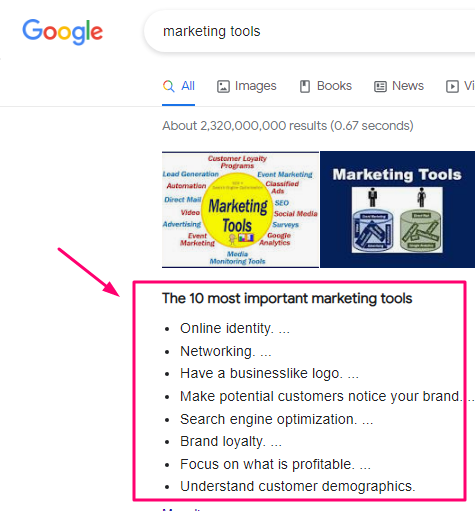
    When you search in Google, you’ll see snippets for a topic like this;

    The writer of this content organized it into easy-to-read and well-organized headings.

    Image alt tags

    Images are equally important as content on a webpage. These helps readers to engage with content and helps them build connection while reading content. From SEO prespective, it is very important to optmize webpage images with the alt tags to rank your website.

    If you concentrate on writing and ignore optmizing the images, it’s not the right SEO strategy.

    People not only search text in Google but also click the images.

    SEO for images is totally different than the text because search engines can’t read your images.

    So, to rank your images, you need to optimize the alt tags of your images. This will help online searchers, searching the “Images” tab; they’d still find your post.

    Best practices

    • Be concise and descriptive 
    • No keyword stuffing 

    HTML Code

    In your WordPress post, click on the right side to add “featured image.” 

    Here you’ll see “Alt text.” Now you can add, title caption and description.

    By doing this, you’ll enhance your chances of organic search.

    Schema markup

    C:\Users\College\Downloads\Screenshot (57).png

    HTML code

    Here’s a sample of HTML code.

    Nofollow link tags

    If you link to another website or page, it will increase that website’s domain authority. But a nofollow link doesn’t do that.

    Neither it’ll help the website’s SEO.

    HTML code of nofollow tag looks like this;

    If you need a backlink SEO strategy for a website, always go for Dofollow links.

    Links and anchor text tags

    When you are writing a post, you’re probably going to link to other websites.

    But make sure to give credit if you want to include images or statistics from different sources. 

    Anchor text is a must for SEO endeavors.

    HTML tag of anchor text will look like this;

    Anchor text is really important for Google to understand what the link or text is about. 

    In short, If you include the anchor tag of a different website in your relevant niche, it will boost your chances of rank.

    Canonical tags

     If you think that you don’t have any duplicate web pages, then you’re wrong.

    Every site has duplicate web pages.

    For human beings, it isn’t easy to understand, but not for search engines.

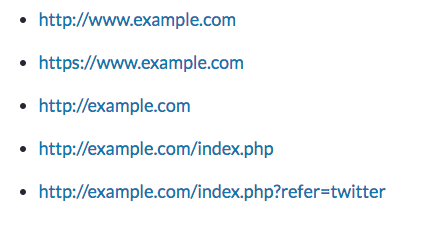
    By using different URLs, a search engine can crawl the same web page.

    We see all of these as the same web page, but the search engine sees it as duplicate.

    HTML code for canonical tag would be like this;

    If you’re not aware of coding, then Software is a good alternative. 

    But which Software?

    There are 2 popular softwares on the WordPress site.

    1. Yoast SEO
    2. Moz

    Yoast SEO will guide you about SEO title, keyword or meta description length, readability score, and SEO analysis.

    Moz with varied SEO tools also helps you to rank your website.

    Your SEO strategy is incomplete without optimized HTML tags. 

    Bottom Line

    Ranking of a website doesn’t happen overnight. It needs a lot of patience, hard work, and organized SEO strategies. 

    Working consistently on a website to improve its rankings by HTML tags raises it to the top.

    In simple words, HTML is the language that you use in your website to tell search engines about your content and subject matter.  

    When you’re not using these tags, then the SEO of your website is going to suffer.

    Pay attention to all the following HTML tags,

    • The title tag, 
    • Meta description, 
    • Header tags, 
    • Image alt tags, 
    • Schema markup, 
    • Nofollow links,
    • Anchor text,
    • Canonical tags.

    It is a wonderful idea to go hand in hand with Software to help you place all of the above tags.

    Let me know which HTML tag you will plan for your website’s SEO?

  • Why site structure & internal linking is so important in SEO?

    Articles about Internal linking usually start with a discussion of how important yet complicated the subject matter is. 

    On the one hand, internal linking seems a simple concept, and everyone should do it. On the other hand, the process, plan, and best internal linking practices are very complex. 

    But regardless of how basic or complex, you think it is, no one argues about its importance.

    For content marketing, strategic internal linking is an SEO power technique. 

    So, there’s no doubt that internal linking and site structure are fundamental elements in the SEO process. 

    But, what is “Site Structure”?

    It simply means organizing a website.

    The purpose is to create a website that allows search engines to crawl and easily navigate users.

    The most crucial step in SEO learning is the practice of on-page optimization.

    On-page optimization relies on an on-page organization using headings such asH1, H2, H3, H4, H5, etc.

    For instance, let’s compare a website with a house.

    The ideal house has a suitable and accessible number of rooms.

    On the website, pages are just like these rooms. To make the house cozy and comfortable, you must build up some corridors. 

    If you don’t have corridors, how can you access all the rooms? You must be thinking about the exterior windows, but that doesn’t look like a better option. 

    Topics & Keywords

    The next major step in creating an ideal website structure is to organize these pages into topic lists.

    Ideally, we prefer to write the topics based on our keyword lists. Instead of thinking about pages and optimizing as per your keywords, make your pages look like topics.

    In this way, your topics and content would answer each part of the buyer’s questions.

    I agree that keyword research is a crucial element of content writing if you want a rank your pages. 

    But we need to understand few things very clearly.

    If you smartly make a list of your low-competitive keywords and start using them randomly in your content creation, it won’t help your ranking until you use in naturally.

    Even things are more complicated nowadays. 

    Search engines are way more innovative and analyze and rank content after checking through many factors.

    That is why it is imperative to plan the topics that need to be covered on a page.

    When you’re done with it, the process of content creation can result into:

    • An expansion of keyword list
    • Ranking
    • Enhanced user engagement

    Information Architecture Structure

    Once you’re done with your keywords research phase and planning the main topics your site needs to focus on, now it’s time to build out your site’s IA.

    Now, remember the example of a house and a website where the website’s pages represent the house’s rooms.

    The site’s information architecture (IA) would be represented by the corridors that connect all rooms.

    The above image shows the appearance of a typical site structure.

    At the top of this image, there’s a most visited page, called homepage.

    Then the homepage is linked to the website’s main topics or categories.

    These are the main topics around which your site focuses on.

    This is quite helpful as search engines crawl these topics, and they will come across your website and better understand your content creation.

    When you place your website on a logical topic, the content is structured to support the other topic.

    What happens now?

    Well, this builds the authority of your content and subject.

    This is where Google’s expertise, authoritativeness, trustworthiness concept comes into play.

    If the site establishes a relevant authority for a subject, there will be great chances to rank for relevant searches within search engines.

    Similarly, if a website produces useful and valuable content for its audience, there are chances that users will build trust and recognition for the website around that particular subject.

    Now, if the users are looking for more queries or need some help in the same subject category, they will return to your website directly and more often.

    Internal Linking

    In simple words, internal linking is linking between pages on the same website.

    This can be done in two ways;

    • Navigational items
    • Internal links in the body content

    So what are the benefits of internal links?

    These types of links are helpful for three reasons:

    • They allow users to navigate a website. . If a page isn’t linked to, it becomes harder to find and is less likely to be crawled as often, if at all. 
    • They help establish an information hierarchy for the given website.
    • They help flow link equity (ranking power) around websites. This allows for pages deeper within the site to rank better for related terms.

    The following steps are a good rule of thumb to set up your internal linking strategy.

    1. Determine the ideal structure for your website

    2. Decide your most important content

    3. Add contextual links

    4. Link hierarchical pages

    5. Consider adding a related post

    6. Try adding navigational links

    7. Add links to your taxonomies

    8. Consider adding links to recent or popular posts

    Don’t Move Pages when Updating

    If your website isn’t a new build but rather something old, don’t move pages when updating the site structure.

    One of the most serious mistakes many of us like to make is;

    1. Resetting or changing the URL of a page
    2. Moving the page within your site

    For SEO, it is incredibly dangerous and can have a substantial negative impact.

    Redirect is not the most logical way to make a better site structure, though it can solve this issue.

    Redirects take the order of the flow of equity from both internal and external links.

    While it would be time-consuming to clean up these links to update the new URL.

    You can properly implement breadcrumbs on a page to move something from one topic to another.

    Once you enable breadcrumbs and have attached the appropriate markup, it’s just a matter of changing the relevant points where you want the page to be associated.

    In this way, you aren’t changing the physical location of a page within the structure, but this method allows search engines to see a change whenever they crawl the page.

    This method helps to eliminate the crawler’s possibility of seeing this as a completely new page.  

    For users, it gives them the ability to navigate within this funnel easily. It’s a win-win situation.

    Competitive Analysis

    As you perform other tasks within SEO, your insight into your competitive websites is another fantastic resource.

    Take a look at your competitive content/pages that perform well for the same topics you are trying to rank for.

    If their site is doing well, you should be able to look at the structure of their site, giving you insights on things search engines are looking for.

    Moreover, you will have the ability to find even a variety of topics to cover within your structure.

    Bottom Line:

    The structure of a website is an essential part of the SEO puzzle.

    If you establish a well-organized structure for your website, then you’ve built a stronger foundation.

    If your site doesn’t have a strong site structure, all of your SEO efforts will have less impact on your success.

    In the same way, Internal linking is not overwhelming or complicated. 

    You will have a more robust link website and better SEO by consistent internal linking. It’s even worth going back and auditing your old content to make sure it has enough internal linking.

    Let me know if you have any questions.

  • These 4 Things Will Change Content Marketing in 2022

    SEO is the only source that increases your traffic by 1000%+ in comparison to organic social media traffic. 

    So, 64% of marketers invest time in SEO, only 36% work on content. 

    49% used Google to find a specific item or any new product based on the content. It has been reported that due to bad content, 50.33% of searches on Google don’t bring any new sale lead. 

    According to a recent survey, it was reported that the revenue of content marketing reached $42.15 billion in 2019. That is a 14.4 percent increase as compared to previous years.

    A survey conducted in 2020 among digital marketing leaders resulted in 35% of respondents stating that more synergistic relationships should be developed vertically and horizontally across the organization. This is required to communicate the digital marketing vision of the organization. 

    Did any of the following questions occur to you?

    • Have you noticed how hard it is to create engaging content? 
    • Do you know how easily your customer gets distracted? 
    • Have you ever thought of looking at your content from your user perspective? 
    • Did your SEO expert ever tell you how hard it is to rank content on Google?

    These are all the tough questions you need to because, my dear friend, content is the new market. And with the constantly evolving Google’s Broad Core Algorithm now user experience is one of the key components of ranking.

    Being an entrepreneur, you should know that the marketing world is ever-changing and dynamic. The trends, tactics, and technology are never stagnant. And the stats clearly show that content needs to be more and more effective. 

    Your effort with content

    If you are an entrepreneur, you will have a Facebook business page, an Instagram page, and a website. Until and unless you boost your post with Facebook boost options, your content will never be viewed or read by the masses. 

    Isn’t that strange that you have worked so hard to create content, and no one is reading it? It’s frustrating seeing your efforts being useless. You might second guess your abilities.

    So, I am going to be with you throughout today’s session. It will be an interesting one where I will be guiding you with things you should adopt and let go of as well to be a successful content creator. 

    Why is your content not being read and watched? 

    There are over 600 million blogs, 1.7 billion blogging websites, and 31 million active bloggers. Are these stats enough to put you through a shock?

    There is too much competition. You have to stand out. You have to do something these 31 million active bloggers are not doing. Yes, this is overwhelming, but there is nothing to worry about, as you are here with me, and I will break it down for you in the simplest form.

    First thing first, you have to accept the fact that there is a ton of content already on the virtual world of the internet, and everyone is already putting in a lot of effort to come up with interesting content related to the same topic. 

    How to make your content reach the masses?

    There are a couple of things you could do to make your content read or watched more. If you’re starting off with SEO, remember this, SEO is only a tool. It’s not the content itself. So SEO is important but not that much. 

    So here are a couple of things which you should do to stand out of the masses:

    1. Push Notifications

    Notifying people that you published new content is very important. One way to notify your users of new content is push notifications. It’s super effective. The working methodology of push notifications is similar to the subscription button. 

    Push notifications will let you automatically send a notification to your subscribers within their browser. Those subscribers who are anxiously waiting for your articles will be amazed to see your new articles. 

    It’s similar to Netflix released a new movie or episode, and you get a push notification to see it. There is no better explanation of a push notification than Netflix.

    1. Be a multi-language content creator

    Let me ask you this, why do you limit yourself to only one language? Whatever that may be, but why limit yourself to one specific set of population. English should not be the only language you should focus on. 

    Do you know how many non-native English speakers live in the USA? Many, many people. These people don’t use Google in English. These people tend to use their mother tongue more than English. They use every language other than English. 

    Please believe me when I tell you that the biggest traffic gain comes from translating your content into more than two languages. Do this, and you will see your traffic increase within days after translating your content into multiple languages. 

    1. Rewrite your old content

    How much do you think you know about things? How many posts or articles do you think you can write every week? Sit down and think about it. It takes a lot of time and effort to produce content. It isn’t easy to come up with something new every day.

    Yes, try it; you will fail. You can’t come up with new content every day for your website. And you can’t let your traffic down. Plus, you can’t keep your subscribers waiting. 

    What to do? How to manage content when you don’t have it. Well, haven’t I told you before that I am here to help you out with every technicality you will get stuck with? Allow me to solve your problem with only one word. Rewrite.

    Yes, rewrite old content. It’s easy. It’s refine-able. It’s reusable. It’s gold for you. It will make your subscribers greedy for new content. For them, it’s new; for you, it’s reusable. 

    Rewriting will make you focus more on your new work while your website will be busy making revenue for you. It will keep your subscribers busy as well. 

    1. Click-through rate

    Rand Fishkin, an SEO expert, shared an experiment. He asked everyone he knows to search for something, anything on Google. Regardless of what the results are, he asked everyone to click on the fourth link as a result of the search. 

    And within no time, that result went from number four to number one, and it stayed at number one for quite some time. He explained that this is only because your clicks tell Google that a certain link is being read more than usual. 

    So how do you get to increase your click-through rate? Once again, I am very fond of answering your very precise questions? It’s simple; you need more clicks. How, optimized tags. Yes, simply it. Let me give you a list of tweaks you can use to optimize your tags:

    • Titles with questions are intriguing and tend to get more clicks.
    • Titles should only be 15 to 40 characters in length
    • Choose your keywords wisely. 
    • Focus on the URL of the article.
    • Use power words, i.e., amazing, effortless. Get your list of power words. 
    • Play with emotions. Use emotional words.
    • Write a proper SEO tool.
    • Write your Meta descriptions yourself. 
    • Titles with years tend to generate a higher click-through rate
    • Your focus keyword, SEO Title, and Meta Description must talk about the same thing. 

    Bottom Line

    Technology is evolving very quickly. If you want to survive the virtual reality or the augmented reality of internet life, you have to be quick and precise with your learning skills. 

    The future is unpredictable, and things can go south at any time. But it doesn’t mean that you have to be affected, and just because you didn’t know, your business is affected as well.  

    So are you sure you want to be left out? Is this article not enough for you to change your perspective about the future of content management and content creation? Are you ready to be left behind?

  • Apply These Techniques to Avoid Loss in Traffic after every Google Broad Core Update

    Apply These Techniques to Avoid Loss in Traffic after every Google Broad Core Update

    55% of people in France, working as content creators, were trained by their organizations about SEO in 2020. They reported improvement in their work. That’s half of your workforce telling you that SEO works. You are happy, and it looks like that training your employees worked. 

    Here are some statistics showing what SEO had done for people from all around the world and from every field of life. 

    • 61% of CEOs said that improving SEO to the point of growth where they have a constantly increasing organic presence is the only marketing strategy.
    • 70% of social media experts see SEO as more effective than pay-per-click.

    I will share one more amazing fact with you, and then I will be going to talk to you about Google’s Broad Core update. I think it will be surprisingly shocking for you to know that your SEO can be affected easily by Google’s Broad Core update. But first, here is that one last fun fact. 

    • Google’s ad solutions helped more than 1.3 million people from different businesses, website owners, and NGOs. 

    This article can be referred to as an act of hatred towards Google. No, don’t get confused. You see, when you work on something, hoping is to be at the top of the list, you get emotionally attached to your product. 

    And if its performance is affected, due to any number of reasons, you feel unaccomplished.  

    Google does this to you. It does it everywhere. It informs you and just simply upgrades itself. 

    How can Google affect our work? It is not Google’s responsibility to let everyone see it. 

    Yes, the list of questions which you have now is very valid? 

    To explain all of these phenomena, I have to take you along with me through the process. And you have to be very patient with me today.

    Google Updates

    In the easiest words of simplest translation, Google updates its broad core algorithm to change how Google evaluates content. And how that content impacts customers. To do that, Google has some business needs to have a continuously evolving User experience. 

    Core algorithm updates are usually designed and maintained to increase the level of searches. This can be related to any key phrase or keyword. 

    Google released a broad core algorithm update on 2nd June 2021. But this time, Google couldn’t get all the improvements all enhancements in one update. This is why it is expected that a new broad core algorithm update will be released anytime in July. 

    Unlike before, Google is going to roll out two separate core algorithm updates. Although Google has made it clear that most of the sites are likely to notice some traffic drop. 

    For me, an SEO expert means that yes, there is an impact of traffic every time Google updates it’s broad or algorithms. That’s why as SEO professionals, we are usually at the mercy of Google. 

    Even smallest changes to their platforms and algorithms can mean huge differences in how our websites rank and perform. 

    With all these frequent updates in Google’s core algorithms, we have to be prepared to avoid any traffic drop or minimize the update’s impact. In today’s article, I will discuss the simplest ways to avoid any major hit to your organic traffic.

    Without further delay, let’s begin.

    Core Web Vitals

    Google announced that its Core Web Vitals will be shifted to ranking base mode anytime in 2021, which can be anytime now. That’s right around the corner. 

    I am sure you remember the update from March earlier this year. With that update, it was evident that Google was going to combine Core Web Vitals with previous user experience signals. If I can make you take a step back and look at the bigger picture, the objective was to improve SEOs. 

    You have a wonderful question again. What makes Core Web Vitals so important? It is important because we can now evaluate our websites on the newly defined standard. This standard is called “real world” experience. 

    Real-world experience is the collection of emotions users have as they scroll on your website, top to bottom. Real-world experience consists of three parts which are:

    • Largest Contentful Paint: 

    It is referred to as LCP. It calculates the time a page calculates to load in the viewpoint, and the information used will be seen without scrolling down.

    • Cumulative Layout Shift:

    It is referred to as CLS, and that measures visual stability. That’s it in simplest words. But one can always ask what Visual stability is. It is whether all the elements on the page shift in ways that users might not like leading to poor user feedback.  

    • First Input Delay

    It is referred to as FDI. It simply checks the time difference between the click of the user the browser processing the click. Do you remember how irritating it was when you click any button on the page and nothing happened?

    Well, now, Google took care of it. And the looks of this functionality, if there is a bigger difference between a user clicking a button and browser processing it, the website ranking will be affected. So will be the SEO. 

    In short, now user experience will matter more than ever before. And in the end, it all comes down to choose the best site. Now the fight will be on the time difference of two sites having similar actions to execute and generate results, determining the most optimized website. 

    Search Console

    The race will be tough now. Search Console will be now rating your mobile and desktop URL with “poor,” “needs improvement,” or “good” feedback. Google Search Console will help you see through the Open Report section to see where CLS, LCP, and FID come into play for either your desktop or mobile site.

    Oh, please don’t get confused. Have I ever left you unaware of anything terminology I am using to use and improve your chances of virtual presence? 

    So, allow me to confirm with you. It is okay if you don’t have Google Search Console set up. 

    You can always use alternate resources to check your CLS, LCP, and FID and get these insights from tools like a lighthouse, Chrome Dev Tools, and Page Speed Insights tool. 

    Google’s John Mueller said that in 2021 Google will be switching to the newer version of the mobile index. And on top of that, Google is going to dump all windows only websites from its index. 

    Updates and Google Validation

    So, timing is really important because all these changes are required to be taken care of immediately. It would be very wise now to hire a developer and start working on your websites. Because if it got dumped out of the indexing stack, then it will be of no use. 

    Please understand that it’s humanly impossible to fix every issue on your website within a limited time. And it will require a lot of work to save your website from any damage. With this much pressure, you have to be very patient with your employees.

    But here is the thing. Everything is a procedure. Procedures take time to be validated. Even if you manage to do the tweaks in time, you still need to be in the queue to get your tweaks validated by Google. 

    And the queue is going to be a long one. However, Google itself is claiming that Google will take around 28 days to validate. So you have to keep these 28 days in mind as well. 

    Are you overwhelmed already? Confused about how do you start? Where do you start?

    Well, I’m glad you have me as your consultant. 

    Start Right now:

    Like a competent consultant, I am feeling proud while recommending Semrush Site Audit to start with. 

    It helps you uncover potential gaps right now by addressing items such as 

    • Uncompressed JavaScript 
    • CSS files 
    • Issues with unminified JavaScript 
    • Issues with unminified CSS files
    • Uncached files or uncompressed pages. 

    To help you easily understand, I have prepared an example for you. 

    Assume your website is having all sorts of problems, as mentioned above. And the results of the Semrush tool were not good. But now you have a list of problems which you have to fix at every cost. So you start working on these issues instead of working without knowing what to fix. 

    And by the end of the activity, you will be down to just a handful of errors, warnings, and notices. And that’s how you can improve the result of your website in Semrush Site Audit. 

    Is that all from the upcoming Google Core Web Vitals? No, that can’t be all. In technological evolution, only time will tell what new technicalities we will see in the future. 

    Bottom Line


    Google loves to keep us on our toes. By following the tool to solve basic SEO errors and warnings, you can move the needle to a higher evaluation with Google’s Core Web Vitals. 

    So that’s all from my side today. I hope that this article was helpful and that you’ll manage to fix the mistakes before the deadline is at the door.

    Let’s get you started with the rectification process; what are you waiting for?

  • How to write captivating content for your website?

    How to write captivating content for your website?

    It can be tricky to capture your reader’s interest even with unique website content. In this fast-paced digital world,  so many things scream for reader’s attention that it’s easy for them to veer off from your site. From Google ads banners to other types of web advertisements, your readers can feel bombarded with many things at once.

     And their attention span dwindles every second, and some of them will spend only a couple of seconds on a webpage before hitting the back button. So, you only have very little time to grab their attention.

     To overcome these odds, you need to write captivating web content and in a manner that will keep them glued on to your webpage and minimize the bounce-back rate.

    Also, you should create original content as Google rewards sites that publish high-quality original content. 

     Similarly, creating great content for your website enhances your site’s ranking and makes it a force to reckon with. It also positively impacts your business and holds your reader’s attention.  This blog post will show you how to write captivating content for your website.

    Whether your site is a hobby or for business, you have to do it right. This blog post will show you how to write great content for your website.

    Tips for Writing Captivating Content For Your Website

    There’s already enough bad content on the web. Make your web content stand out by following the tips below.

    Make Your Content Easy to Read

    Your readers visit your site as they want to read your content. Unfortunately, and as earlier intimated, your reader’s attention span is minimal, and nobody enjoys reading through a block of text.

    You have to grab your attention right from the get-go and get them hooked till the end. You do this by writing high-quality content and writing in a manner that will enable them to skim through your content in a matter of seconds.

    To achieve this, ensure that your content is easy to read by  

    • Writing in short sentences and paragraphs.
    • Using subheadings
    • Using high-quality visual aids such as photographs, charts, comics, and memes.
    • Highlighting most important points
    • Select an easy to read font
    • Choose an easy-to-read font

    Also, since most people use their mobiles to surf the web, ensure that your pages appear terrific, both big and small. Pay close attention to pictures you use and headline size.

    Also, be sure to use fonts created for online reading, such as Verdana and Georgia. The font size should range between 10-12 points or even bigger. Also, make the space between lines of text well-spaced to easy skimming.

    Know Your Target Audience

    Before putting your fingers to the keyboard, consider whom you are trying to reach. Then, before creating your first content, answer these questions honestly:

    • Who is my target audience?
    • How will my target audience find my content online?
    • Who is my secondary audience who may influence and inform my first audience?

    Let’s say that you are creating a site for a law firm. Of course, your first audience could be your current clients.

    Nonetheless, your secondary audience will be much more extensive. It might include law reporters, other advocates, or anybody who could require your legal services in the coming days.

    In this case, ensure that the content you create is exciting and accessible to all these valuable audiences.

    What type of queries could these groups of people ask about a specific topic? Where do they hang out most online? What kind of information could they be looking for?

    Your audience discovers web content through various ways such as social media sharing, email sharing, using search engines, and links from other authoritative sites.

    If you write for the web, you have to optimize your content for the search engines for your audience to find it.

     If you fail to optimize your content for the search engines, the chances are high that your audience might fail to find it.

    And what would be the point of creating content that no one would ever find?

    Consider your target audience again and know what search terms they could be typing into Google. Then ensure to include those terms in the subheaders and headlines of your blog posts. 

    Provide Solutions To Problems Your Target Audience Could Be Facing

    What are the main objectives of search engines? You are correct is you said to provide answers. And Google is excellent at this. Just enter a query into the search engines, and they’ll present you with numerous videos, links, and pictures.

    People use search engines because they need answers to something that could be bagging them for some time. And the job of search engines is to give answers without reservations.

     When individuals watch videos, view infographics, or read blog posts, they need an answer and get more informed about what they are searching for. It’s so amazing that people do not just need answers. They need quick solutions to their issues. 

    An additional tip here is: people don’t just want answers; they want answers fast. So, offer solutions you had promised to give in your post as fast as you could.

    In other words, do not beat around the bush. Instead, go straight to the point and make your content simple to scan so individuals can consume the crucial bits fast.

    Be Very  Accurate In Your Writing And Source Your Information From Credible Sources

    Picture this: you write articles for your company’s blog. Millions of people read it, and some of the info you provided turns out to be inaccurate. Can you imagine the damage this could do to your business and personal reputation?

     Remember that your blog is a representation of your business. Therefore, if the blog has some problems, it affects how people perceive the product.

    It’s critical that any figure you present be verifiable. Many blog posts would have a direct connection to the statistic as well as the source.

    Readers are more likely to believe you if you are accurate. Do you recall James Frey, the author of the best-selling novel A Million Little Pieces? He had to confess that the book was based on lies on Oprah Winfrey’s show.

    He has since published a few novels, but people will more likely remember him as a guy who fabricated his memoir than as a successful author of his other works. Unfortunately, his reputation has been permanently harmed as a result of it.

    Suppose you have ever watched the terrific movie Shattered Glass or maybe you have closely followed Stephen Glass’s fall from Grace. In that case, you can see the catastrophic effect that inaccuracy can bring on your profession.

    When contemplating over the accuracy question, consider the following:

    Think about whom you’re linking your content to. Are they reliable and trustworthy sources? Your readers  trust you more if you link to other credible high-quality websites.

    Linking too much helpful content will fortify your site. The more you can substantiate and reinforce your claims, the more credible your content becomes. 

    Do your best to help the search engines to determine what your content is about, plus how to classify your content by linking to other authoritative sites.

    Other Helpful Tips to Help You Write Good Content For Your Website 

    • Write original content
    • Create actionable content
    • Add suitable images and Videos to your content to communicate better
    • Create strong headlines

    Final Thoughts

    Never take blog posts or any other types of content sites faintly.  Researching and writing good website content takes a lot of time and effort. Excellent grammar, title, and organization are non-negotiable. When proofreading your blog post, ask yourself these questions:

    • Is there anything irrelevant that I need to omit?
    • Have I given the best-updated information to my audience?
    • Did I finish?

    Follow tips above to help you write fantastic content for your website to keep your readers glued to the end.

  • 4 Comprehensible FAQ Page Examples and Tips For Creating Yours

    4 Comprehensible FAQ Page Examples and Tips For Creating Yours

    It’s no secret. Best companies prioritize their customers. Right?

    A positive customer experience is vital to brand loyalty.

     However, providing an exceptional client experience may be costly, time-consuming, and challenging to implement.

    There are customer reviews,  chatbots, support lines to guide buyers through the purchasing process. But one overlooked customer care approach that is cost-effective and efficient. An FAQ page is one such strategy.

    What is an FAQ Page?

    An FAQ is an abbreviation for “Frequently Asked Questions.” It is a compilation of frequently asked questions and answers on a website covering topics such as: 

    • Hours
    • product or service usage
    • shipping and handling
    • product information
    • return policies etc

    FAQ pages fell out of favor for a while because businesses regarded them as obsolete and unappealing modes of communication.

    But nowadays you’ll find them on almost every website as they save time for both customers and staff.

    It’s tempting to get overwhelmed with the FAQ page’s design and its content.  Nevertheless,  we got your back on that too.   

     This post will teach you all you need to know about creating a successful FAQ page. In addition, it will also give you a few FAQ page examples.

    Before creating a Faq page, you need to know why you are making one in the first place. So, this brings us to the importance of the FAQ page.

    Why You Need to Create a Faq Page 

    Earns you More Trust

    You can access a lot of information at the click of a button. However, that information may not always be correct. As a result, consumers have never been more skeptical. 

    Customers hunt for services or products by sieving through several reviews, searching for services or products on various websites, and comparing prices throughout the web. 

    The shopper will become a loyal client if your business understands the consumer’s challenges and addresses them through a flawless user experience.

    One of the typical problems is when a customer has a query about a product or service, and there is no information available to address that concern.

    Consumers say to themselves, “I can’t be the only one who is curious about this,” but why can’t I find an answer anywhere?  So, most of them shut the window and head over to your competitor’s site. Sad. 

     By making a detailed FAQ page, you can guarantee consumers get the answers they desperately need and continue buying on your website.

    It is great for SEO

    To maximize the ability of your FAQ page to increase website SEO, build a single page with all of the queries and then link out to specific sites that address each issue in more depth.

    Building this web of links will delight search engines, and when customers are googling inquiries about your services or products,  they will be redirected to your dedicated pages. 

    Addressing these issues on different web pages can also help your URL surface when people search for information about your rivals’ products or services.

    Other benefits of creating a FAQ page are that it stops negative reviews and offers you a chance to give additional insights regarding a product or service, and improve internal page views.

    When Do you Need An FAQ Page?

    If you receive loads of similar questions time and again, then you should create a FAQ page. 

    When running a blog with a mass of unique content, you need an FAQ page to educate your audience about your services or product through these posts.  

    You do not require an FAQ page when your service or products need an expert to install them.

     For example, you’ll never find an FAQ about performing any surgery. 

    You can find FAQS on what to do before or after specific surgical procedures and how to heal faster, but patients do not have to understand the nitty-gritty details about how to carry out a surgery. 

    Create a helpful FAQ page by ensuring it:

    • reflects the requirements of your target audience
    • It covers a wide range of interests (transactional, informational,  and many more).
    •  It is updated regularly depending on new information insights.
    •  Brings  in new users to your site by addressing and solving challenges
    • Displays expertise, trust, and authority in your field.

    How to Create an FAQ page 

    Creating an FAQ page does not have to be the elephant in the room anymore. Follow the tips below to create an FAQ page that’ll be the envy of your competitors.

    Use Service Data to Recognize the Most Regular Questions

    Your FAQ page should answer the most frequently asked questions about your services,  products, and company as a whole.

    The most straightforward approach to find those queries is to look through your customer service statistics and discover which issues consumers are consistently contacting you about and address them accordingly.

    2 Classify the Questions Accordingly

    Determine commonalities in your collection of questions and start classifying them based on that similarity.

    The following are examples of common FAQ categories:

    • Returns and shipping
    • Discounts and promotions
    • Product 
    • Payments
    • Your account
    • Sizing 

    Sifting through a large number of random inquiries will only add to the consumer’s frustration. Classifying the questions will guide them accordingly in their pursuit of correct answers. Here’s how to create an FAQ page 

    1 Highlight the Most Popular Question and Link them 

    Ensure that all the questions you are addressing apply to the masses. For example, “what to do if my dog fights?” would not be an ideal FAQ. A superb IQ is always about service or product details plus the quality of the material used to minimize the number of tears. 

    After you’ve identified the most frequently asked questions, select no more than five to emphasize as the most often asked at the top of your FAQ page. 

    Since most shoppers will only need the answers to these questions, highlighting them will improve the user experience.

    Update it Frequently

    An outdated  FAQ page can be more disappointing for customers than no FAQ page at all.

    When you launch a new product or feature, ensure to update your FAQ page with recent queries.

    It’s a good idea to go over the page once four times a year and see if you need to make any adjustments. As a  topic grows in popularity and has to be pushed to the top, or you might change payment processors and need to change those terms.

     Regardless of how big or minor the update is, ensure it reflects on your FAQ page.

     Superb Examples of  FAQ Pages 

    Now that you know you have seen the tips on creating an FAQ Page let’s look at exceptional FAQ page examples. Sure, these pages are at the top of the game. Let the design, content, and layout inspire you to build a compelling FAQ page. 

    1 Instagram

    At first sight, it appears that this FAQ page could be more appealingly labeled.

    After all, Instagram is an artistic site. However, after browsing the page, you’ll discover that their stuff is genuinely brilliant.

    They include a “what’s new” section that discusses recent app upgrades, a typical feature among app users. The categorization is straightforward but meticulous, and the “known problems” segment relieves the support team of the burden if a bug exists.

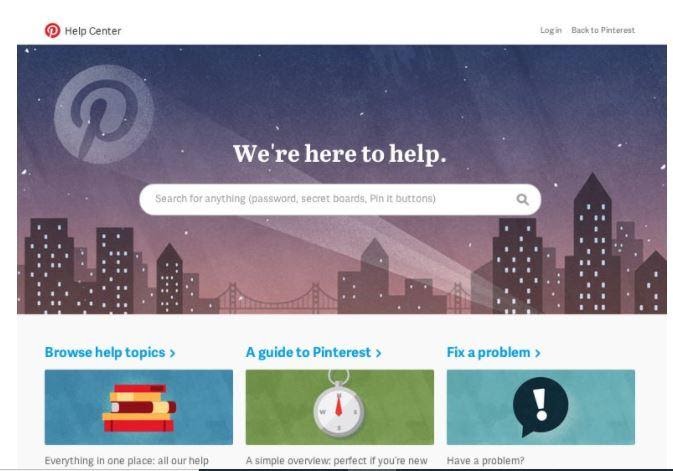
    Pinterest 

    Pinterest’s FAQ page is slick, minimalistic, and fashionable.

    All three links take you to the same help center page, which has an appropriate sidebar on the left and is relatively straightforward to explore. All of the answers provide in-depth descriptions and photos to help Pinterest newbies become Pinterest masters.

    Spotify

    Spotify’s FAQ section includes the what and the how.

    Their FAQ part is detailed and well-organized, yet it can never overwhelm customers because they can easily navigate the instructions. Drop-down menus are frequently employed.

    DropBox

    Dropbox’s comprehensive but simple FAQ page checks all the boxes.

    The page has a clear, colorful search box that encourages users to use the tool rather than scrolling to answer their questions. 

    The top of the page contains links to its featured FAQ pages, which are most likely popular and the newest.  It includes many topics below, each with a brief description to enable readers to find solutions quickly.

    Closing Thoughts

    The internet is bursting at the seams with incredible examples of FAQ pages. These are just a drop in the ocean. Pay a closer look at these examples and learn a thing or two. 

    Remember, customers come to the FAQ  page for assistance, and if they do not receive it, you can wave goodbye to that sale. Spend some time building your very own FAQ page, and you will reap the many rewards.

  • Google’s Future: The Mindboggling Curiosity

    Google’s Future: The Mindboggling Curiosity

    1998 was the year that changed the progress trajectory of the Internet. 

    Google was established on 27th September 1998. And this year it will turn 23 on 27th September. Google started its journey as a search engine is now considered to be the pillar of innovation and development. 

    It is a multinational internet company based in California, is known for its digital services. Google was ranked first, with over 267 million unique users in 2020. With a market share of 61.8%, Google was ranked as one of the leading US search engines. 

    Some of the financial statistics of Google are listed below:

    • $181.7 billion in revenue in 2020 came from its advertisement services. 
    • These advertisement services can be divided into Google Sites and Google Network Sites.
    • Google sites, in 2020, contributed $123.83 billion in revenue. 
    • Whereas Google Network Sites generated $23 billion in revenue. 
    • Quarterly growth of Google from $41 billion in Q1 2020 to $56.5 billion in Q4 2020. 

    Have you ever imagined how does Google get to have so much revenue? What would be the thought process of the geniuses working in Google? How would they foresee the future? What would these geniuses have in mind for the future? 

    These are all the questions that made me do a little research on Google and see its publications. I saw an interview of Google’s CEO Sundar Pichai, his press release, and Key Note Speech on Google’s sustainability in 2021. It all had one thing in common—the clear AI VISION.

    But let’s be honest, even the term AI Vision in itself is confusing. Let’s get into the details and allow me to share with you whatever I have understood about Google and its future endeavors. 

    Where is Google Standing?

    Artificial intelligence, Quantum computing all the miracles of technology that Google led are being worked on by almost every industry. The industries which are not using AI will soon be shifting to AI as this is the only need of current times. But what’s next. What new crazy ideas is Google working on?

    I was looking for answers to a very specific question. What new things will Google let us embed in our lives in the next 5 to 10 years? 

    With the fast-paced advancements, I thought maybe a fortune teller has any idea of what will be google doing. But hey, when was the last time you saw a prediction coming true. So to know what Google is up to, I looked up Google in Google Chrome. 

    An obvious factor is that Google is the data king. So one of the obvious advancements we will be seeing is in the field of data, and data services will keep on evolving. For example, the voice search! 42% of the worldwide online population had conducted a voice search using Siri or Google Assistant. 

    So with so many people shifting to voice search, it will soon be challenging for Google to push advertisements. So I think, there must be other revenue streams for Google to work on to avoid any revenue loss. 

    What is Google’s plan?

    Here is a list. But before looking into the list, buckle up, as this will be a wild ride in the future.

    Quantum Computing

    To start with, Google and its quest for quantum computing. It is a very long relationship Google is working on developing. Google wants to build its quantum computer by 2029. But why does Google want to put quantum technology in use so eagerly?

    The answer is to help solve a vast range of problems such as feeding the world, climate change, and better medicines. To achieve quantum computing, Google needs to have a supercomputer working on the basic mechanism of quantum mechanics. Google has unveiled its Quantum AI campus in Santa Barbara.

    Quantum AI campus consists of quantum data processing center, a hardware research lab, and a quantum chip fabrication facility. Google will be spending billions achieving Quantum Computing.

    What’s more?

    Google Car

    For a while, now Google has been working on driverless cars for quite some time. With the support of Google maps, Google will be one of the leading organizations working in the autonomous mobility industry. This means way too many more driverless cars on the road. 

    With the continued funding, Google is making progress with all the research and development they need to have highly functional autonomous driverless cars. Both Google and Tesla know that this is a trillion-dollar industry worldwide.  

    Since Google has a massive data bank, loads of AI backing, and quantum computing power for machine learning, these attributes help Google to get the world’s first legally allowed driverless car officially on roads any time now. 

    The revamp of Google Bicycle

    Google is also working on another mobility-related product. It has its hands deep in shared mobility. Have you seen Google’s self-riding bicycles? Yeah, don’t be shocked. You read it correctly. Google has its self-riding bicycles. Crazy right. It’s been out there for a couple of years now, but now Google is working on reengineering the cycling experience. 

    Google has been striving to amplify the reach of its hardware portfolio from its pixel smartphones to the chrome book. It has big plans to get devices to every internet user on the planet. 

    This means that Google will be able to get more and more data than ever collected before. As data. In the 21st century, it is referred to Oil; Google wants to have it more and more. And to do that, Google may be getting in slightly cheaper electronic products. Google Pixel will be more affordable, just like the Xiaomi mobile phone, in the coming 5 to 10 years. 

    Space exploration

    In today’s era, every big organization with a great amount of funding is looking for space exploration. I haven’t heard of a Lunar XPrize Project. In the Lunar XPrize project, Google Invites inventors to come up with a space exploration solution. With Lunar XPrize, Google is working on getting NASA projects like Space X. 

    Google Wing

    Have you ever thought that Google will be working on making drones? No, no, these are not simple camera-oriented video and picture capturing drones. The wing is a project at Alphabet subsidiary known as X. X is working on utilizing Google Maps and transform the way goods usually are moved in-between two points. 

    Robotics at Google

    Previously, Google used to own a company named Boston Dynamics. Yes, this was the company that made amazing robots. But then it was sold off. And Google is now planning to work on its robotic section. It is called Robotics at Google. 

    Google has made its robotics division focus on merging the Internet of things with electronic household equipment. Some examples are Mika bot, Dolly, and Redwood robotics are some of the Alphabet-owned companies currently working in robotics under Google’s supervision.

    Bottom Line

    Everything that I had fantasized about in my childhood is coming to reality. From seeing Inspector Gadget to seeing military-grade robots, driverless cars, and robots following orders, Google is working very hard to change the course of humanity. With AI and Machine learning, Google is making its way very fast to accomplish something new every day. 

    Quantum mechanics leading to quantum computing will help Alphabet and Google to accomplish many hurdles to improve the human lifestyle. Be it an education system or a technical diploma; Google will make machines work for humans. 

    Only time will tell if these machines and algorithms are morally sane or not.

    Dream Big, imagine something widely crazy. 

    Are you ready to give it some time, like 5 to 10 years, to be a particle experience? Only time will tell if these machines and algorithms are morally sane.

  • How to write product descriptions that brings high conversions?

    How to write product descriptions that brings high conversions?

    Picture this: You have a customer on your web page, searching for the ideal products that suit his or her needs. The one last thing remaining is to convince the client to click that “add to cart” button. 

    But how are you going to persuade him/ her to click that button?  You convince him with an effective product description. A product description is a marketing copy that briefly describes what a product is and the reasons for buying it. 

    When it comes to conversion, knowing how to write product descriptions is a critical aspect because your online business depends on it. 

    Though product descriptions hold substantial power, it can be mind-boggling to write a good product copy, particularly if you are dealing with a long list of products on your product web. 

    We have done a lot of digging and have come up with 5 simple to follow tips for product description writing that will enable you to build awesome product copy that converts. But first off let’s see why you need a product description

    The Importance of an Excellent Product Description

    Why would you bother writing a product description? Apart from explaining what the product is, a product description also:

    • Helps your site visitors to decide whether a product is suitable for them
    • Convinces or persuades customers to consider purchasing the product by giving them compelling reasons for doing so. 
    • Exceptional product descriptions are optimized for SEO. So, when customers search for a product, your page pops up in Amazon or search engines.

    How to Write Epic Product Description that Converts

    Determine Who is Your Ideal Customer

    Everybody is not your suitable customer. It’s crucial to remember this adage when writing your product descriptions. If you attempt to sell to everybody, you won’t sell to anyone. 

    Focus on speaking directly to your target customer and leave others alone. That’s the way it is. After all, there’s something for everyone. 

    After knowing who your ideal customers are, understand the problems they are facing, and how your products can help them rise above these challenges. 

    To define who your ideal prospect is, ask yourself the questions below:

    • What will the primary prospects’ objections be during their purchase decision?
    • What are the primary prospects’ initial goals during their buying decision?
    • Who will gain more from these products?
    • What challenges can this item solve?
    • What expectations can this product satisfy if you own it?
    • Why should the prospects choose me over other fierce competitors?
    • What phrases or words do customers use when discussing the product?
    • How does this product function?
    • What are the basic details of this product?
    • Where would somebody use this product?

    Answering these questions helps to build ideal buyer personas.

    What is the age of the people who will find this product more appealing? Is it teens, pensioners, children, or the elderly?

    When writing product descriptions, write as if you are speaking to your buyer personas, and as if you can see the sound more human.

    For a natural deodorant product, for example, here’s how you could respond to the questions above:

    What are the prospects’ initial goals during their buying decision? To get rid of deodorant which contains loads of chemicals.

    Who will gain more from these products? Ladies and gentlemen ( women and men) who love natural products. 

    What challenges can this item solve? Keep them from stinking for 24 hrs.

    What expectations can this product satisfy if you own it? Making them feel clean while protecting the environment.

    Why should the prospects choose me over other fierce competitors? The product is genuine and contains no artificial chemicals.

    What phrases or words do customers use when discussing the product? “Natural”, “chemical-free”, “all-day freshness”

    How does this product function? The product is specially formulated to help you stay cool with natural, efficient ingredients. It neutralizes odors and prevents bacteria from settling on your skin, keeping you smelling fresh and tidy all day long.

    What are the basic details of this product? Say it contains ingredients with antibacterial properties such as tea tree oil and coconut oil. Also, it has essential oils such as bergamot or sandalwood, and lavender to give you a pleasant fragrance. And to fight moisture, say the product has naturally absorbent ingredients such as cornstarch, baking soda, or arrowroot.  

    Where would somebody use this product? Anywhere you tend to sweat a lot, such as armpits, behind the knees, or inner thighs. 

    If you follow these steps you’ll churn out a killer product description just like the one below from Schmidt’s

    Use Persuasive Language

    After knowing who your buyer personas are, come up with an effective way of addressing them. 

    Persuasive words can convert into huge sales according to Frank Luntz. These words can entice readers to take drastic actions. 

    The following words are particularly persuasive: 

    • Remarkable
    •  Announcing
    •  Introducing 
    • Amazing
    •  Sensational
    •  Simple 
    • Miracle
    •  Magic
    •  Quick
    •  Hurry
    • Mind-blowing etc

    .We should also be truthful and transparent in how we word product descriptions.  But certainly, being honest does not imply emphasizing the product’s flaws, but rather highlighting its strengths to motivate and convince the reader. 

    Below is a perfect example of the usage of persuasive language used to describe overpriced shoes from Nasty gal.

    Your target audience is more interested in what they can accomplish with your product than in the product itself. They’re curious about how purchasing your item will solve their problems.

     They do not care so much about the mundane details of the product. You can point this out in your product descriptions by framing product features and relevant details as must-buy advantages. So,

    Encourage potential customers by praising their goals.  Help them visualize what they can accomplish with your product. Assist prospects in imagining they already own the product.

    Use great sensory language to describe how the prospect will feel after using the product. Put into play the five senses: smell, touch, sight, sound,  and taste.

    Before selling the solution, bring out the problem.  In other words, turn the mice into rats if you need to sell large mouse traps ( make the problem appear bigger than it is.)

    Consider Welly for example. They have done an exceptional job of persuading visitors with their bandage kits by emphasizing the challenge (tricky hand wounds) and how their item solves related needs ( their extra-long bandages that do not fall off your hands)

    Make Your Product Description Easily Scannable

    Make your product copy easy to scan as only 16 percent read everything word-by-word. Seventy-nine percent just scan any new pages.

    Ensure that buyers can find the exact information they need without digging through other pages of data. In your product copy, include:

    • Bullet points
    • Short words
    • Short paragraphs
    • Loads of whitespaces
    • Different font sizes

    Writing in this manner saves your prospect’s time and improves customer experience. 

    Optimize Your Product copy for the search engines

    You can write a killer product description, but if you do not optimize it for the search engines, all your hard work will bear no fruit. 

    Search engine optimization is one of the easiest and the most effective ways of drawing both old and new customers to your website. It is also an excellent way of persuading prospects to buy your products. 

    Optimization begins with keywords. Keywords are the search words that most buyers use to discover the products they are shopping for. You’ll need keyword tools to help you find out which keywords are ideal for your Shopify shop. 

    Use Great Photos/ Images

    Even if you’re an expert at writing product descriptions, you’ll need high-quality photographs to accompany them.

    Why?

    Because images are a great part of purchasing decisions and are also excellent for SEO. Also,  product picture according to most consumers is more valuable than the explanation or even good or bad reviews.As a result, the picture itself contains a vital feature of the product definition

    The consumer will be able to see all of your product’s main features if you use high-quality images. They will also encourage the customer to envision herself using this product.

    Vitamix, a company that sells professional blenders, for example, uses high-quality photographs and videos to help close sales.

    Apart from informing you about the blender’s capacity, they have shown you a magnificent photo of the blender full of healthy foods and a persuasive video about the motor.

    They have managed to make the consumers envision themselves having this blender at home by showing what it is capable of doing.., 

    So, Is There a Well Known Product Description Template?

    Unfortunately, there is no such thing as a one-size-fits-all approach to writing a product description.

    You’ll have to come up with your product description template based on what you are selling, and your buyer personas. Answer the questions we discussed hereinabove and you’ll craft a killer product description. 

    Closing Thoughts 

    Writing an epic product description does not have to be a long drawn-out affair. Follow the steps we have discussed in this blog post and you’ll write a product description that converts. 

    Remember to highlight more about how your product will help the buyer personas than the product features. Because customers want to know how your item is going to help them solve the problems they are facing.