Blog

  • Competitor Analysis: What It Is and How to do it

    No business operates in a bubble. If you’re a small business owner, chances are you think about your competition a lot. But what should you focus on, and what should you do with that information?

    That’s where a competitor analysis can help. At any stage of your business, it’s worth taking time to conduct one. You’ll identify competitors, research their marketing strategies, and assess your brand’s strengths and weaknesses.

    Before any big game, a good sports team spends time studying their opponent. Coaches will do research, watch game footage, and put together a scouting report on each opposing player. A competitor analysis is like a scouting report for your business—a tool for designing a game plan that helps your company succeed.

    What is a competitor analysis?

    A competitor analysis, also referred to as a competitive analysis, is the process of identifying competitors in your industry and researching their different marketing strategies. You can use this information as a point of comparison to identify your company’s strengths and weaknesses relative to each competitor.

    You can do a competitor analysis at a high level, or you can dive into one specific aspect of your competitors’ businesses. This article will focus on how to conduct a general competitive analysis, but you’ll want to tailor this process to match the needs and goals of your business.

    Why do a competitor analysis?

    More often than not, small business owners find themselves juggling many tasks at once. Even amid a busy schedule, though, it’s worth taking the time to do a competitor analysis. It can benefit your business by helping you:

    • Identify your business’s strengths and weaknesses.
    • Understand your market.
    • Spot industry trends.
    • Set benchmarks for future growth.

    Identify your business’s strengths and weaknesses

    By studying how your competitors are perceived, you can draw conclusions about your own brand’s strengths and weaknesses. Knowing your company’s strengths can inform your positioning in the market, or the image of your product or service that you want members of your target audience to have in their minds. It’s essential to clearly communicate to potential customers why your product or service is the best choice of all those available.

    Being aware of your company’s weaknesses is just as important in helping your business grow. Understanding where you fall short of your customers’ expectations can help you identify areas where you may want to invest time and resources.

    You might learn that customers prefer your competitors’ customer service, for example. Study your competition to find out what they’re doing right, and see what you can apply to your business.

    Understand your market

    While identifying competitors, you may find companies that you didn’t know about or that you didn’t consider part of your competition before. Knowing who your competitors are is the first step to surpassing them.

    Conducting a thorough assessment of what your competitors offer may also help you identify areas where your market is underserved. If you find gaps between what your competitors offer and what customers want, you can make the first move and expand your own offerings to satisfy those unmet customer needs.

    Spot industry trends

    Studying the competition can also help you see which way the industry as a whole is moving. However, you should never do something just because your competitors are doing it. Copying the competition without really considering your own place in the market rarely, if ever, leads to success.

    If you see your competitors doing something that you’re not, don’t rush to replicate their offering. Instead, evaluate what your customers’ needs are and how you can create value for them. It’s often better to zag when everyone else zigs.

    Set benchmarks for future growth

    When doing a competitor analysis, you should include companies that are both larger and smaller than your own. Studying well-established businesses in your industry can give you a model of what success looks like and a reference point against which to compare your future growth. On the other hand, researching new entrants into your industry tells you what companies may threaten your market share in the future.

    When should you do a competitor analysis?

    Conducting a thorough competitive analysis is always a good idea when starting a new business. However, a competitor analysis isn’t just for startups. It’s a tool that can—and should—be used at every stage of the business life cycle. Periodically revisiting and updating your competitor analysis, or conducting one from scratch, will help you identify new trends in the market and maintain a competitive advantage over other companies in your industry.

    How to do a competitor analysis

    Figuring out what to focus on when conducting a competitive analysis can be tricky. Below are 6 steps to help you get started. Before you begin your competitor analysis, consider what you want to get out of it. Add any other areas of research that align with these goals.

    1. Identify your competitors

    To create a list of potential competitors, consider where your customers would turn if they didn’t buy from your company. An easy way to start is to search your product name or category on Google or another search engine and explore the results. You can also survey or interview existing customers to ask them what alternatives they considered before deciding on your product or service.

    Keep your list to 10 or fewer competitors so that you can devote enough time and attention to researching each of them. When you finalize your list, aim to include a diverse set of companies to get an accurate assessment of what the market is like. You should consider businesses that fall into each of the 3 categories of competitors.

    Direct competitors

    Direct competitors sell a similar product or service to a similar target audience. These are likely the companies that first come to mind when you think of your competition. For example, McDonald’s likely considers other fast food burger chains like Wendy’s and Burger King to be its direct competitors.

    Indirect competitors

    Indirect competitors sell a different product or service in the same category but target an audience similar to yours. For example, takeout pizza restaurants like Domino’s and Papa John’s are indirect competitors of McDonald’s.

    Replacement competitors

    Replacement competitors exist outside your product category, but they satisfy a similar customer need. For McDonald’s, replacement competitors could be any solution that consumers turn to when they’re hungry, including products such as frozen meals. Of the 3 types of competitors, replacement competitors are the hardest to identify.

    When conducting a competitor analysis, you should focus most of your attention on direct and indirect competitors. Still, it’s worth briefly taking stock of potential replacement competitors that could threaten your business prospects.

    2. Create a competitor matrix

    Before you dive into your competitor analysis, take a moment to get organized. A competitor matrix, also known as a competitor grid, is a table or spreadsheet you can use to compile your research. This will make it easier to compare your findings across competitors and spot larger trends.

    Start by devoting one row or column to each competitor that you’ve identified. On the other axis, list data points or categories of information you’d like to find out about each competitor. Don’t worry if you’re not sure what you should be looking for at this point. You can also always add more categories as you progress through your research.

    3. Gather background information

    Once you have a list of competitors to research, start learning about their businesses. Look for the most basic information first, and then build your way up from there. Start by looking at company websites, social media pages, and any news articles that have been published about them. Here’s some basic information that you may want to look for.

    Company history

    This includes information such as founding date, funding sources, and any mergers or acquisitions they have been involved with. You can often find this information by reading the “About” section of their website or browsing past press releases from the company. Studying how your competitors got to where they are today will give you a more complete understanding of their businesses.

    Location

    This will vary greatly based on your industry. If you’re in the e-commerce business, you could be competing against companies that sell their products worldwide. For traditional brick-and-mortar businesses, your competition is likely highly localized. Either way, it’s always smart to know where your competition is based and where they sell.

    Company size

    How many people do your competitors employ? LinkedIn and Glassdoor are helpful resources for this kind of data. You’ll also want to look into how many customers your competitors have and how much revenue they generate. This information will likely be easily accessible online for larger companies. For smaller and privately held companies, you might have to make do with rough estimates. Knowing how large your competitors are will help you better contextualize the rest of the data you collect.

    4. Profile your competition’s target customers

    A company is nothing without its customers. Getting an idea of who your competitors sell to will tell you a lot about their businesses. To pinpoint the target customer for any business:

    • Read their mission statement.
    • Look at what kind of messaging they use.
    • Track who they interact with on social media.
    • See if they feature any existing customers in their content.

    Use this information to construct a profile of who your competitors are trying to reach with their products or services. These customer profiles will probably resemble your own target customers—these are your competitors, after all—so make note of even small differences.

    5. Focus on the 4 P’s

    Now that you’ve identified the target customer for each competitor, it’s time to look into how they go about reaching that segment of the market. This will require a deep dive into their marketing strategies.

    The marketing mix, also known as the 4 P’s—product, price, promotion, and place—covers the must-have elements when bringing a product to market. As part of your research, ask yourself the following questions for each competitor you’ve selected.

    Product

    • What are they selling?
    • What features are included in their product or service?
    • What is most appealing to customers about the product or service? What are some weak points of the product or service? (Pro tip: Check out customer reviews.)

    Price

    • What kind of pricing model do they use? Is it a one-time purchase or a subscription?
    • How much do they charge for their product or service? Do they offer sales or discounts?
    • How does their pricing reflect the quality, or perceived quality, of their product or service?

    Promotion

    • How do they get the word out about their product or service? What advertising channels (social media, email marketing, print advertisements, etc.) do they use?
    • What elements of their product or service do they emphasize? What’s their unique selling proposition?
    • What’s their company story? How do they talk about their brand?

    Place

    • Where do they sell their product? Do they sell online or in brick-and-mortar locations?
    • Do they sell to customers directly, or do they partner with retailers or third-party marketplaces?

    These questions are meant to be a starting point. Feel free to expand on them and tailor your questions to your industry and the goals of your research.

    You’ll likely find a lot of information. Try to condense your findings into short bullet points that you can easily reference later. Be sure to include quantitative data where appropriate if you’re able to find it.

    6. Analyze strengths and weaknesses—yours and your competitors’

    Using the information you’ve collected, consider the strengths and weaknesses of each of your selected competitors. Ask yourself why consumers choose a particular company’s product or service over the other available options. Record your conclusions in your spreadsheet.

    Last, consider your own company’s strengths and weaknesses. How does your business compare to the competitors you’ve researched? Knowing what sets your business apart from the competition—and where it falls short of expectations—can help you better serve your target customers.

    A competitor analysis sets you up for success

    Completing a competitive analysis isn’t the end of your strategic planning—it’s just the beginning. Don’t let your hard work go to waste. Use the insights you’ve collected to guide your strategic decision-making.

    Not sure where to start? It can be helpful to conduct a SWOT analysis, in which you evaluate your strengths, weaknesses, opportunities, and threats. This can help you sift through the information you collected during your competitor analysis and identify actionable next steps for your business.

    Using a competitive analysis as part of your strategic planning is an ongoing process. You can always refer back to your research whenever you need to make an important decision for your business. To stay ahead of the competition, you should regularly revisit and update your competitor analysis.

    Whether your company is big or small, well established or just starting out, it’s essential to keep your competition in mind. Conduct a competitor analysis today to set your business up for success.

  • SaaS Marketing statistics

    Over the past few years, SaaS (Software as a Service) has been witnessing substantial growth at a rapid pace. Thanks to its evident advantage when it comes to innovation, security, usability, and cost, SaaS is now a target for many businesses trying to catch up with the rising sector.

    We realize how performance metrics can be crucial to the success of any SaaS business, so in this article, we’ll be helping you keep track of all the valuable data and statistics of the SaaS market.

    Here’s a collection of key SaaS marketing statistics sorted by categories.

    SaaS Growth Statistics

    SaaS Growth numbers and benchmark rates can provide valuable insight for software businesses in relevance to how widespread the use of SaaS applications is, as well as the effect of such expansion on the modern workplace.

    1. The average number of SaaS apps being used by various establishments has doubled up from 8 to 6 between the years 2015 and 2017. (BetterCloud)
    2. In the year 2018, the global workload of SaaS organizations reached $206 million. It’s expected to continue growing and reach $380 million by the year 2021. (Statista/Cisco)
    3. During the period between 2019 and 2021, the global SaaS market is expected to be worth $60.36 billion, amounting to a 9% CAGR with the 4 years. (Technavio)
    4. Since the year 2010, the average money spent per company on SaaS apps has increased on a yearly basis. (Blissfully)
    5. In the year 2018, the average cost of SaaS subscriptions per employee was $2,884, which is higher than the cost of buying a new laptop (an Apple MacBook Pro at $1,299). (Blissfully)
    6. The forecast compound annual growth rate of the SaaS market is calculated to be 18%. (MarketsandMarkets)
    7. In the year 2007, there were only 500 apps for marketing. By the year 2017, the number of marketing apps grew to over 8,500. (PriceIntelligently)
    8. The lack of skilled workers, as well as cyber-attacks, could hinder the growth of the SaaS sector. (MarketsandMarkets)

    SaaS Email Marketing Statistics

    1. The majority of emails sent by SaaS organizations are automatic. They keep users updated about new changes, share announcements, etc.
    2. Welcome emails sent by marketers get 5 times more open than other types of messages.
    3. SaaS startups state that email marketing is the most effective way to attract new leads and maintain relationships with existing customers.
    4. Emails sent by robots help SaaS firms generate 320% more revenue than emails composed by marketing managers.
    5. Only one in five customers opened emails sent. The click-through rate is 2.5%.
    6. 95% of businesses primarily use emails to communicate with SaaS companies.

    SaaS Content Marketing Statistics

    1. Only 15% of SaaS firms don’t have blogs online.
    2. 36% of SaaS companies attract new users by sharing educational content on their blogs. Top-quality content marketing can help increase a SaaS company’s revenue.
    3. WordPress is the most popular CMS (content management system) used by SaaS companies to share content online. 54% of SaaS firms use this content management system.
    4. 12% of SaaS businesses use Hubspot as a platform to spread their content on the Internet.
    5. 13% of companies in the global SaaS market launch podcasts for effective customer acquisition.
    6. 41% of content marketing managers on SaaS projects highlight the importance of using visual content to increase users’ engagement.
    7. 62% of companies state that high-quality content creation is a difficult marketing task that requires a lot of effort.
    8. 25% of all webinars available online are created by SaaS businesses.
    9. 42% of SaaS firms add call-to-action elements to their blog posts to drive more sales from the content they create.

    SaaS Revenue Statistics

    Keeping a close eye on the SaaS revenue statistics is an excellent method for business owners to get an idea of the true size of the SaaS sector, as well as the largest companies operating in this market.

    1. In 2018, SaaS organizations managed to generate an estimate of $72.2 billion. (Gartner)
    2. On a global scale, the revenues of the SaaS market are expected to reach a whopping $113.1 billion by the year 2021. (Gartner)
    3. According to revenue, Microsoft holds 18% of the SaaS market share, making it the largest provider of SaaS services across the world. The second place goes to Salesforce with 11.5%, and Adobe comes in third with 6.7%. (Synergy Research Group)

    SaaS General Market Statistics

    Here are a couple of SaaS general market statistics that you shouldn’t miss out on:

    1. In terms of adoption, North America has the most mature SaaS market. (MarketsandMarkets)
    2. North America along with the Asia Pacific SaaS market will demonstrate the highest rate of growth. (MarketsandMarkets)
    3. To this date, 2018 was the best SaaS IPO year. It had 17 new public vendors accumulating a total of $5.1 billion, which is double the amount collected in the next highest year. (Battery)

    SaaS Marketing and Sales Statistics

    Marketing is a highly versatile domain where companies utilize different approaches to sell their products. It’s not a one-size-fits-all strategy, and so, the outcomes can vary greatly.

    SaaS marketing and sales statistics can help paint a clearer picture of how much it would cost to acquire a new customer as well as the types of techniques agencies tend to adopt.

    1. 48% of businesses reported an average contract length of 1 year, while 13% reported their typical contract being month to month. 11% of respondents reported having an average contract length of at least 3 years or more. (KBCM Technology Group)
    2. To acquire $1 of ARR (Annual Recurring Revenue) for a new customer, the median cost is $1.32. This cost can significantly drop down to $0.71 by adopting upselling strategies with already existing customers. (KBCM Technology Group)
    3. The median startup spends approximately 92% of its first average contract value on the sale, which translates into a payback period of 11 months on the CAC (customer acquisition cost). (Tom Tunguz)
    4. Having a global, widely popular brand on board as a customer is an effective way to add credibility and help general substantial revenue from second orders via referrals. (SaaStr)

    SaaS Churn Statistics

    Churn rate, which is the number of customers who stop doing business or discontinue their subscription to a service provider within a certain period of time, is a vital insight for any SaaS company or agency.

    By monitoring churn statistics, questions such as “what’s an acceptable churn rate?” and “what’s the median churn rate for SaaS organizations” can be answered.

    The following are key statistics on SaaS churn data and their effect on establishment revenue.

    1. According to the KBCM SaaS company survey in 2018, the median churn rate for SaaS organizations is 13.2%. (KBCM Technology Group)
    2. Depending on whether you measure revenue or customers, an acceptable annual churn rate lies between a range of 5% and 7%. (Sixteen Ventures)
    3. Tom Tunguz, a venture capitalist, notes that the yearly customer churn rates can vary from 6% to 10% acquiring enterprise organizations, while those that target SMBs (small/medium businesses), can reach up to 58%. (Tom Tunguz)

    SaaS Business and Customer Statistics

    With its inevitable growth, there’s no doubt that SaaS has changed the global business scene. Cloud computing has enabled companies to take full advantage of automation at reduced expenses, some agencies attribute their emerging success to such platforms.

    The following SaaS business and customer statistics can help you discern the impact of SaaS on the dynamics of workplace operation as well as the employee and customer experience.

    1. 38% of companies surveyed reported that they were already running almost completely on SaaS technologies. (BetterCloud)
    2. In organizations operating almost entirely on SaaS apps, reported that they experienced higher employee engagement. 86% of end-users accredit SaaS for helping them succeed more than other desktop alternatives. (BetterCloud)
    3. In the year 2017, the number of SaaS apps used by companies on average increased by 33% from the previous year. By the year 2020, 73% of organizations signified that almost all of their apps (80%+) will be SaaS. (BetterCloud)
    4. Salesforce, one of the largest SaaS organizations in the world, was ranked the number 1 best company to work for in the United States. (Fortune)
    5. 70% of active free trial users are likely to buy paid services after reaching out. (Invespcro)
    6. On average, companies running entirely on SaaS use 34 apps, which is 2.1× more than the typical workplace. (BetterCloud)

    SaaS Pricing Strategies Statistics

    The following SaaS pricing strategies statistics are a reliable way of figuring out their impact on the sector’s profitability.

    1. 50% of SaaS organizations, up to this date, still rely on user-based pricing. (Cobloom)
    2. The most common free trial period is 1 month. (Cobloom)
    3. About 40% of SaaS companies take a value-based approach to set pricing. (OpenView Venture Partners)
    4. 30% of SaaS businesses charge based on usage. (OpenView Venture Partners)
    5. The golden number of paid packages is 3 (or low, medium, and high). Offering too few or too many products can risk confusing or losing customers. (2checkout)

    Wrap Up

    The SaaS marketing statistics listed above can be beneficial for companies and businesses looking for ways to optimize their performance and boost their overall market growth. The listed data can also be highly valuable for any SaaS startup trying to adopt effective marketing and sales strategies.

  • How consumer behavior impacts in ecommerce sales

    Why do buyers behave the way they do?

    It’s a question that has plagued marketers and business owners alike for decades.

    It’s easy to rationalize buying things like food, water, and other items needed to meet basic physiological human needs. But what about buying something for the sake of simply wanting it? That’s where things get a bit more complicated.

    For retail store owners, understanding the root of why people make certain decisions around buying—known as consumer psychology—can unlock insights that will help boost sales, build customer loyalty, and so much more.

    Plus, it’s safe to say that COVID-19 has had quite an impact on how people spend their money. Therefore, it’s all the more important to know how your customers think.

    Trying to get inside your customers’ minds may seem overwhelming or impossible. But we’re here to show you how to build meaningful connections and curated experiences for them using consumer psychology—whether they’re shopping in your physical store or online.

    Below, we dive into the fundamentals of consumer psychology and how you can use it to grow your business.

    What is consumer behavior?

    Consumer behavior is the study of how consumers behave. The American Psychological Association puts it this way: “Consumer psychology employs theoretical psychological approaches to understanding consumers.”

    Consumer psychology analyzes questions like:

    • How do shoppers choose businesses, products, etc.?
    • What motivates consumers to buy or choose one product over another?
    • How can businesses use marketing to reach their ideal customer?
    • What demographical, environmental, or psychological variables influence purchasing behavior?

    The list goes on. These types of insights help marketers and business owners learn about their customers so they can better connect with them.

    It can be helpful to think about consumer behavior in the context of motivation to find the answers to these questions. In the psychology world, motivation is broken up into two categories: intrinsic motivation and extrinsic motivation.

    What’s the difference between intrinsic and extrinsic motivation?

    • Intrinsic motivation is when people make decisions based on their personal wants and needs.
    • Extrinsic motivation is when people make decisions based on external factors.

    For example, let’s say Customer A and Customer B are both in the market for a new pair of running shoes to train for an upcoming marathon. Customer A selects the pair in their price range that feels the most comfortable, while Customer B selects a pair based on the brand and style without caring as much about foot and knee support.

    So, which customer is intrinsically motivated?

    Customer A.

    That’s because Customer A opted for a pair of shoes that work best for them and will make their training experience more enjoyable. Customer B was extrinsically motivated because they chose a pair of shoes based on brand popularity over comfort.

    “People buy luxury brands because it signals to others, and themselves, about their status,” says Tracey Wallace, Director of Marketing at MarketerHire.

    “People buy facial masks [the skincare kind] because it signals to others, and themselves, that they care about their skin and self-care. What we buy, and what we don’t, says just about everything about who we are.”

    The role of consumer psychology in marketing

    Because psychology is used to analyze the human mind and its functions, it only makes sense that understanding consumer shopping behaviors on a psychological level could help meet marketing and sales goals.

    Consumer psychology can be used in a variety of ways in a marketing and sales context by:

    The thing is, consumer psychology is a moving target. Shoppers’ expectations change alongside changes in technology and culture, making it all the more important to know how to leverage your customer insights.

    “Consumer psychology is a moving target… making it all the more important to know how to leverage your customer insights.”

    A real-time example of the human psyche’s evolving nature and associated behaviors is the direct impact COVID-19 has had on shopping and buying.

    According to McKinsey & Company, “Personal disposable income is not expected to recover to pre-crisis level until Q2 2024 in the US.”

    What’s more, consumers have increased the amount of shopping they do online and have shifted to shopping at stores closer to home.

    Getting into your customers’ minds will help you craft memorable shopping experiences that keep them coming back time and time again, no matter what’s happening in the world.

    Before we jump into how you can leverage consumer psychology for your brick-and-mortar business, let’s take a look at the basics.

    How does consumer psychology play a role in the buyer journey?

    Buyer motivators are the emotional and factual considerations that influence behaviors around purchasing. Think of them as both subconscious and conscious tick boxes customers move through as they enter different stages of the buyer journey.

    There are many different buyer motivators, and they are organized into two categories:

    • Product motivation. The factors that drive a customer to choose a specific product or service over other options.
    • Patronage motivation. The factors that drive a customer to choose a product from a specific brand over others.

    Now, here’s where things get a bit more complicated.

    These categories can each be broken down further into two additional categories, emotional and rational:

    • Emotional product motivation. When a customer is driven by emotions, like perceived status or impulse, to buy a product, typically without logic or reason.
    • Rational product motivation. When a customer is driven by logic or reasoning, like safety or survival, to make a purchase.
    • Emotional patronage motivation. When a customer is driven to complete a purchase from a specific brand without logic or reason.
    • Rational patronage motivation. When a customer is driven to complete a purchase from a specific brand using reason and logic, like buying from a sale or after doing research.


    Now, let’s dive into how buyer motivators play a role in the buyer’s journey.

    Awareness

    The awareness stage is when customers become conscious of a problem, a need, or a want. Once that awareness is recognized, the customer will prioritize this problem and then conduct their research accordingly.

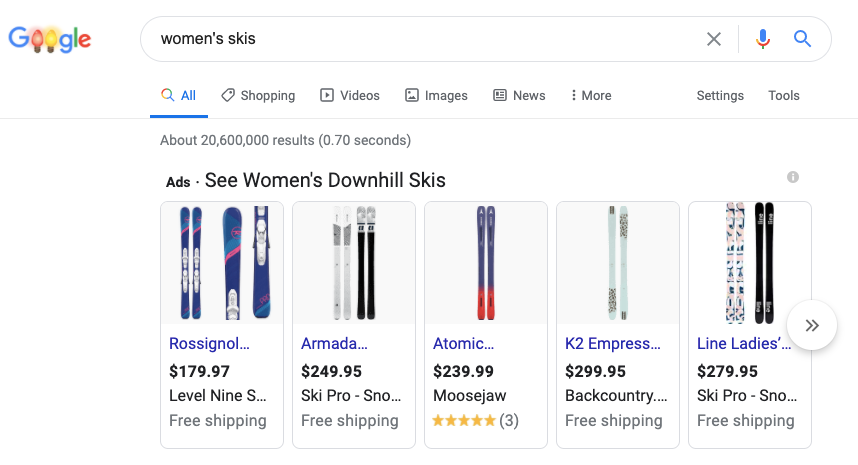
    For example, a customer is looking for new skis for a ski trip next year. The priority of this issue is much lower in May and June than it is in December.


    At this point, our customer will likely begin her search for a new pair of skis with a Google search. She’ll start to look at various brands, learn about the differences between all-mountain skis, powder skis, and twin-tip skis, and find out all she can about what type might best suit her needs. This customer cares about finding the right skis for her trip, skill set, and price point.

    Consideration

    In the consideration phase, customers know they have a problem, want, or need to solve and have taken steps to find a resolution. During this stage, customers will be both comparing and narrowing down their options.

    Customers are also doing things like mining customer reviews, feedback, and social proof and hearing opinions from close family and friends with relevant experience.

    With customer reviews, feedback, and social proof playing a significant role in the buyer’s journey, it’s best to leverage these insights wherever possible. In fact, according to a survey from BrightLocal, the average customer spends about 13 minutes reading reviews before making a decision.

    Customers are also likely visiting stores in person, along with shopping online, to gather further information.

    In the case of our ski trip customer, she’s closing in on a decision once she feels like she has enough information. Reviews like this one on the Salomon website can help customers in the consideration stage learn more about a specific product.

    Salomon review

    Source: Salomon

    In addition to reading customer reviews, she’s also visiting ski shops to see options in person and consult with a store associate.

    Decision

    Once customers have reached this stage, they are likely ready to make a purchase. They’ve analyzed their findings and have landed on a product that’s right for their needs.

    A specific combination of buyer motivators—whether emotional or rational, product or patronage—helps customers arrive at different purchase decisions. In the case of our ski trip customer, her unique motivators, like wanting to have the latest and greatest skis or wanting to buy skis well within her budget, will influence her decision.

    For brick-and-mortar businesses, learning the motivators that drive your audience to purchase will help you figure out how to help them.


    How can brick-and-mortar retailers leverage customer insights?

    Direct-to-consumer brands have troves of customer data, enabling them to create exceptional shopping experiences for their customers. But can brick-and-mortar retailers do the same?

    Take Shopify merchant LIVELY, for example.

    LIVELY is a bra and underwear retailer redefining lingerie by combining style with comfort.

    In 2016, LIVELY opened its first physical store to lower the cost of digital customer acquisition. With Shopify, LIVELY built a unique online booking experience called a “fit sesh” that let customers book a slot ahead of time to visit the physical store for their appointment.

    This in-store experience allows women to try on different fits and styles that work best for them, per the guidance of a store associate.

    Roughly 30% of LIVELY’s in-store revenue comes from these online-to-in-store bra fittings.

    The kicker is that not only did LIVELY boost in-store sales in a unique way, but it was able to collect valuable insight into its customers’ behavior online vs. in-store.

    LIVELY uses Shopify’s point-of-sale system (POS) across each of its retail locations and can see that its average order value is between 60%–80% higher among customers who book a fit sesh compared to those who simply walk into one of its stores.

    “LIVELY uses Shopify’s POS across each of its retail locations and can see that its AOV is between 60%–80% higher among customers who book a fit sesh.”

    This is just one example of how physical retailers can find innovative ways to learn about their customers.

    “The data is there—brick-and-mortar stores will need to put it all together themselves,” says Adrienne Barnes, founder of ANB SaaS Consulting and Content Marketing.

    “So understanding what products are selling the best, what pricing works the best, add that info to ‘Why did our customers buy from us?’ ‘Why did they buy this item?’ Put your hard data with your qualitative data—meaning those chats with your customers—and you can have the insights.”

    A few other methods brick-and-mortar businesses can use to collect customer data include:

    • Surveys and feedback forms
    • Talking to customers in person
    • Social media
    • Focus groups
    • Exclusive mini-product launches

    “Small brick-and-mortar stores, like boutiques or family-owned businesses, have the added bonus of being local to the community,” says Barnes. “Show up in your community and take every chance you have to chat with your customers. The better you know who your customer is, what motivates them to buy, and what their needs are, the better you can serve them.”

    “Small brick-and-mortar stores have the bonus of being local to the community. Take every chance you have to chat with your customers.”

    4 ways you can leverage consumer psychology to boost your sales

    Even small changes to your in-store experience can significantly impact your sales, brand awareness, and customer experience if you’re strategic about it.

    Here are a few tactics based on consumer psychology you can implement to encourage customers to complete their purchase.

    1. Improve your in-store experience

    How do customers feel when they walk into your store? Are they hit with your brand? How does it feel to be in your store? What’s the aesthetic? These are questions that can help get the cogs in your mind turning about enhancing your in-store customer experience.

    “Use consumer psychology to understand the buying motivations behind your product, and then create a space that brings that motivation to life,” says Wallace.

    “As soon as consumers start to envision themselves in the reality you’ve created, the more likely they are to buy those products.”

    A great example of a seamless in-store experience is The Detox Market. In non-pandemic times, customers could visit one of The Detox Market’s six retail locations and book an ultra-personalized appointment with a sales associate. This curated in-store experience resonated well with The Detox Market’s customer base and was a successful initiative.

    Once the pandemic hit, the clean beauty collective built an online shopping experience that mirrors its in-store experience.

    the detox market product page with chat open

    Source: The Detox Market

    Customers can shop virtually via text, chat, and video, as well as ask in-store associates questions in real time as if they were right there with them.

    2. Leverage social proof

    According to BrightLocal, customers read about 10 reviews before feeling like they can trust a business. What’s more, a whopping 82% of customers read online reviews for local businesses. In other words, social proof—reviews, feedback, etc.—are critical in your customer’s buying journey.

    There are countless ways to leverage social proof, like in your email marketing, on social media, in-store, and of course, on your website.

    really good emails example from everlane

    Source: Really Good Emails

    This email from Everlane is a simple yet effective way to showcase social proof and encourage users to browse a store or visit in-person.

    3. Introduce a loyalty program

    Although it may seem cumbersome to launch a loyalty program, there’s a reason why so many brands have them: they work! A loyalty program is a great way to turn first-time customers into lifelong customers.

    Outdoor collective REI runs the ultimate example of a successful loyalty program. REI is a co-op—a business that’s managed and owned by those who use its services—that has been around since 1938 and has a commitment to the great outdoors and those who love it.

    REI co op screenshot

    Source: REI

    For just $20, you gain lifetime access to the REI Co-op community, complete with a 10% member dividend, members-only special offers, and much more. This business model has proven to be a highly effective way to build community and brand loyalty.

    4. Provide value through other channels

    While encouraging customers to purchase your products, it’s just as essential to provide additional avenues of value.

    “When you know why your customers behave the way they do, you’re able to market, serve, and sell to them in a more meaningful way that meets their needs, which in turn will help your business grow,” says Barnes.

    Athletic clothing brand, Outdoor Voices, knows its customers inside and out, and as a result creates supplemental content that resonates with them via Outdoor Voices’ online zine, The Recreationalist.

    the recreationalist

    Source: The Recreationalist

    From blog posts and interviews to a community forum and more, Outdoor Voices understands the content its core audience cares about and has built a brand around those values.

    Know your customers, know how to grow

    You can learn a great deal from observing your customers’ actions. But don’t stress: you don’t have to be a psychologist to understand consumer behavior.

    Knowing how your customers think, behave, and make decisions is extremely valuable information to have, whether you’re creating new products, launching new marketing campaigns, introducing new programs, or looking to sell more units.

  • Best motivational speeches for your employees to

    As human beings, it’s easy to lose track while you struggle to complete your daily tasks. Though, you still wish to keep striving towards your goals in life. The most significant factor that can help you do so is motivation and we keep ourself energetic by listening to the motivational speeches.

    It plays a crucial role in achieving your dreams, no matter how big or small they are. The same is the case with the company employees. It’s effortless for them to become demotivated while hustling for life.

    We all feel demotivated at some point in life but what matters is that we should keep moving forward. And a little motivation can help us to do that. Motivated employees always look for ways to become more productive, and such employees positively impact an organization’s development. According to the stats, 20% of employees perform better when motivated, leading to better output results.

    Are you also feeling drained while chasing your project deadline? Do you want the push that can help you reach your full potential? Here we have listed a few best motivational speeches regardless of the job that will give you the much-needed motivation. So, let’s jump straight into it.

    1. J.K. Rowling: “ The Perquisites of Failure, and the Power of Imagination” (2008)

    The theme of J.K. Rowling’s speech was “failure.”  In 2008, J.K. Rowling, a renowned author of Harry Potter, explained how defeats and thoughts are essential to achieve success.

    Failure can assist you in finding out where your passion lies, and it will teach you to analyze the area that needs more focus while stepping ahead. At the same time, imagination will permit you to comprehend with others, enabling you to utilize your impact to do well.

    “We do not need magic to change the world; we carry all the power we need inside ourselves already: we have the power to imagine better.”

    2. Steve Jobs: “Learn the Art of Living Before You Die” (2005)

    The theme of his speech was “life and career.”  His speech video got 24 million views on YouTube, so you probably have heard about it already.  IN THE COMMENCEMENT SPEECH, the CEO and co-founder of Apple Inc., Steve Jobs, described love as one of the essential elements of his success. His love for work motivated him to work daily and achieve new goals.

    Even though what you want and what people want for you are two different things, finding out your passion and dedicating yourself to it will make you successful and satisfied.  No doubt, a few lines that he mentioned from “The Whole Earth Catalog” at the end was an unforgettable part of his address.

    “Stay hungry. Stay foolish”

    3. Elizabeth Gilbert: “ Your Elusive Creative Genius”  (2009)

    Because of the remarkable success of Gilbert’s book, “Eat, Pray, Love,” people start asking her again and again: How are you going to beat that? While analyzing this question in her 2009 conversation, she explores how our ideas of genius and creativity have passed through generations.

    Genius and creativity have progressively become related to people; however, once they were considered separate. In Gilbert’s opinion, this change will put massive pressure on artisans, writers, and other creatives to deliver extraordinary work.

    4. Matthew McConaughey- University of Houston Speech (2016)

    Matthew McConaughey, an Oscar-winning actor, delivered his speech at the University of Houston in 2016. His speech is considered one of the best motivational speeches from the last few years.

    “Joy is always in process; it’s always under construction” – McConaughey.

    In his address, he talked about how he judged his success based on the number of winning academy awards or how much money his films made. But he gained success in those metrics when he focused on the whole procedure of film-making and enjoyed it throughout. When he progressively achieves his goals and appreciates himself, everything he does makes sense.

    “Define success for yourself.”

    Discovering where your interest lies and enjoying the whole journey, whatever it presents to you, can bring success. $135,000 was paid by the university to McConaughey for sharing his brilliant thoughts. That money was donated by McConaughey and his wife to their foundation, as reported by the university.

    5. Simon Sinek: “Live2Lead”(2016)

    A writer and public speaker, Simon Sinek, is well-known for his gossip about leadership related to business. In his conversation of 2016, he brings an encouraging demand to the table. The theme of Simon’s speech was “leadership.” he said that the current organizational leaders are not aware of their games. They prefer to gain credit instead of taking responsibility.

    Leaders’ biggest mistake is that dominating the competing product is suitable. Instead, what they should be doing is to possess their own. However, after accepting the responsibility as a leader, the circumstances regarding business growth and employ success that Simon puts in are enough to rouse you.

    6. Jim Carrey: Take risks to succeed in life (2014)

    The theme of the speech was “taking risks.” Earlier, Jim Carrey was known as the jerkiest humorist. However, he presented memorable wisdom in his speech by connecting it with his typical comedy at the graduation ceremony of the Maharishi University of Management in 2014.

    The motivational words of the comedian for a successful life are pretty simple- “explore what you desire to serve the world and go after it.” However, it can be a lengthy process to discover your talent.  But questioning yourself what the world wants from you that you can present makes things possible.

    Jim Carrey discussed his childhood later in his speech. Furthermore, he explained how fear performs its part during our lifetime. According to him, he learned several lessons from his father, and one of them is that:

    “You can fail at what you don’t want, so you might as well take a chance on doing what you love.”

    7. Ellen Degeneres: Tulane University Commencement Speech (2009)

    The theme of her speech was “life and career.” Ellen’s speech carries a bit of humor, as one can expect. But she also discussed some tragedies that paved her way toward comedy.  Sometimes, humor is considered the best motivator.

    Surmounting tribulations and staying genuine, the way you are the main themes of Degeneres’s talk.  Ellen kept moving forward even after her show got called off because of her publicity as gay. She spoke that she learned how to be the best version of herself by losing everything. According to her, she doesn’t live in fear anymore. She will be fine no matter what happens because she knows herself better.

    8.  David Foster Wallace: “This is Water” (2005)

    In his address, David Foster Wallace, one of the famous writers, discussed that being open-minded is considered crucial in life. He stated that having a broader view in mind permits us to be free and happy in adult life. Probably, you can find a solution or a new concept by hearing out other’s ideas.

    Relationships are essential for any career simultaneously. Your connections will aid you in forming a backbone or shifting your career. Being attentive toward folks is vital to building excellent links. Because being attentive means, you are caring and respectful for another person.

    9. John Keating: “Seizing the Day” (1989)

    In 1989, John Keating tried to motivate his students through a simple belief, “seize the day.” His idea makes sense for those who feel demotivated regarding their career or trying hard to accomplish their goals.

    A working person spends eight hours per day at his office, much time invested in something he dislikes. So if you are one of them who is losing interest in his career, don’t waste time anymore, according to Keating’s opinion. Exploring your interests and imperfections and how you can utilize them to build a purposeful career will be your turning point. Right?

    “Seize the day, boys, make your life extraordinary.”

    10.  Brene Brown: “The Power of Vulnerability” (2014)

    Brene Brown, a researcher, in his motivational speech, focused on how empathy and sympathy are different from each other. Empathy means making connections with others’ experiences at a deeper level personally. However, although well-intentioned, sympathy can result in disconnection by making boundaries that others don’t like.  Vulnerability is not primarily the topic of debate when motivating people. We all are aware of being vulnerable. Don’t we?

    But what Brown says is that it’s the fear of failure or considering yourself imperfect that built boundaries around oneself. Simultaneously, it presents difficulties in connecting with others.  Observing your employee’s perspectives and hearing them properly can make one a great leader. Only then will you be able to enhance business-wide communication and job satisfaction.

    The Bottom Line:

    Regardless of what job you are doing or what it throws at you, you can get motivation from the context of the above-mentioned motivational speeches to achieve your next milestone. But your satisfaction and dedication for whatever you do matter a lot.  So stay motivated no matter what, discover where your interest lies, form connections, and build a successful career.


  • Roofer SEO – Complete guide on marketing for roofers

    Why should a homeowner choose you to replace or repair their roof?

    That’s the most important question to answer, if you want to build a successful roofing company. And guess what the answer lies in roofer SEO marketing.

    But if you have no idea about marketing before or just starting out a new roof repair company, it can be a challenge to know where to start.

    In this guide, we are sharing useful resources to build a roofer marketing plan that wins customers’ trust, generates referrals, and bloom your business.

    So, what do marketing activities include for a roofing contractor?

    The answer is quite simple! Digital marketing.

    Today in the era of internet, you need only digital marketing rather than traditional marketing or anything else to promote the services or products of  business to the potential customers.

    These strategies can range from Local SEO to email marketing or, all the way to paid advertisement.

    As the industry grows, competition also grows and you don’t want to loose roofing leads to your competitors. So your roofing business needs to stay competitive to bring in more roofing sales and leads.

    First of all, let me explain the SEO in roofing.

    What is Roofing SEO?

    Search engine optimization for roofers is the process of improving your online presence so that it ranks highly in SERPs. The higher you rank, the more your chances are of attracting customers to your website.

    I’ll explain how to market a roofing business and why you should go for roofing SEO.

    How Roofing SEO helps your business?

    Around 85% of people use the Internet to find local services, so you need to focus your marketing efforts on local SEO if you want to reach out to your local community.

    Right SEO strategy brings 8.5 times more leads than traditional forms of marketing.

    Why You Need Marketing for Your Roofing Business?

    10X your sales

    About  78% of roofing professionals believe that the expansion and growth of roofing sales will continue to surge. As a result, your roofing company gains more exposure by crafting and implementing an innovative roofing marketing plan.

    Grow your business by Targeting Potential Customers

    Marketing helps business owners to attract more leads by building their exposure in their target market. As a result, more potential buyers will become aware of your company, resulting in more leads in your sales funnel.

    Strengthens your brand

    A great marketing strategy strengthens and solidifies your brand’s voice. For instance, you create a marketing plan that involves elements of social proof. That’s how your company communicates its trustworthiness and authenticity to homeowners.

    Gain insight and Strategies for customers Retention

    Marketing is not limited to building your database of customers’ contact information. It can also provide insight into your valuable customers. Now, that helps you improve customer retention strategies and business. For instance, if your business targets homeowners, you can get data on what’s their demand or what kind of ads they like the most.

    Follow the latest industry trends

    If you want to stay ahead of the competition. In that case, you always have to be informed of the latest industry demands or trends. This all can be done through roofing marketing. Learn more about what your competitors are doing differently, current roofing trends, and customers’ needs.

    Your industry is extremely competitive if you’re a roofing contractor.

    That’s because the other contractors want the same customers you do. Unfortunately, it can be difficult to ensure that those potential buyers choose your roofing company.

    Search engine optimization or SEO is one of the most effective techniques for standing out from the competition and attracting clients.

    This strategy helps your site rank higher in search results for relevant keywords, bringing the target audience to your site.

    I know you are searching for professional help to learn more about SEO for your roofing company.

    Well!  Just keep reading.

    Grow your Company with roofing SEO

    SEO for roofing companies offers a proven and cost-effective channel for generating more leads and sales. However, managing a roofing SEO strategy takes expertise and time, which is why many contractors partner with an SEO agency.

    Traditional SEO

    Use traditional SEO methods to bring a valuable audience and leads to your site. This includes on-page, and off-page SEO, a complete technical audit, and fresh website content.

    Local SEO

    Reach high-value local leads, including Google My Business optimization, citation management, custom content, and more.

    4 ways to get started with Roofing SEO

    SEO for roof marketing provides so many benefits to your business. Still, it’s essential to recognize that it’s an ongoing process with many different pieces.

    For instance, a roofing contractor’s SEO strategy involves various steps to ensure that your website appears at the top of search engine results. As a result, it helps you get more clicks and more conversions.

    So, what are you waiting for? Let’s get started with roofing SEO for your company by following these steps:

    Keyword research

    Keyword research is a crucial and number one part of the SEO process. It helps you to identify the keywords that connect you with your target audience and have the potential to generate valuable business leads. There are many keywords to target when it comes to the roofing business.

    With keyword research tools, like keywordtool.io or KeywordsFX, you should optimize your research. These tools provide helpful keyword data, from their cost-per-click (CPC) to search volume.

    While it helps your SEO agency or team to determine if those keywords are worth the effort and time to target.

    Here are a few examples of roofing SEO keywords:

    • “Roof shingles pros cons.”
    • “synthetic roofing cost”
    • “roofing contractors near me”
    • “roofing contractors Harrisburg”

    On-page optimization

    On-page optimization (SEO) refers to the content on your web pages along with each page’s source codes.

    Your content is unique with targeted keywords when you have an optimized page. However, on-page optimization goes beyond your keywords and content. It also focuses on your website’s UX(user experience).

    To provide the best UX to your target audience, you must have a website that supports every user browsing it on their mobile, tablet, or desktop.

    You can do it with a mobile-friendly website when considering how to market a roofing company.

    The next thing is to have a fast website; that’s how page speed optimization is another focus of roofing company marketers. If you don’t have a mobile-friendly site, you risk losing a huge chunk of business.  As 52% of users are less likely to engage a company with a poor mobile site.

    Another factor is ensuring that your site is crawler-accessible. Your site won’t appear in Google searches if it can’t be crawled. So, with fantastic on-page optimization, you have a greater opportunity to rank higher in search results.

    High-Quality Content

    High-quality and unique content is capable of doubling your site’s conversion rates. Moreover, it’s an integral part of a roofing SEO strategy. Quality content provides you an opportunity to share your knowledge with users, encouraging them to convert later.

    If you incorporate content marketing into your SEO techniques, this can be done. First, provide potential buyers with a wide range of content that makes purchasing decisions easier. For instance, you can publish blog post FAQs that answer common questions about any type of roofing.

    Another example is a blog post about the pros and cons of different kinds of roofing. However, you can also write a complete guide post that explains the costs and timelines for various roofing jobs or projects.

    Building Links to your Roofing Company

    Link building to your roofing site is vital in showing search engines that your site is credible and worth sharing with users. In addition, more search engines trust your content quality if you get more links from other high-authority sites.

    Search engines prefer the quality of your website links to matter than the quantity.

    When you write content for a roofer’s marketing strategy, link a stat or fact to other credible websites in your niche. Your users need additional information on topics you don’t cover extensively; it will help them anyways.

    How to measure the success of roofing SEO strategy?

    If you develop an SEO campaign for your roofing business, it’s crucial to measure the success of your strategy. You can set targets for what you want to achieve, whether it’s more sales, leads, or more email sign-ups.

    To determine your roofing SEO strategy goals, choose a reputable tracking tool, such as Google Analytics.

    While assessing your roofer SEO campaign, keep in mind that SEO doesn’t deliver immediate results like PPC.

    You can generate more sales and leads when you know how to market a roofing business. This only happens if you use successful SEO strategies for your roofing company.

    Bottom Line

    If you want to compete in the roofing industry, search engine optimization (SEO) is here to stay.  SEO campaigns help your roofing company appear in search results when people search for a roofing contractor in your local area.

    Remember: there are two ways to do roofing SEO, wrong and right ways. It is known as Black and White Hat SEO in the industry

    Black hat SEO effectively gets fast and short-term goals. Unfortunately, it does not follow the rules, and chances are to get an overnight penalty. So it is a huge risk for your business.

    On the flip side, white hat SEO for your roofing company follows the rules, and it takes some time to get your desired results. However, you can attract more people in white hat SEO and lead your roofing business by building links from other authority sites. Hence it also helps you boost your social media or digital presence.

    I hope this roofing SEO guide has provided all the information you need to rank your website higher in the SERPs.

    As always, if you have any queries, feel free to comment below.

    Focus Keyword: Roofing SEO, Roofing Marketing


  • Complete guide for on-page SEO

    One thing that can take your website straight to the first page of Google and that is totally in your control. Its the on-page SEO.  

    On-page SEO is the single most crucial thing if done right can take your website to get top positions of the search engine results. Do you want to see how? Let’s get to the point. We have brought this On-page SEO Complete Guide to unveil some of the top on-page SEO techniques that will surely skyrocket your website traffic in a matter of time.

    On-page SEO won’t be the end-all solution for your website ranking, but it is the foremost step towards better google ranking and getting higher traffic to the website. With that said, let’s get to the detailed guide.

    Understanding the searcher’s intent

    The first step in an on-page SEO guide is to identify the intent of the searcher and design your on-page seo strategy around it. For instance, if someone searches for “shoes at a cheap price”,  they might be looking for shoes listed on the online shops.

    As we know, Google gives preferences to the websites which carry a higher satisfaction rate from its users. To see that, conduct a search and closely look at the search results that comes first.

    As an example, if you sell a range of organic food, and for that, you create a webpage aiming at ‘best organic diet‘. Put your keyword in the search and observe the Google search results.

    By closely looking at the results, you can quickly determine that most blog posts follow a list-style presentation. In that case, we wouldn’t recommend creating a webpage targeting the keyword ‘best organic diet‘ instead, go for this ‘organic diet available online.

    Bottom Line: If you aren’t putting the search intent correctly in place, you probably will not list in similar searches.

    Now, you can jump-start your on-page SEO practice right away, but wait; we would like to do a little more. We highly recommend opening these results and seeing what they have in their content. For instance, one of them targets organic food by categorizing them by type.

    Takeaway: Studying the topmost resulting pages is a way of assessing the results from Google’s point of view because they are at their very best to answer the most accurate result given to any query.

    Make short URLs

    In a study based on numerous on-page SEO ranking features, it is noted that there is a direct relation between the numbers of letters in a link and a website’s rank in Google.

    What you can do is make them short at the very beginning. Let’s say your post title is “10 best weight-loss diets in 2022′ and you are using WordPress, so when you will make this post in the editor, it will automatically create the URL tags as per the post title and fill the spaces with dashes.

    Most of the low-rank URLs are way too much in length than they should be. It is just because they were not going through the consideration of an on-page SEO guide.

    You can make a difference; see how. Make it short and put your targeted keyword in the URL string. There are some other advantages of using short URLs:

    1. People tend to go for the closest result to their intent, and keyword-contained URLs can highlight your page as a close result of that intent.
    2. Since descriptive URLs have your targeted keyword, they have an edge while referencing as hyperlinks.

    Now, if your websites have links that are not short and non-descriptive but make good website traffic, please do not sweat about making them short for just the sake of it. For the future, try making URLs that contain short keywords.

    Include Relevant Keywords

    According to a study, the topmost result at google searches is also rankable for many other related keywords. So, you need to search relevant keywords to ensure that your piece of content is comprehensive enough. These are some ways by which you can get the list of the relevant keywords against your primary keyword.

    1. Search for relevant keywords in top-ranking websites by going in-depth
    2. Make good use of Google’s auto-suggest
    3. Include ‘people also ask’ box to cover the relevant topics
    4. Scroll down at the end of the result page to get more related keywords.

    Now, The only drawback of these techniques is that you are kind of playing a guessing game. So, to authenticate your guesses, you can opt for an SEO tool that will show you mutual keywords that the topmost websites have.

    No doubt, with a well-structured outline, backed up by an on-page SEO tool; there is nothing that can stop you from making a compelling copy for your website.

    Label your images with alt tags

    This technique is straightforward yet effective in taking on-page SEO to the next level. Alt tags let you attach descriptive texts to images posted on your website. We highly recommend doing so due to these remarkable factors:

    1. In a slow loading process, alt text is the first thing to appear on a webpage.
    2. Around 8.1M US citizens have a vision loss; alt text provides real-time assistance relying on screen readers.
    3. Alt tags let you rank in google images search. John, Mueller confirms this by saying, “Alt text is beneficial for google images if you want your images to rank there.”

    Once you practice this, you can witness millions of impressions on Google’s console data from the images only, which indeed can lead to thousands of clicks coming to your website.

    Bottom line: It is in your best interest to include alt text in your images to get the most out of your on-page SEO.

    Integrate the targeted keyword in the title and Meta description

    We highly recommend integrating your targeted keyword into the title and H1 and meta descriptions. See why;

    1. Upon conducting a study on 2 million keywords, there was little association between google ranking and strategical placement of matching keywords.
    2. It shows the searchers that your site is the best-related one against their search intent.
    3. While using them wisely in title and tags is advised, some exactly matching keywords may look spam. Make them use but never overdo.

    Bottom line: There is no goodness in overstuffing exact matching keywords in your page headings or copy. Instead, use substitutes and other connecting words because Google is nifty enough to sense any glitches. Instead, make an effort to bring genuine content.

    Include structure data where applicable

    Frequently, you have noticed some search results listing with star ratings. It is generally due to the review structure data that can positively influence the CTR of a website. Keep that in mind that it is not about giving you a higher chance to appear in Google searches, but it lets search engines understand your page’s context and relevance.

    While it is not a direct approach for an on-page SEO practice, it can still support your aim for a higher ranking in google. As John Mueller said, “There is no generic ranking boost for SD usage; however, the structure can make it easier to understand what the page is all about, which makes it easier to show where it is relevant (improves targeting and maybe ranking for the right terms).”

    You can create your code by using google structured markup helper. Besides, if you have a website on WordPress, there are plenty of plugins that make adding the marker super convenient.  

    Straightforward content with a higher readability score

    Considering the 3Cs (clear, concise, and consistent) while creating your content can take your website to places. Meaning it will ease the search engine to decide where it should be positioned in ranking. Also, it is essential to make it readable for the people it is intended for. It is said that Google takes notes of users’ signals such as max time on a page and conversions.

    A bogus and hard-to-understand text will lurk your visitors away, and they most likely backstep or even head towards other searches, which is not a good sign.

    Follow these bits of advice to score high at readability:

    • Avoid irrelevant terms and complex vocabulary if it is not a research-based content
    • Make compact sentences and sections
    • Write in a conversational tone

    Finalwords

    With this, we like to conclude our on-page SEO guide and hope that it will be equally beneficial for you as it did wonders for us. Remember, you can get the maximum results by putting all these techniques together. Also, a web page requires around 30 – 60 days to affect the on-page SEO techniques. So be patient and persistent to reap your fruit.

  • 4 Essential Tools For Effective Remote Work Experience For Startups

    • Many organisations have started putting efforts into building online tools that can help resume business processes
    • Huge companies like Amazon Web Services and Google have offered various cloud-based solutions for data storing and sharing
    • During this pandemic time, it becomes increasingly difficult to make important business decisions

    The covid-19 pandemic has made massive impacts on almost all the fields across various verticals. Starting from healthcare to the food industry, every field has faced major challenges in its own way due to this unprecedented pandemic situation. With that being said, many startups in the technology sector are facing various difficulties because of this pandemic such as insufficient capital, unavailability of manpower or unavailability of an investor, reduced need in the market, etc… Out of the total global startup market, 70% of the startups have been deeply impacted by the covid-19 pandemic. In this 70%, 12% of the startups have been shut down and the remaining have been operating with certain disruptions in the business process.

    Thanks to the development of the internet and technology, despite this adverse situation, many companies have found ways to pull themselves out of the situation and explored many ways to expand their business by extracting the advantages of online tools.

    Essential tools for effective remote working

    Many organisations have started putting efforts into building online tools that can help resume business processes. Huge companies like Amazon Web Services and Google have offered various cloud-based solutions for data storing and sharing. As mentioned above, many startups and SMEs have also taken advantage of this situation and are developing products according to the current needs of the market. Out of various categories of tools present, an aggregated collection of tools that I use and believe can be very useful for startups is mentioned below.

    Hubstaff – For Remote Productivity Management

    Employee productivity plays a major role in the success of a business. Every client would want and prefer the product to be delivered within the given time frame. When it comes to working from home, it is pretty hard to be as efficient as working in an office environment. For situations like this, tools like Hubstaff provide various features like productivity monitoring, online timesheets, invoicing, etc…to boost productivity. Many startups, entrepreneurs, freelancers and remote workers are widely using this application. The premium version of Hubstaff offers high-end features like GPS tracking, shift planning and project budgeting.

    K2View DPM – For Remote Privacy Management

    For a business to reach a wide number of people, it should be transparent and trustworthy. Gaining customer’s trust adds tremendous value to the company. Initially, this can be achieved by being transparent with the customers like letting them know what kind of data is being gathered from them and used and ensuring that the collected data is secure. K2View’s data privacy management system collects user data from all resources and stores it in a micro-database that is individually allocated for each customer. This way, the data would be readily available to be accessed upon request by the user. In simpler words, K2View DPM addresses the data management challenges such as collecting and categorising data and storing them securely.

    Getlua Tools – For Converting Documents In A Click

    During this pandemic time, it becomes increasingly difficult to make important business decisions. When it comes to startups, every single decision could potentially bring massive changes to the company. To fix goals and work towards them as a team, it is essential to make sure that everyone in the team is on the same page so that the processes are carried out seamlessly. The idea of the project can be documented in the form of word documents or PDFs. Teams can also connect over online meetings and discuss the topic while displaying a PPT to provide a clear understanding to others on the team. Getlua is a highly efficient online converter tool that simplifies the process of converting documents into any desired format like Word to PDF, PPT to Excel and vice versa. It also lets you effectively compress PDF files in a way that the quality of your document remains the same and the load on your system’s memory is decreased.

    Gusto – For Easy Finance and HR Management

    The biggest challenge during this pandemic is hiring people and maintaining employee payroll. With the right tool like Gusto, finance and HR management can be carried out effectively. Employees can make use of the application’s online portal to upload their information and relevant documents like resumes and certificates. This application makes complex and repetitive tasks such as payroll management, hiring, maintaining business finances and taxes keeping very simple.
    With lockdowns still being implemented in various parts of the globe, 82 percent of companies across different verticals have adopted remote work. Work from home has become the new normal. Normalizing WFH is found to be advantageous in many ways like reducing unwanted infrastructure costs, reduction of transportation costs, etc… With the right tools and technologies, remote work could be very effective in keeping up the business workflow. This, in turn, will provide desirable and successful results for the companies, especially for startups where every penny matters.

  • Is Email Marketing Dead? Statistics Say: Not a Chance.

    In this post, we share email marketing statistics showing that, far from being dead, email marketing is an essential tool for attracting and retaining customers. Along the way, you’ll pick up some info that’ll help you refine your own email marketing strategy.

    You’ve probably heard that email marketing is dying, or even already dead, more than a few times. Don’t believe it.

    Here’s the thing:

    That line has been around so long that even respected news outlets started referring to email as a “hot, new way” to reach customers in early 2019.

    Well, it’s definitely hot, but it’s not new by a long shot. ?

    With a potential return on investment of up to 4400%, email marketing remains the best way to attract and retain customers.

    Need more convincing? Good, because we have some nice graphics that we want to show off. ?

    Email Marketing Statistics

    Let’s be clear: the email marketing statistics show that email is here to stay.

    For starters, we send 102.6 trillion emails every year. And the numbers keep going up, with 126.7 trillion expected to be sent by 2022. The average email subscriber receives 13 commercial emails a day.

    Who’s sending and reading all of these emails?

    Well, in the U.S. alone, more than 90% of people over the age of 15, it turns out:

    And, despite the rise of social messaging apps, more than 3/4 of teenagers are still using email. In fact, they consider email a “fact of everyday life.”

    We’re also pretty attached to our email. All of us (well, 99% of us) check our email every day.

    Some of us check our email as much as 20 times a day. With the rise of mobile use, checking email is super easy, after all.

    More than half of us even check our email before doing anything else online (probably before even getting out of bed):

    Key takeaway: No matter what age group you are targeting or where they are located, email remains a great way to reach your audience.

    How do people usually check their email? On desktop or mobile? By far, the largest number of people are using the iOS mail client, whether that’s on the iPhone or iPad, according to research by Litmus. The next largest group uses Gmail, which boasts more than 1.5 billion users.

    And with all of the emails and all of the users, email reaches about 85% of the people you send it to (this is called the “inbox placement rate”).

    “But, my fine OptinMonster people,” you say, “I can get in front of millions of people for FREE with social media!”

    Honey, no. You may not even get in front of most of your own followers for free with social media.

    Here’s what we mean:

    For the “Big 3” of social media (Facebook, Instagram, and Twitter), the engagement rate isn’t even 0.6%. Compare that to email’s average open rate of 22.86% and even its click-through rate of 3.71%.

    Key takeaway: Emails reach most of the people they’re intended for, so email marketing remains an essential part of your marketing strategy.

    Give your emails an even better chance of reaching your customers by reading our guide: 11 Reasons Why Your Emails Go in the Spam Box and How to Make Sure They Don’t.

    Consumers and Email Marketing

    If you’re wondering how email marketing looks from the consumer point of view, this next batch of email marketing statistics gives some insight.

    According to Adestra, consumers prefer email for communicating with the brands they’re connected with.

    Marketers also prefer email. 91% of B2B (business to business) marketers in a Content Marketing Institute study rated email as “important” or “extremely important” to their content marketing distribution efforts.

    It’s not all good news, though. DMA Insight‘s 2019 report shows that email marketers have some work to do when figuring out exactly how consumers are going to respond to their emails.

    And with 53.49% of emails sent classified as spam as of the latest numbers available on Statista (September 2018), it’s easy to see how consumers could easily be put off by getting the wrong emails.

    It’s also easier than ever for consumers to fight back. Many will report emails as spam if marketers don’t get the content and frequency right, even if your email isn’t actually spam!

    Key takeaway: Consumers have the power to get rid of the irrelevant emails that are cluttering up their inboxes.

    One way to make sure that your email isn’t on the chopping block is to include smart personalization that goes beyond just using subscribers’ first names. Learn how to use Smart Tags to make your campaigns more engaging even if you’ve never used personalization before.

    dynamic text replacement optinmonster

    What Email Marketers Say

    When it comes to email marketing software, marketers are spoilt for choice. But how do they feel about the emails they send?

    It turns out that relevance is a huge concern for them, too. DMA reports that only 55% of marketers believe that more than half of what they’re sending out is useful to their subscribers. That’s a pretty big problem.

    Even worse? Only 1 in 7 people (just 14% of subscribers) believe that more than half of the emails they receive are useful to them.

    Relevant content is a big issue for email marketers and since we know that content is one of the main ways to attract and retain your audience, finding ways to create good content has to be a priority for any marketer. Check out our content marketing guide for help with using content to grow your list.

    One of the best ways to ensure that you’re hitting the mark every time is to test. Yes, you can split test everything, even your content!

    Never done a split test before? Don’t worry; we’ve got your back with the Ultimate Guide to Split Testing Your Email Newsletters.

    Key takeaway: Email marketers agree with consumers about the issue of relevance in email marketing. This will only become more important, so there’s work to do here.

    Email Marketing ROI

    Another issue people wonder about is the ROI of email marketing. Is it really worth it? That’s a giant YES!

    Our own comparison of email marketing vs social media shows that email outperforms social by miles, though in fairness to social media it’s like comparing apples to cotton candy.

    Just a reminder: email marketing has a 4400% ROI. That means that every dollar you spend on email marketing has the potential to bring you a $44 return. Is it worth it?

    Key takeaway: the stats agree that email marketing delivers. Find the ROI of your own campaign with our guide on How to Measure the Effectiveness of Your Email Campaigns.

    Email Marketing Benefits

    So, what are some of the benefits of email marketing that make it a must for marketers?

    Remember how we said that consumers still like email? Turns out that they use emails for shopping and finding deals.

    According to MarketingSherpa, about 60% of consumers subscribe to a brand’s list to get promotional messages and deals compared to only 20% that follow brands on social media.

    There are multiple other communication methods out there, but email has managed to adapt and stay relevant.

    For us, one of the big reasons to use email is that social media platforms come and go and you never actually own your account, which means that your profile could just disappear. It happened to world-famous skydiver Felix Baumgartner, who had over a million fans at the time. Makes you think, doesn’t it?

    When you build your email list, you own it.

    Key takeaway: Email marketing has shown it has the ability to evolve so it’s a must for marketers wanting to stay relevant to their customers. Learn how to start your own email marketing strategy right in our Ultimate Guide to Email Marketing for Beginners.

    Mobile Email Marketing

    mobile email marketing

    These days, you can’t afford to ignore mobile email marketing. About 67% of consumers use mobile to check their email and since mobile use has steadily overtaken desktop use, that trend is only going to continue.

    As of 2018, mobile devices claimed 51% of the market share while desktops sat around 45%.

    Key takeaway: It’s not optional to have campaigns that work well on mobile devices. If your campaigns aren’t mobile-first or at least mobile-optimized, you’re missing out on a lot of potential connections, customers, leads and sales. Learn all about how to increase your mobile conversion rate.

    Email Privacy

    With GDPR a reality for EU-based customers, privacy issues are more important than ever. Many consumers are happy to share personal information, but 88% of them want transparency about how that information’s used.

    Luckily, the DMA says 90% of marketers feel that they have a good individual understanding of GDPR. And 57% expect a positive impact on sales. Preference centers will be an important part of this process; 17% of subscribers expect to be taken to a survey when they click to unsubscribe.

    Key takeaway: It’s time to get serious about email privacy. Check out our GDPR guide for more on this issue.

    Cold Email Marketing

    Most email marketing statistics are focused on email marketing for a list that you’ve built. But, what about cold emails?

    Cold emails are emails that you send to a potential customer that doesn’t have an existing relationship with you.

    Wait. Isn’t that spam? Nope.

    Under the CAN-SPAM Act, you can send emails to people you don’t know as long as you comply with the Federal Trade Commission’s (FTC) rules:

    Be Honest

    This includes being truthful about who you are and what your email is about. So, this comes down to 4 things:

    1. Your “From,” “To,” “Reply-To,” and routing information (including the domain name and email address) must accurately identify the person or business that initiated the email
    2. The subject line must accurately reflect the content of the email
    3. You must show that the email is an ad
    4. Your email must include a valid physical postal address (current street address, PO Box, or a private mailbox)

    Include Opt-Out

    You must include in your email an easily identifiable way for recipients to opt-out of future emails. And, you must honor opt-out requests within 10 business days.

    Monitor What Others Do on Your Behalf

    Even if you contract out your email marketing, you’re still on the hook legally if the company you’ve hired doesn’t comply with the CAN-SPAM Act. Make sure you know what they’re doing in your name.

    Cold Email Marketing Statistics

    Prospect.io analyzed more than 3 million emails in 2018 and found 4 key things that impact the effectiveness of cold emails:

    • Sending time
    • Subject line length
    • Content length
    • Campaign steps

    Let’s take a closer look at each of these.

    Sending Time

    There are 2 key times when a potential customer is most likely to read and respond to your cold email: when they get to work and when they get home.

    Aim to send your cold emails between 5-6 am (37% open rate; 8% response rate) and 7-9 pm (48% open rate; 8% response rate).

    Subject Line Length

    Subject lines either have to be very short or long and specific. Here’s how it breaks down:

    • 3-12 characters: 44% open rate
    • 81-86 characters: 43% open rate
    • 98-111 characters: 54% open rate

    The standard of 29-45 characters ended up with a 33% open rate in this study.

    Content Length

    Content length follows the same pattern as subject line length, short and concise or very detailed. Here’s what that looks like:

    • 200-400 characters: 3.5% response rate
    • 900-1000 characters: 7.5% response rate
    • 1400-1500 characters: 8% response rate

    Campaign Steps

    How many times do you follow up with potential customers? Choosing the best campaign length could have a huge impact on your conversions. Prospect.io took a look at conversion rates based on the number of steps in a cold email campaign. Here’s what they found:

    • 1-step: 0.74%
    • 2-step: 0.62%
    • 3-step: 0.84%
    • 4-step: 1.0% ?

    What about longer campaigns? In this study, Prospect.io found a 15-step campaign with a conversion rate of 1.39%! ?

    Of course, it’s important to remember that not all audiences are the same. It’s so important to split-test your email campaigns to figure out what works best for your target audience.

    Email Marketing Predictions for 2020 and Beyond

    So, what’s coming up in email marketing over the next year or so?

    • Storytelling and Interactivity. Email marketing is all about the subscriber. Engage them with interesting stories and look for ways they can interact with your content.
    • Subscriber Experience. With the rise in email marketing automation, it can be easy to lose authenticity. Be sure to stay true to your brand, include personalization, create lifetime value for subscribers, and keep your email marketing focused on subscribers.
    • Content Combinations (+ TESTING). Try out new content combinations to see what works with your subscribers. Do they like longer emails or get click-happy after seeing pictures? You could even get fancy and segment them based on those preferences so you’re sending the right content to the right subscribers.
    • Improve email accessibility for subscribers with disabilities
    • Non-Linear Sales Funnel. The internet has changed so many things in marketing. The biggest thing is that the sales funnel is a bit less linear. Instead, there are multiple touchpoints where leads might come into contact with your brand. The good news is that email marketing is a great way to connect with leads no matter what stage of awareness they’re in.

    Key takeaway: Customers will expect an even more authentic and interactive email experience, and marketers will have to use more tools and technologies to deliver that.

    Related Content: The 14 Best Marketing Automation Tools for Your Business


    Striata also has some trends it suggests email marketers focus on. These include:

    • Sending hyper-personalized emails
    • Integrating machine learning/AI into email marketing automation
    • Being relevant to consumers across all channels

    email design trends 2018

    Key takeaway: the future looks bright for email marketing but marketers must keep on their toes to get ahead of these coming trends.

    So, is email marketing dead? It’s pretty clear from these email marketing statistics that the reports of email marketing’s death are greatly exaggerated (sorry for stealing your quote, Mark Twain).

    Far from being dead, email marketing is alive, well, and increasingly relevant for you to reach audiences across demographics. Give yourself a head start by checking out these subject lines that will get your emails higher open rates. And, if you’re not sending out newsletters, be sure to check out our guide to create and send email newsletters that will keep your site visitors and customers engaged.

  • The Guide to restaurant marketing on social media

    If you own a restaurant and aren’t engaging with your audience through restaurant marketing on social media platforms, you are missing out your presence.

    Imagine: you can reach thousands or millions of viewers using popular hashtags of restaurant marketing. For example,  #foodporn, #foodlover and #foodphotography.

    Foods are one of the most popular and dominant social media posts on platforms like Instagram and Facebook. On Instagram alone, there are over 202 million posts with the hashtag #foodie and 466 million posts with the hashtag #food.

    So, this is an excellent opportunity for restaurants to join the social handles and target food lovers on a platform they frequently use.

    Platforms like Instagram, Twitter, and Facebook let you upload attractive images with location tags, making social media ideal for your restaurant marketing.

    After all, who doesn’t like looking at delicious food pictures when scrolling through your feed?

    A recent survey by MGH (restaurant marketing agency) shows that 36% of U.S. diners follow restaurants on social media to choose their next dining destination.

    Most social platforms are free to use. So, if you use the best marketing strategies, advertising and promotions can be free as well.

    This guide will help you understand how to use social media platforms for your restaurants and grow your digital reach.

    First of all, let me explain why social media platforms are crucial for the restaurant business.

    Then I’ll discuss how to stand out from your competitors and find the most effective social media marketing techniques for your business.

    Why is Social Media important for restaurants?

    Using social media strategies to increase your restaurants’ digital reach may sound like a lot of work, but the real effort pays off.

    Here are 5 reasons why social media is important for restaurants.

    1. Brand awareness:In 2021, more than 48 billion people are actively using social media platforms. You can upload your cooking videos, post restaurant pictures, share behind-the-scenes, etc, to reach your target audience on social media.
    2. Engage with content:Social media platforms let you increase engagement by sharing restaurant posts, testimonials, and featured stories. Engaging content encourages your visitors to share valuable content for your restaurant.
    3. Customer problems: Unsatisfied customers take their problems to social media platforms. So, this is an excellent opportunity for business owners to reach out and solve their issues. It’ll help you earn a positive reputation while increasing customer reach.
    4. Helpful Feedback:From Facebook to LinkedIn, you can use social media posts to start a conversation and get helpful feedback. Ask customers about new menu items or change they’d love to see. It would bring them back again and again.
    5. Increase your digital reach: You can use location tags onFacebook and Instagram to reach new customers around your target area. This can also help attract tourists to grab a bite to eat.

    Social Media checklist for restaurants

    1. Restaurant names: Choose an attractive name for your restaurant and use the same name across all of your social handles so that when food lovers look for you, your social presence pops out.
    1. Social media handles: Be identifiable with your social media handles. For example, if your restaurant name is already taken, try adding any abbreviation or your city to the end. (i.e.: if “pizzabar” is taken, try “pizzabar.nyc”.
    2. Logo & Profile Pictures: Your restaurant’s logo and pictures should be the same throughout your social platform.
    3. Restaurant’s location: If your restaurant has multiple locations, use the address of your most popular restaurant.
    4. Restaurant Website: Every social media platform has a website field where you can direct your online customers. Don’t leave this space empty. Otherwise, you’ll miss a big opportunity to grow your business.
    5. “Bio” or “About Me” sections: Fill this section carefully and try to include a brief description of your restaurant business, so potential customers know they found the right food point.

    Social Media profile creation

    When you start your restaurant venture, you must join social media platforms. To do so,  the first thing that you need is to create your social media profiles.

    When a customer search for you on their favorite social platform, your profile is the first thing to appear. It is a great chance to make your first impression and also provide all the necessary information to your potential buyers.

    Here are 3 best practices to follow while making your profiles:

    1. Mention your restaurant’s name as you might not always get the exact name for your social media handle.
    2. Provide all the relevant information like contact details, address, and opening hours to help people reach out to you.
    3. Add an interesting story or fact about your brand. You can also share your brand story in your bio, as this is another chance to make a strong impression.

    These are the things that you can include in your profiles on different social media platforms.

    For instance, Facebook business pages offer a few additional options that allow you to add “popular hours” at your restaurant, in addition to opening hours.

    You can also upload the “menu” and add a table reservations button. This helps you to conversions as customers can book their table online and then visit at the available or selected time.

    You can also add multiple locations for your different locations on Facebook. This allows your consumers to easily find the nearest by looking at the right address if they want to visit.

    content strategies for Social Media

    Once you have created your restaurant’s social media profiles, it is time to start posting engaging content to build your audience. This is where you can show your brand stories and creativity to stand out from your competitors.

    If you only post promotional content or photos of the restaurant, you may fail to communicate with your customers.

    To be successful on social media, think from your customer’s perspective and what they would like to see on their feed. For example, people don’t want to see only the pictures of restaurants; instead, they want some engaging posts.

    They want something useful and relevant, so you need to have a proper plan.

    Following are some of the most useful social media content strategies for restaurants.

    Use HD Food & Recipe Images

    Of all the things that you can share on social media, this is the most important. Posting High-quality pictures of food and recipes work like a charm for food lovers. Posting pictures of yummy recipes that look delicious makes people want to try it motivates them to visit the restaurant.

    Strong Brand Voice

    Another top strategy is to create your consistent and strong brand voice. It not only helps you distinguish yourself from others but also connect with your audience better.

    For instance, Sweetgreen is a US-based restaurant that believes in sustainable and healthy food. They reflect their brand voice by posting pictures of healthy-looking fruits, salads, and dishes.  Also, they maintain a consistent aesthetic in all their images and posts.


    Cooking Videos and Step by Step Recipes

    Millennial foodies are your loyal audience, and that’s why there has been 280% growth in food channel subscriptions in one year.

    So, it is the most effective and brilliant social media strategy for restaurants to post cooking videos and step-by-step recipes.

    To engage your audience on your restaurant’s social media handles, create infographic posts with step-by-step recipes and instructions for your popular dishes.

    Right Hashtags for Restaurants

    To amplify the reach of your posts, use relevant hashtags.

    Hashtags like #foodporn, #foodlover, and #foodphotography are trendy, but making your post rank for these hashtags is nearly impossible. Therefore, add some less-popular and relevant hashtags that you can easily rank for.

    For example, if you only serve a particular beverage, search for related hashtags instead of adding hashtags like #coffee.

    Another helpful tip is to narrow down your target audience by location. For example, if your restaurant is in only a specific area, try using location-specific hashtags.

    For instance, if your restaurant is based in London, you can hashtag #londonrestaurant.

    Just like blogging, It is far easier to rank for a hashtag that has “10K” posts than for ones that have several thousand or a million posts.

    Promote New Product Launches, Offers, and Events

    If you’re launching a new product or arranging an event in your restaurant, you can use social media to keep your audience updated.

    Sprouts Social‘s survey report shows that 61% of people may make the first purchase after seeing a sale or discount.

    Here is an example of MacDonald’s deal. In addition, they added mouth-watering images of burgers and wings, offering $5 for 2.

    Have you launched a new product or menu item? Are you opening a new restaurant chain? Don’t forget to promote and create a buzz on social media.

    Bottom Line:

    If you are a restaurant owner and do not yet have an active social media presence, this guide will help and motivate you to get started. Read the importance of social profiles for your food business, join and build your digital presence.

    From setting up a catchy and professional profile to posting the right content, my tips will help you master the art of planning social media marketing for your restaurants.

    So, what are you looking for? Go ahead and start social media journey for your restaurant today.

    Focus Keyword: “Restaurant Social Media”

  • The Ultimate Guide to Real Estate Website

    The real estate market is undergoing a major transition right now, and technology is driving this change. However, the US real estate market has been under the sole control of realtors for many years.

    93% of Americans use real estate websites to find a house. However, only 7% of people didn’t use any online house hunting sites. Hence, the whole industry moved online.

    44% of buyers all across the globe start their home search by looking online.

    Regardless of how much local marketing you do, you need a website to attract and engage online leads.

    The foundation of every successful real estate company is a solid, well-designed, SEO-driven website that integrates IDX (Internet Data Exchange) listings and pushes leads right into your CRM.

    There is a significant shift, and the question is, “how to build a real estate website?”

    Throughout this article, we’ll explain how to build a successful real estate platform and which features you should include.

    We’ve got a lot to cover, so let’s get started!

    What Is A Real Estate Platform?

    A real estate platform is a virtual space where realtors, home buyers, and home sellers can connect and make a purchase or rental agreement.

    Why have a real estate website?

    Creating a real estate site ought to have a purpose first and foremost. Platforms for real estate are designed to solve a user’s problem – finding a new place quickly and easily.

    Apps for real estate should:

    • Offer enough options for potential buyers and renters;
    • Make it easy to find the right property;
    • Make it easy to contact a real estate agent;
    • Let you research properties easily.

    The most popular real estate sites are Compass, Zillow, Trulia, Zoopla. Websites like these have revolutionized the real estate market, opening it up to real consumers.

    ‍Different types of real estate websites

    Whether you’re selling, buying, or renting a house, you know how stressful it can be. Every role comes with its own challenges. Hence, we come to a very logical conclusion – create real estate websites for different user roles with different functionality.

    Here are four of the most popular types of real estate sites:

    1. Online real estate marketplaces

    A real estate marketplace connects buyers and sellers. The site lets property owners list their property, set the price, and find customers.

    Meanwhile, customers can search for properties, check out photos, building plans, and overall descriptions.

    Zillow, Redfin, Airbnb are some examples.

    2. Websites for listing properties

    Property listing sites allow people to find houses for sale or rent on real estate platforms. However, unlike a real estate marketplace, homeowners often cannot list their property without an agent.

    Zoopla, RightMove, and Realtor are some examples.

    3. Websites for property management

    All property management websites are aimed at homeowners. This is because owners are in charge of their properties and can fully handle potential customers. Typically, property management websites focus on both residential and commercial properties.

    Appfolio, TennantCloud, Yardi are examples.

    Aggregators of real estate

    It’s pretty obvious what a property aggregator is. The website collects real estate ads from different sites and displays them on one page.

    A real estate aggregator is the easiest way to find homes to buy or rent since it lets you compare prices, locations, sizes, and conditions, all in one place.

    Nestoria, LoopNet, Apartments.com are examples.

    How Can Real Estate Websites Make Money?

    Where does the revenue come from on real estate websites? You can monetize your real estate website in three ways. Pick one or mix them all.

    Listing Fees

    Real estate marketplaces do well with listing fees. This is how it works: sellers pay a 1% fee to the platform before listing their property.

    Subscriptions

    With this model, you charge homeowners a fixed monthly or yearly fee. Then, they can list as many properties as they want. It’s great for real estate marketplaces and property management sites.

    Paid Ads

    One of the most well-known business models is paid advertising. Since the process is well-established, it is suitable for real estate platforms. In addition to earning money from advertising, you can target the offers to the right audience.

    Steps to Building A Real Estate Website


    1. Learn about the industry

    In the Discovery stage, we learn about the market. In simple terms, we jump into the real estate industry, analyze the competition, find their strengths and weaknesses, and look for the prospective niches we can cover with the product.

    2. Make sure you know your audience.

    Finding out what people really want is the next step in making a real estate website that people will want to use. So we conduct user interviews, surveys, and focus groups to figure that out. The idea is to build a product that directly addresses users’ needs, not imaginary ones.

    Our real estate website development process ends up with a roadmap that includes:

    • Providing a solution; Hypotheses;
    • Issues;
    • Possible solutions;
    • How to execute on your Business Ideas;
    • Interviewing users;
    • Creating a prototype;
    • Putting it to the test
    • A customer journey map

    3. Select a Real Estate Website Type

    When you find out the real needs of your users, choosing the type of website becomes much easier. Below are six popular types of websites:

    1. Marketplaces for real estate
    2. A property listing site
    3. Property management sites
    4. Aggregators of real estate
    5. Buying and selling websites
    6. Renting sites

    They differ by what they offer to homebuyers, realtors, sellers, etc.

    4. Come up with a design.

    UX and UI are equally important when making a real estate website. The user experience at real estate sites is tailored to three user types:

    • Agents;
    • Buyers;

    Sellers;

    There should be profiles for different roles on the website, and you should be able to switch roles. Well-designed UX makes websites easier to use. So make sure you hire a good UX designer.

    Plus, you need a mobile-friendly design for better business results.

    5. Build the MVP

    Start with MVP (Member Value Plus) if you want a real estate website that solves a problem. So you can validate your idea cheap and fast, get real user feedback, and show investors and stakeholders that it’s a good idea.

    6. Launch, test, and improve 

    It’s almost time to launch your real estate website, and the next step is to introduce it to the market. My favorite part is when you check how users interact with your product.

    You get feedback, find improvements, put the product requirements in front of the team, implement changes, test.

    Even though it seems huge, it should be part of any product development process. As part of the product development process, you can receive feedback. It’s not a good idea to wait until it’s done.

    Top 3 things that will make your real estate platform stand out

    You need the right functionality in your app to build a real estate website that works. I’ve put together a list of features already implemented in other real estate platforms:

    1. Favorites Section

    This custom feature allows you to add options from the search results to your favorites’ list, like putting products in a shopping cart.

    It lets you weigh your options before buying/renting a house. The favorite list can also be used to analyze and suggest new properties.

    2. Instant Messaging

    Probably when users make a decision, they’ll want to get in touch with a realtor or home seller. Chatting in-app is the best way for users to communicate.

    A new messaging app can cost a lot of time and money. So instead, you can use real-time messaging solutions like Twilio, Layer, and PubNub.

    3. Appointment Booking Calendar

    Having chosen an apartment or house, users will want to take a tour. But, first, they’d need to contact a realtor and make an appointment to see it. So, I think it would be a lot more convenient if you could check the app’s calendar for open slots.

    Bottom Line: 

    Real estate has shifted online over the past few years. The majority of homebuyers search for homes on real estate websites. Therefore, real estate companies have no choice but to build real estate websites.

    In this article, I’ve shared 6 tips on making a real estate website that people will like. In addition, you should follow the latest trends and add key features to make your website stand out.

    If you want to know more about our experience or like to share an idea for the product, do not hesitate to contact us.

    Now that you’ve built your real estate website, you can start to blog and use social media to generate leads.

    Focus Keyword:

    Real Estate Website Guide